Brazzaville, Kampala, Lomé—The World Health Organization (WHO) Regional Office for Africa, in collaboration with ministries of health, partner hospitals, and with support from Irish Aid, organized a series of regional training-of-trainers sessions to strengthen hospital care for severe acute malnutrition (SAM) with medical complications.
These training courses form part of the implementation of WHO’s updated 2023 recommendations on the prevention and management of SAM and nutritional edema in children under 5 years. They are based on revised WHO training modules (2025), aligned with the latest evidence, and integrate tools on quality of care, clinical management and support for patients and caregivers.
In sub-Saharan Africa, malnutrition remains a major driver of child mortality, with waste being its deadliest form. According to the Joint Child Malnutrition Estimates (WHO, UNICEF, World Bank, 2025), 12.2 million children under 5 suffer from SAM worldwide, nearly a quarter of them in Africa—around 3 million children. Faced with this heavy burden, training of health workers is essential to ensure quality, standardized and evidence-based hospital care that can significantly improve treatment and save children’s lives.
“This training highlights the critical importance of ensuring quality hospital care for children suffering from malnutrition and addresses a key need: supporting countries in applying standardized protocols and continuously improving care quality to save lives,” said Dr Eugénie Niane, Technical Officer for Nutrition and Food Safety at WHO Madagascar.
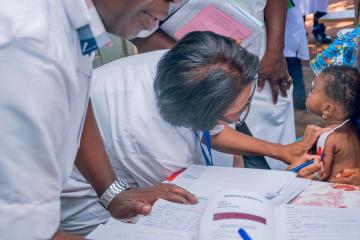
The sessions combined theoretical and practical approaches, including case studies, simulations, facilitation exercises and supervised clinical placements in hospitals. This integrated approach strengthened clinical skills in assessing, diagnosing and managing SAM complications; improved therapeutic feeding practices and clinical monitoring; promoted caregiver involvement; and introduced continuous quality improvement methods.
“This training reminded us of something powerful: Africa has the expertise, passion and determination needed to change the narrative of child survival on the continent,” said Dr Joy Odhiambo, Child Health Specialist at Kenya’s Ministry of Health. She emphasized that every health worker trained through this initiative is now part of a broader movement to protect the future of African children.
Participants were also prepared to become national trainers, able to replicate the training in their own countries, thereby contributing to sustainable health system strengthening and continuous improvement of nutritional care.
According to Dr John Makengo Mafuila Adjukula, Head of Monitoring and Evaluation at the National Nutrition Programme in the Democratic Republic of the Congo, a new regional dynamic is underway: “We are now well equipped to replicate the same training in our countries and serve as champions in health facilities to strengthen the management of children suffering from severe acute malnutrition with medical complications.”
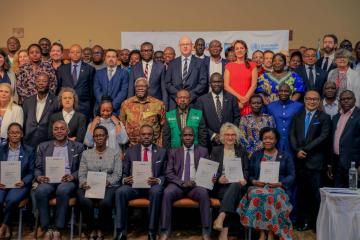
The training was delivered in two phases: online and in-person. The online preparatory phase took place from 27 April to 1 May 2026, involving 12 countries. It was followed by two in-person sessions: in Kampala, Uganda (4–9 May 2026) for English-speaking countries (Ethiopia, Kenya, Malawi, Nigeria, South Sudan and Uganda), and in Lomé, Togo (18–23 May 2026) for French-speaking countries (Burkina Faso, Madagascar, Niger, Democratic Republic of Congo, Chad and Togo). These 12 countries, heavily affected by child malnutrition, benefit from WHO’s sustained support to adapt and implement national protocols aligned with international standards.
Cross-country experience sharing proved particularly enriching and strengthened regional collaboration around quality of care.
At the end of the training courses, participating countries developed national action plans to organize domestic trainings, reinforce mentorship and clinical supervision, improve quality of care in nutrition units and accelerate the implementation of national protocols aligned with WHO recommendations.
Ultimately, this regional initiative is expected to improve the sustainability and quality of nutritional care services and accelerate the reduction of preventable deaths due to severe acute malnutrition among children in Africa.