

COMMUNIQUÉ
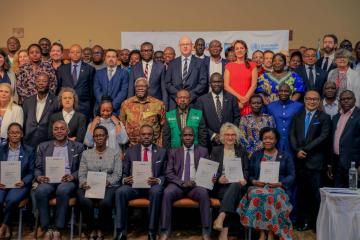
Kampala, Republic of Uganda – WE, the Ministers of Health of the Democratic Republic of the Congo (DRC), the Republic of Uganda, and the Republic of South Sudan, together with Heads of Delegations, representatives of the Africa Centres for Disease Control and Prevention (Africa CDC), the World Health Organization (WHO), UNICEF, and development and technical partners, convened at the High-Level Ministerial Meeting on Cross-Border Coordination on the Ebola Disease Outbreak caused by Bundibugyo virus held in Kampala, Uganda, from 22–23 May 2026 under the theme: “Regional Solidarity, Preparedness and Coordinated Response.
PREAMBLE
MINDFUL that Ebola disease remains a high-consequence public health threat with severe health, humanitarian, social, and economic implications for affected countries and the region;
CONCERNED by the evolving Bundibugyo virus disease (BVD) outbreak declared by the Government of the Democratic Republic of the Congo on 15 May 2026, following laboratory confirmation of the Bundibugyo species in Ituri province;
NOTING with concern the epidemiological situation as of 20 May 2026, including confirmed transmission in Ituri and Nord-Kivu provinces, increasing numbers of suspected and confirmed cases, ongoing chains of transmission, and documented cross-border population movement signals involving Uganda and the broader region;
NOTING that the current outbreak affecting and Kivu provinces constitutes both a Public Emergency of International Concern and a Public Health Emergency of Continental Security, requiring strengthened regional coordination and solidarity to urgently contain the outbreak and prevent further cross-border spread;
RECOGNISING the heightened regional risk associated with porous borders, active trade and mining corridors, humanitarian crises, population displacement, insecurity, and limitations in surveillance and preparedness capacities at points of entry and border communities;
ACKNOWLEDGING the efforts of the Governments of the DRC, Uganda and South Sudan, frontline health workers, rapid response teams, laboratory personnel, humanitarian actors, communities, and partners supporting the ongoing preparedness and response efforts;
RECALLING the obligations of Member States under the International Health Regulations (2005), the Africa CDC framework for regional collaboration and health security, and continental commitments toward strengthening epidemic preparedness, surveillance, and coordinated emergency response systems;
WELCOMING the leadership of Africa CDC and WHO in convening this High-Level Ministerial Meeting to strengthen regional solidarity, technical coordination, and operational preparedness and response to the Bundibugyo virus disease outbreak;
WE HEREBY agree on the following actions and commitments:
1. Strengthen Cross-Border Surveillance and Early Warning Systems
Commit to strengthening coordinated cross-border disease surveillance systems, event-based surveillance, joint contact tracing, active case finding, and real-time information sharing among the DRC, Uganda, and South Sudan, including routine cross-border coordination meetings and harmonised reporting mechanisms.
2. Harmonise Points of Entry Preparedness and Population Mobility Monitoring
Commit to strengthening and harmonising public health measures at official and unofficial points of entry, including traveller screening, alert management, referral pathways, population mobility mapping, and monitoring along high-risk mobility corridors and border communities.
3. Protect Frontline and Vulnerable Communities
Commit to prioritising the protection of frontline health workers, displaced populations, mining communities, border communities and other vulnerable populations disproportionately exposed to the risk of transmission.
4. Strengthen Community Engagement
Recognise the central role of trusted community leaders, civil society, media and local networks in promoting public awareness, early detection, prevention measures and community trust during outbreak response operations.
5- Strengthen Laboratory Systems and Diagnostic Capacity
Commit to strengthening laboratory preparedness through decentralised diagnostic capacity, rapid sample transportation systems, genomic sequencing, surge staffing, and interoperability of laboratory information systems to support timely confirmation and response.
5. Strengthen Clinical Management and Infection Prevention and Control
Commit to strengthening case management capacity, triage systems, Infection Prevention and Control (IPC), Water, Sanitation and Hygiene (WASH), isolation capacity, safe and dignified burials, and protection of frontline healthcare workers in affected and at-risk areas.
6. Strengthen Risk Communication and Community Engagement
Commit to strengthening Risk Communication and Community Engagement (RCCE) interventions, including community-based disease surveillance, social listening, rumour management, infodemic management, community feedback systems, and engagement of traditional, religious, youth, women, and local leaders to improve trust, acceptance, and adherence to public health measures.
7. Strengthen Operational Coordination and Incident Management
Support the operationalisation and strengthening of the Africa CDC Continental Incident Management Support Team (IMST), Emergency Operations Centres (EOCs), and national and sub-national coordination mechanisms to ensure harmonised regional preparedness and response operations.
8. Mobilise Sustainable Financing and Operational Support
Call upon Member States, regional institutions, development partners, humanitarian actors, donors, and the private sector to urgently mobilise and align financial, technical, logistical, and operational support behind national preparedness and response plans, including support for surveillance, laboratory systems, RCCE, IPC, and workforce surge capacity.
9. Strengthen Regional Preparedness and Health Security
Commit to strengthening preparedness capacities in at-risk countries and border districts, including simulation exercises, workforce development, stockpiling of critical supplies, rapid response readiness, and continuity of essential health services during the outbreak response.
10. Sustain High-Level Political Leadership and Regional Solidarity
Reaffirm our commitment to sustained political leadership, transparency, multisectoral collaboration, and regional solidarity to contain the outbreak, prevent regional spread, and protect the health security and socioeconomic stability of the region.
11. Advance Long-term Regional Health Security
Underscore the urgency of investing in resilient health systems, regional preparedness capacities, workforce development, laboratory networks and emergency coordination systems to strengthen Africa’s collective health security and preparedness for future outbreaks.
12. Ensure the continuity of essential services
The critical maintenance of essential services includes healthcare, education, and other critical social services, in the affected provinces and countries throughout the response to the outbreak.
We express our appreciation to the Government and people of the Republic of Uganda for hosting this important meeting, and commend the efforts of frontline responders, health workers, communities and partners working tirelessly to contain the outbreak.
DONE in Kampala, Republic of Uganda, on 23 May 2026.