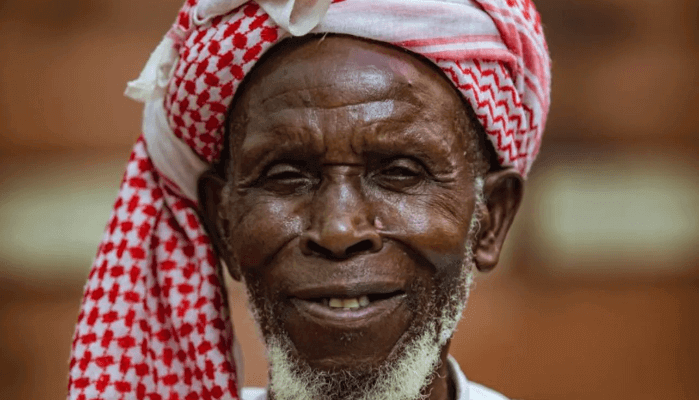
On January 16, 2026, the world lost a rare moral voice—an imam whose understanding of faith was anchored not in domination, intolerance, or divisiveness, but in humanity. Imam Abdullahi Abubakar, widely known for saving over 262 Christians during a violent attack in 2016, departed this world quietly, leaving behind a legacy that speaks louder than sermons and far beyond religious boundaries.
In Nigeria, particularly in the North, religion has too often been weaponised for political advantage, social control, and violent extremism. Against this backdrop, the life of Imam Abdullahi Abubakar stands as a profound counter-narrative. At a moment when fear could have justified silence and self-preservation could have excused inaction, he chose courage, compassion, and conscience. He chose humanity.
Faced with armed attackers, Imam Abdullahi Abubakar reportedly told them, “You must kill me first before harming anyone who has sought refuge under my protection.” The attackers heeded his call, sparing the lives under his custody, even though two churches were later burnt along their path. This singular act gives credence to a fundamental truth: religious extremism and intolerance are man-made constructs, sustained by leadership choices. Ending the needless killings in the Middle Belt and Northern Nigeria requires moral courage and responsible leadership from religious authorities. No religion can exterminate another. The only viable path forward is mutual acceptance, learning to live together as one people within a multi-diverse nation like Nigeria.
Imam Abdullahi Abubakar’s actions remind us of a simple but uncomfortable truth: religion, at its highest expression, must place humanity first. Any faith that elevates power over people, identity over life, or doctrine over compassion has lost its moral centre. He did not merely preach tolerance; he practised it under the most dangerous of circumstances. One cannot help but wish that all imams and pastors would embody the faith the way Abdullahi Abubakar did.
“Ending the needless killings in the Middle Belt and Northern Nigeria requires moral courage and responsible leadership from religious authorities.”
It is tempting to describe such actions as heroic exceptions. Yet doing so allows society, and religious institutions in particular, to evade responsibility. The more difficult but necessary question is this: why should Imam Abdullahi Abubakar be the exception rather than the norm? Why should saving lives across religious lines be celebrated as extraordinary, rather than expected as a basic expression of faith?
Nigeria’s fault lines, religious, ethnic, and political, have been widened over decades by leaders who profit from division. Extremism thrives not only because of violent actors but also because of silent enablers: leaders who refuse to condemn hate unequivocally, institutions that prioritise loyalty over morality, and systems that reward conformity rather than courage. In this context, Imam Abdullahi Abubakar’s life is both an inspiration and an indictment.
His example exposes the fallacy that religion must be aggressive to be relevant or intolerant to be powerful. True religious leadership, as he demonstrated, is moral leadership. It is the capacity to protect the vulnerable, even when they do not share your creed. It is the willingness to see the “other” first as a human being, not as an enemy, an infidel, or a statistic.
As Nigerians mourn his passing, we must resist the temptation to turn his legacy into mere symbolism. The greatest honour we can pay Imam Abdullahi Abubakar is not through words alone, but through replication. Religious leaders, across all faiths, must consciously redefine their influence: away from domination and toward dignity; away from fear and toward shared humanity.
“How I wish all Imams were like him,” many have said, and rightly so. But the aspiration must go further. We must wish for and work toward all religious leaders embodying this standard. Christianity, Islam, and all belief systems must reclaim their moral purpose as forces for peace, justice, and coexistence.
In a nation searching for unity amid diversity, Imam Abdullahi Abubakar leaves us with a timeless lesson: faith that does not protect humanity has failed its divine mandate. His life reminds us that leadership, religious or otherwise, is ultimately tested not by how many people follow you but by how many lives you are willing to save.
Imam Abdullahi Abubakar deserves more recognition, immortalisation, and national honour in death than many founding fathers who fought together for independence but left behind a deeply divided country. His name is a more enduring monument than the wealth-driven, self-centred honours often bestowed on political office holders. He will be better remembered if today’s leaders emulate his religious ideals and abandon the destructive agenda of domination in the name of God, a God who values life, not violence. God is humane, and any religion that sanctions the killing of His creation cannot be true to His values.
As we bid farewell to Imam Abdullahi Abubakar, may his legacy outlive him. And may Nigeria listen to the voice of reckoning and to the enduring truth that our diversity is an asset, not a liability.
Babs Olugbemi, FCCA, is the Chief Vision Officer at Mentoras Leadership Limited and Founder of Positive Growth Africa. He can be reached at [email protected] or 07064176953 or on Twitter @Successbabs.