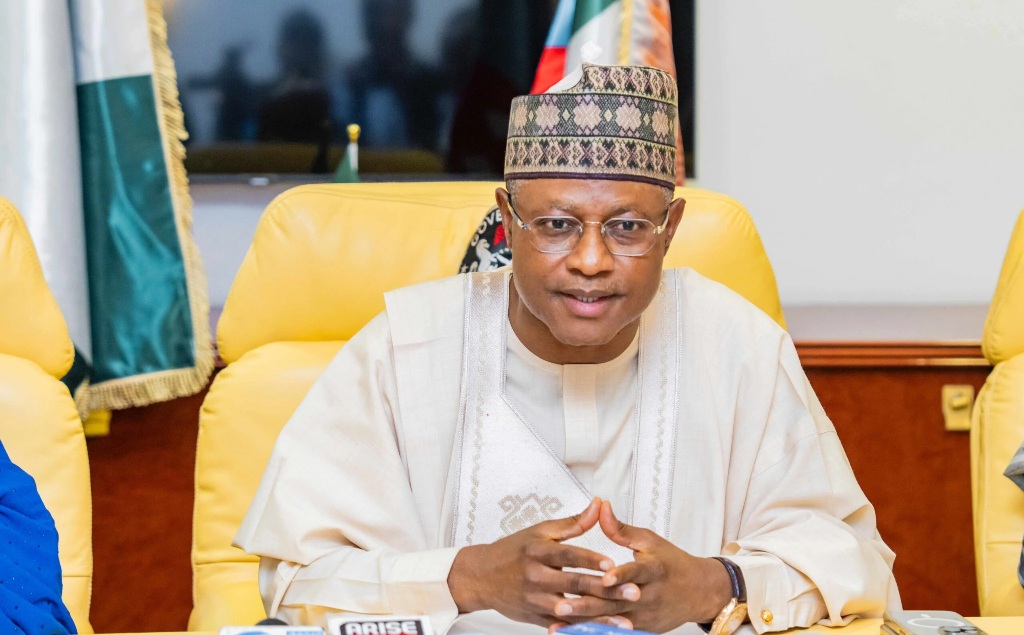
Uba Sani, the Kaduna State Governor, says his administration inherited deep-rooted challenges in insecurity, infrastructure deficits and weak social indicators, but has begun repositioning the state through reforms anchored lp performance, accountability and coordinated development priorities.
Speaking at a workshop for senior government officials organised by the Nigerian Institute of l
Public Relations during Nigeria Public Relations Week in Kaduna, Sani told commissioners, advisers, councillors and permanent secretaries that his government has moved to restructure governance systems to deliver measurable results. He said Key Performance Indicators (KPIs) have now been introduced across ministries, departments and agencies to ensure efficiency and transparency in service delivery.
The governor outlined seven priority pillars guiding his administration: security, infrastructure, institutions, investment, agriculture, human capital development and citizen engagement describing them as a holistic framework aimed at transforming Kaduna into a safer, more inclusive and economically vibrant state. According to him, the pillars are interlinked and designed to reinforce one another in addressing both immediate and long-term development challenges.
On security, which he described as the cornerstone of stability, Sani said his administration has intensified collaboration with federal authorities to curb banditry and violent crime. He disclosed that new military bases have been established in Giwa, Birnin Gwari and parts of southern Kaduna to strengthen security presence in previously volatile areas. In addition, over 150 operational vehicles and 500 motorcycles have been deployed to security agencies to enhance rapid response capabilities.
He further noted that a joint task force operating in urban centres has contributed to a noticeable reduction in street crime and banditry. As part of broader recovery efforts, the state government has reclaimed more than 20,000 hectares of farmland, enabling displaced farmers to return to agricultural activities. Sani added that over 1,000 displaced persons have been resettled, while approximately 117,000 internally displaced persons have received humanitarian support under what he termed the “Kaduna Peace Model.”
Beyond security, the governor highlighted progress in the social sector, particularly education. He said the number of out-of-school children in the state has declined significantly from about 550,000 to 187,720 within two years, attributing the improvement to targeted interventions and increased investment in the education system.
On economic development, Sani revealed that Kaduna has attracted more than $743 million in investments since his administration took office, with an additional $2.77 billion in potential investments currently under discussion. He linked this inflow to improved security conditions and governance reforms that have helped rebuild investor confidence.
Sani maintained that the combination of policy reforms, security interventions and institutional strengthening is gradually restoring normalcy and stimulating economic activity across the state. He stressed that his administration remains committed to translating policies into tangible outcomes that directly impact citizens’ lives.
The governor urged public officials to align with the administration’s performance-driven agenda, noting that sustained progress would depend on collective responsibility and effective implementation.