By Irina Slav – Apr 13, 2026, 5:00 PM CDT
- Global oil supply has been cut by up to 11 million bpd due to the Middle East war, with disruptions likely to persist as ceasefire prospects fade.
- Even in a best-case scenario, restoring production will take months, with full normalization potentially delayed until late 2026.
- Ongoing chokepoint disruptions and LNG outages—especially in Qatar—are tightening energy markets further, pushing prices higher and forcing some countries back to coal.

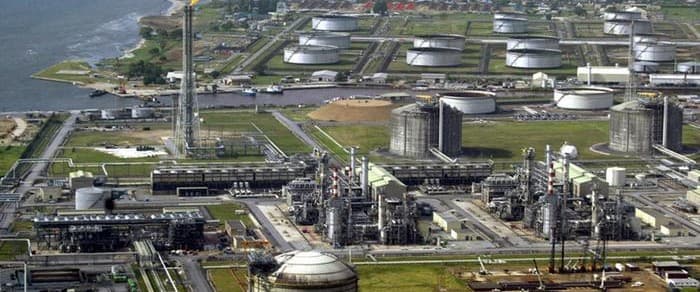
Global oil production has been slashed by as much as 11 million barrels daily amid the Middle East war. With the latest attempt at ending the hostilities failing, chances are the supply disruption will last a while, and then it would take months to restore production to its full size, even in the best-case scenario.
“Even if there is a durable ceasefire tomorrow and the strait reopens, markets will not return to normal for at least six months,” Rystad Energy’s head of geopolitical analysis told the Financial Times earlier this month. The publication noted that a tenth of global oil production has been shut in, along with some 2.4 million barrels daily in refining capacity. “And in some cases it could take significantly longer,” Rystad’s Jorge Leon also said.
Right now, this best-case scenario with a durable ceasefire is off the table, with the U.S. president threatening to add its own blockade to tanker traffic obstacles in the Persian Gulf. Reuters reported earlier in the day that tankers were already steering clear of the chokepoint, suggesting that instead of an improvement, the situation is worsening, with all the implications for oil markets that are to be expected, such as higher prices, which are already a fact, with Brent crude at over $102 earlier in the day and West Texas Intermediate at over $104 per barrel.


Little-Known US Company Lands Important Pentagon Contract in Rare Earth Race
What’s more, the oil production cuts are not over. They seem to be on track for further deepening, according to estimates made by the U.S. Energy Information Administration in its latest Short-Term Energy Outlook. The EIA reported it expected production shut-ins across the Middle East to rise from 7.5 million barrels daily last month to 9.1 million barrels daily this month.
It is worth noting that the EIA took an optimistic stance, saying that it assumes the war will end by May and production will begin to return to normal. However, even under that optimistic scenario, the EIA does not expect full restoration of oil production in the Middle East until much later in the year. “Under those assumptions, we expect production shut-ins will fall to 6.7 million b/d in May and return close to pre-conflict levels in late 2026,” it said in its Short-Term Energy Outlook.
Wood Mackenzie said in a recent report that about half of the production that has been shut-in could be restored in a matter of days, with the amount rising to three-quarters over a period of several weeks. Yet this would only happen if the Strait of Hormuz reopens fully. Also, Wood Mac’s analysts noted, “The final barrels will take months to restart, requiring well interventions and optimization of production systems from wellhead through pipelines, gas plants, water facilities and export logistics.”
The Financial Times pointed to Saudi Arabia as an example that oil production restoration takes a while. Just recently, the biggest OPEC producer suffered damage to its oil infrastructure that reduced its production capacity by some 600,000 bpd to 700,000 bpd. Indeed, attacks on oilfields have reduced its capacity by some 5%, according to data cited by the FT. Restoring that would take a while.
Again, it bears noting that all these are estimates resting on the assumption that hostilities between the United States and Israel, on the one hand, and Iran, on the other, have ended with a permanent resolution that allows for traffic along the Strait of Hormuz to resume unobstructed.
“Should the green light come, over 120 million barrels of crude stored in vessels on the water could quickly pour back into the market, reaching Europe within two to three weeks and North Asia within four weeks,” Wood Mackenzie’s analysts pointed out in their report. That amount of crude would certainly provide some much needed relief to energy-importing countries but it will not go a long way. Global oil demand was estimated at around 104-105 million barrels daily last year by the World Bank and the IEA.
Of course, the situation is even more dire in natural gas, as Qatar’s production capacity, which represents 77 million tons annually, remains offline as it undergoes repairs after Iranian strikes. The amount of 77 million tons annually would be impossible to replace over the near term, which is why some big LNG importers are switching to coal, notably in Asia, even in Japan.
According to Wood Mac, as cited by the Financial Times, actual lost production from Qatar stands at 12.8 million tons annually. However, even undamaged trains have been suspended because of the effective blockade of the Strait of Hormuz. Resumption of production at the undamaged trains of Ras Lanuf would take months, the consultancy said.
Based on the predictions and assumptions of analysts, it appears that the global supply disruption in oil and gas as a result of the Middle Eastern war could last until the end of this year—and that is the best-case scenario.
By Irina Slav for Oilprice.com
More Top Reads From Oilprice.com
- Oil Soars 7%, OPEC Cuts Demand Forecast As Trump Moves to Block Iran Ports
- EU Considers Lower Energy Taxes as Hormuz Crisis Drives Costs Higher
- BP Joins Shell and TotalEnergies in Namibia’s Offshore Rush
Download The Free Oilprice App Today



Back to homepage


Irina Slav
Irina is a writer for Oilprice.com with over a decade of experience writing on the oil and gas industry.
More Info
Related posts
Leave a comment