Spain has refused to bow to pressure from the United States after Donald Trump, the United States President, threatened to cut off trade in response to Madrid’s opposition to American strikes on Iran.
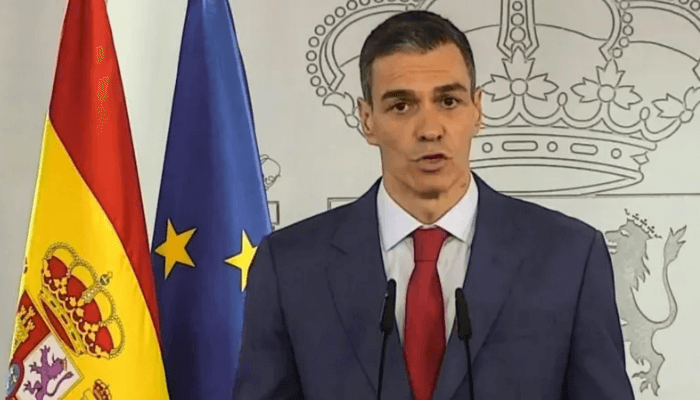
In a televised address from the Moncloa Palace, Pedro Sánchez, the Prime Minister, made clear that Spain’s position can be summed up in three words: no to war. But the message was larger than one leader. It was a statement of national policy rooted in Spain’s recent history and its reading of international law.
Read also: Trump threatens to cut all trade with Spain over military base access
The row began after Spain refused to allow the United States to use the jointly run bases at Morón and Rota for attacks on Iran. Madrid described the strikes as an unjustified and dangerous military intervention. In response, Trump called Spain a “terrible” partner and said Washington would cut off all trade.
The threat has injected uncertainty into one of Spain’s most important economic relationships. The United States is a key destination for Spanish exports and a major investor in the country. Although it remains unclear whether the White House will follow through with formal sanctions or tariffs, the warning alone has unsettled markets and businesses.
Read also: WORLD IN BRIEF: Trump Threatens Spain Trade Cut, El Mencho Buried, Belgium Arrests Cameroon Separatists and other stories
Spain’s position reflects a broader pattern. The government has taken a strong line on conflicts it believes risk breaching international law. It has been among Europe’s most vocal critics of Israel’s conduct in Gaza and has recognised a Palestinian state earlier than many other European Union members. At the same time, it has supported Ukraine in its defence against Russia’s invasion while urging caution against escalation elsewhere.
By recalling the 2003 invasion of Iraq, Spanish leaders tapped into a powerful national memory. Spain’s backing of that war under a previous conservative government sparked mass protests and remains widely viewed as a mistake that deepened insecurity. The lesson, many Spaniards believe, is that military interventions can carry heavy human and economic costs long after the bombs stop falling.
Read also: Nigeria, Spain deepen food security partnership
The dispute with Washington also comes at a sensitive political moment at home. Spain’s coalition government has faced sustained pressure in parliament and allegations of corruption involving figures close to the leadership. Yet public opinion may offer some insulation. Recent polling suggests that a large majority of Spaniards hold negative views of Trump, which could soften the domestic impact of a direct clash with the White House.
For Spain, the issue now is not only about Iran or access to military bases. It is about defining its role in a more divided world. The government argues that siding with peace and international legality is consistent with the country’s values and long-term interests. Critics warn that defying the United States could carry economic risks that ordinary Spaniards may ultimately bear.
What happens next depends largely on whether Washington turns rhetoric into action. Until then, Spain finds itself navigating a tense standoff that tests both its foreign policy principles and its economic resilience.
Faith Omoboye
Faith Omoboye is a foreign affairs correspondent with background in History and International relations. Her work focuses on African politics, diplomacy, and global governance.