
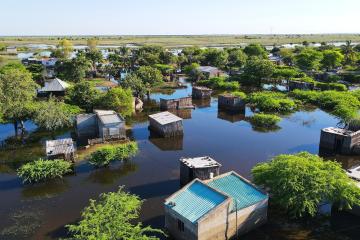


Brazzaville — Cholera cases in Southern Africa region have risen by over seven times in the first six weeks of 2026 compared with the same period the year before due to severe flooding triggered by cyclones, infrastructure damage and inadequate water and sanitation among displaced populations, an analysis by World Health Organization (WHO) shows.
A total of 4320 cases and 56 deaths were reported between 1 January and 15 February 2026 in five Southern African countries, up from 586 cases and 11 deaths in the same period in 2025. The increase contrasts with a general decline in cases across the continent, which reported a drop of 47% and 59% respectively compared with 2025 and 2024.
A total of 13 countries in the African region are currently reporting cholera outbreaks. In Southern Africa, Malawi, Mozambique, Namibia, Zambia and Zimbabwe are reporting cases. Since 2023, Southern Africa has been the dominant cholera hotspot in the continent, with major outbreaks during the 2023—2024 cyclone season. So far this year, Mozambique accounts for 90% of cholera cases in Southern Africa. The country has experienced intense flooding which has affected more than 700 000 people.
Southern Africa is experiencing an active cyclone season which usually runs from January to April. Above-average rains continue in cyclone-prone areas. Twenty-seven high-risk zones have been identified in five countries, with vulnerabilities including poor water, sanitation and hygiene infrastructure, as well as recurrent cholera outbreaks.
“The sharp rise in cholera cases in Southern Africa is a clear reminder of how climate-related shocks are intensifying public health risks,” said Dr Marie Roseline Darnycka Belizaire, Emergencies Director at the WHO Regional Office for Africa. “We’re working closely with national authorities to provide emergency health assistance while strengthening preparedness and resilience of our health systems to better protect communities from the growing impact of climate-linked shocks.”
According to the WHO analysis, Southern Africa faces a critical period between March and August, with a projected 12 000 to 22 000 additional cholera cases under the most probable scenarios. Multiple factors are contributing to the cholera outbreaks in Southern Africa: tropical cyclones; flooding that has affected Malawi, Mozambique, South Africa and Zambia; conflict and population displacement; and inadequate urban water supply systems.
WHO and partners are supporting the ongoing emergency response, including delivering cholera and other essential health supplies, strengthening health response coordination and improving disease surveillance and prevention measures.
A rapid scale-up of public health measures, including cholera vaccination, disease surveillance and improvement of water and sanitation services is crucial to protect the health of populations and avert a deterioration of the situation. Most people with cholera have mild or moderate diarrhoea and can be treated with oral rehydration solution (ORS). However, the disease can progress rapidly, so starting treatment quickly is vital to save lives. Patients with severe disease need intravenous fluids, ORS and antibiotics.
Cholera is a global public health threat and indicates inequity and lack of social and economic development. Access to safe water, basic sanitation and hygiene is essential to prevent cholera and other waterborne diseases.