





Leonard Hyman & William Tilles
Leonard S. Hyman is an economist and financial analyst specializing in the energy sector. He headed utility equity research at a major brokerage house and…
More Info
Set us as your preferred Google source
Premium Content
By Leonard Hyman & William Tilles – Mar 08, 2026, 10:00 AM CDT
- Rural electric cooperatives may face disruption from cheaper on-site renewables.
- Co-ops serve about 12% of the U.S. population but operate over 40% of the nation’s power lines.
- Financial pressure could grow across the system, as co-ops remain tied to long-term fossil power contracts with generation providers while renewable alternatives become cheaper for rural customers.

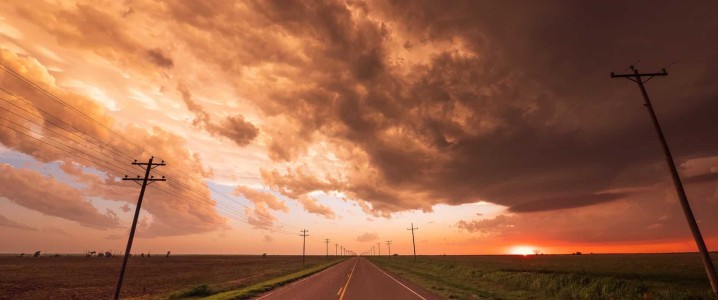
Rural electric cooperatives may be next in line for meaningful disruption from lower-cost, renewable power generation technologies such as wind and solar. The co-operative movement, a creation of FDR’s New Deal, has survived the past ninety six years with a simple mandate: provide low-cost, reliable electricity in under-served rural areas.
From a business perspective rural electrification always seemed like a terrible idea. The electric utility has to spend prodigiously on poles and wires for a sparsely populated area with a few customers per mile who provide an insignificant amount of steady revenues on that enormous investment. And to make it worse from a business perspective, all the farmers wanted in 1935 was mostly electric light and maybe power for a radio. Urban utilities, on the other hand, had over 20,000 customers per mile of distribution line, making for a proper business. The investor owned utilities at the time looked at the outsized capital expenditures for a rural power distribution network and its dismal revenue prospects and said, in effect, “no thanks”.
This rural-urban divide in the electric utility industry generated a bitter conflict within the industry, now long gone from the public’s imagination. But it still manifests itself plainly on a utility’s balance sheet. Rural utilities, not surprisingly, have a relatively large percentage of assets devoted to power transmission and distribution activities, especially on a per customer basis—all those miles of poles, wires, and small substations to move electricity across a large, sparsely populated service area. Said differently, the US’s power co-ops today serve about 12% of the population, but they have about 40+% of the nation’s transmission and distribution network and cover more than 50% of the land mass of the US.
Even today, rural power distribution costs on a per customer basis are very high, about four times higher than for an urban utility. Until recently, we saw this as a competitive strength. A relatively wide and protected moat for their business. The existing rural T&D system is too expensive to replicate, so we viewed competitive threats as minimal. Now, on- site power generation (and storage) with renewables could pose an existential competitive threat. If the storage and generation are on the customers’ premises, then the expensive distribution network becomes irrelevant and a potentially stranded asset. And because this renewable power is also cheaper than current fossil alternatives, this renders the power generation contracts to serve the co-op’s load at risk as well.
In the US, there are over 800 power co-ops serving more than 40 million people. And there are about 60 larger generation and transmission (G&T) co-ops,that own mostly fossil-fired power generation assets, which sell power to the distribution co-ops under long-term contracts. If we are correct, utility customers in these rural areas might realize substantial savings by switching to on-site solar. There are two reasons for this: 1) the new solar power providers don’t have that extensive rural electricity distribution network to support physically and financially, and 2) their power costs are cheaper than coal and gas. From a business competition perspective, this isn’t even a remotely fair fight. To us, this is what utility stranded asset risk really looks like when it’s caused by a technology transition.
In our rural electrification model in the US, we broke up the integrated electric utility into two parts, the distribution entity (the co-ops) and the Generation and Transmission entities providing power. But the financial stresses of more rapid solar and renewables adoption will affect each part of the business differently. The co-ops will lose lucrative customers as large commercial and industrial loads get bid away by solar developers offering lower power costs. But real financial stresses will also occur between the co-ops and their power providers, the G&Ts. The co-ops are contractually obligated to purchase mostly fossil-fired power from the G&Ts, but the co-ops now find themselves purchasing power that is now uncompetitively priced versus renewables. And this situation will likely get worse. The current fuel mix, according to the industry’s association, NRECA, is about 25% coal, 35% gas, 14% nuclear, with the rest being renewables and hydro. It is the financial tensions between co-ops and G&Ts that may give fixed-income investors some cause for concern.
The cooperatives are customer-owned businesses dedicated to providing reliable electric service at the lowest possible cost. They can raise money at a lower cost than their individual customers, and they have service staff that covers big, sparsely populated territories. They could become sellers, owners, and maintainers of on-site generation and storage and mini-grids. But those new businesses do not address the real issue: what to do with the existing infrastructure? That is where the financial risk lies.
What a new technology like renewables exposes here is an underlying and unavoidable physical and financial fragility of rural electrification based on the prevailing technology at the time, central station power. that reached customers through a relatively high-cost distribution system. But now, renewables produce electricity at lower cost, are faster to deploy at scale, and, because their power is generated on site, they don’t need any of the extensive distribution system nor the fossil-fired plants built to serve it. For a rural utility today we might say their assets are being stranded at both ends.
By Leonard Hyman and William Tilles for Oilprice.com
More Top Reads From Oilprice.com
- Oil Prices Surge Toward $90 as Middle East Tensions Escalate
- Europe’s Gas Price Set for Largest Weekly Gain in Three Years
- Kuwait Shuts Production, Qatar Warns Oil Could Hit $150 in Weeks
Download The Free Oilprice App Today



Back to homepage
Leonard Hyman & William Tilles
Leonard S. Hyman is an economist and financial analyst specializing in the energy sector. He headed utility equity research at a major brokerage house and…
More Info
Related posts
Leave a comment