Addis Ababa, Ethiopia — March 2026 The World Health Organization (WHO) Ethiopia Country Office played a decisive role in the rapid containment of the Ethiopia ’s first-ever Marburg Virus Disease (MVD) outbreak, successfully interrupting transmission within a short period and enabling the official closure of the outbreak on 26 January 2026. The achievement marks a major milestone in Ethiopia’s public health response and demonstrates the effectiveness of coordinated, multi-level emergency operations.
The outbreak, which began in October 2025 in Jinka town in the South Ethiopia Region and was declared by the Ministry of Health on 14 November 2025, posed a complex and high-risk public health threat. Early delays in detection, combined with community and healthcare-associated transmission—including infections among healthcare workers—highlighted the severity of the situation and the urgent need for rapid, coordinated action.
In response, WHO rapidly scaled up its operations, deploying surge teams and delivering coordinated technical, logistical, and strategic support across all major response pillars. Through strong leadership, real-time adaptation of technical guidance, and close collaboration with national authorities and partners, WHO contributed significantly to bringing the outbreak under control in record time.
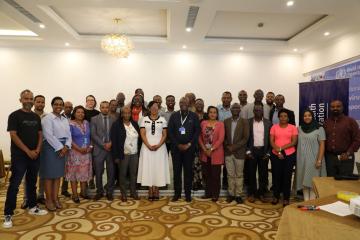
Following the successful containment of the outbreak, WHO Ethiopia conducted an internal Joint Operations Review in Addis Ababa from 17th to 19th March 2026, to assess its response and strengthen preparedness for future health emergencies. The review brought together experts and emergency response teams from across the three levels of the Organization—country, regional, and headquarters—to reflect on operational performance, identify achievements, and address gaps observed during the response.
Professor Francis Chisaka Kasolo, WHO Representative to Ethiopia, the African Union, and the United Nations Economic Commission for Africa, commended the extraordinary efforts of WHO teams. He emphasized the dedication, professionalism, and solidarity demonstrated across all levels of the Organization under intense pressure.
“The successful interruption of transmission and the closure of the outbreak stand as a testament to the coordinated efforts of WHO teams working across multiple response pillars,” he said.
From an operational perspective, the response required continuous adaptation, rapid decision-making, and the activation of robust support systems to sustain field-level interventions. WHO Ethiopia Incident Manager, Dr. Innocent Komakech, highlighted the importance of strong internal coordination and agility in managing complex emergency situations, particularly in the context of multiple concurrent crises.
While the response achieved its primary objective of interrupting transmission, the review also identified key operational and systemic challenges requiring attention. These included gaps in context-specific protocols for viral haemorrhagic fevers, persistent weaknesses in infection prevention and control (IPC) and water, sanitation, and hygiene (WASH) systems, and inconsistent adherence to standard precautions in healthcare settings.
The response also highlighted challenges in operationalizing the One Health approach, particularly in integrating surveillance systems and ensuring effective information flow. In addition, risk communication and community engagement efforts were initially constrained by misinformation and the growing influence of social media, underscoring the need for more agile and coordinated communication strategies.
The Joint Operations Review provided a structured platform to assess how effectively WHO leveraged its comparative advantages across its three levels and to evaluate the performance of critical operational systems, including logistics, information management, and workforce surge capacity.
Importantly, the review was designed as a forward-looking, learning-oriented process aimed at enhancing the quality, timeliness, and impact of future emergency responses. The findings will inform improvements in preparedness, coordination, and operational readiness for Marburg Virus Disease and other high-impact public health emergencies.
The outcomes of the review will be consolidated and shared widely with partners and WHO country offices across the region to support collective learning and strengthen best practices in outbreak response.
The successful containment of Ethiopia’s first Marburg outbreak not only demonstrates the country’s growing resilience to public health threats but also reinforces WHO’s critical role in supporting countries to detect, respond to, and control emerging health emergencies rapidly and effectively.