Innovate Now, a Kenya-based accelerator focused on assistive technologies, has unveiled its largest cohort yet, doubling down on a model that puts persons with disabilities at the centre of product design.
The accelerator, implemented by Assistive Technologies for Disability Trust (AT4D), has selected 19 startups working across speech therapy, mobility, inclusive education, and caregiver support sectors where demand is rising but locally adapted solutions remain scarce.
Across Africa, an estimated 200 million people require at least one assistive product, yet access remains limited. High costs, driven in part by imported devices, continue to lock out most users, while products designed outside the continent often fail to reflect local infrastructure constraints, cultural contexts, and maintenance realities.
Through its “Live Labs” model, Innovate Now embeds users directly into early-stage development. Persons with disabilities test prototypes, flag usability issues, and shape how products evolve before they reach the market, an intervention the programme says is critical in a sector where many tools are designed without sufficient input from end users.
“At Innovate Now, building with persons with disabilities at the centre is not optional, it is essential,” said Bernard Chiira, founder of AT4D. “It ensures the solutions are not only innovative, but truly relevant, accessible, and affordable.”
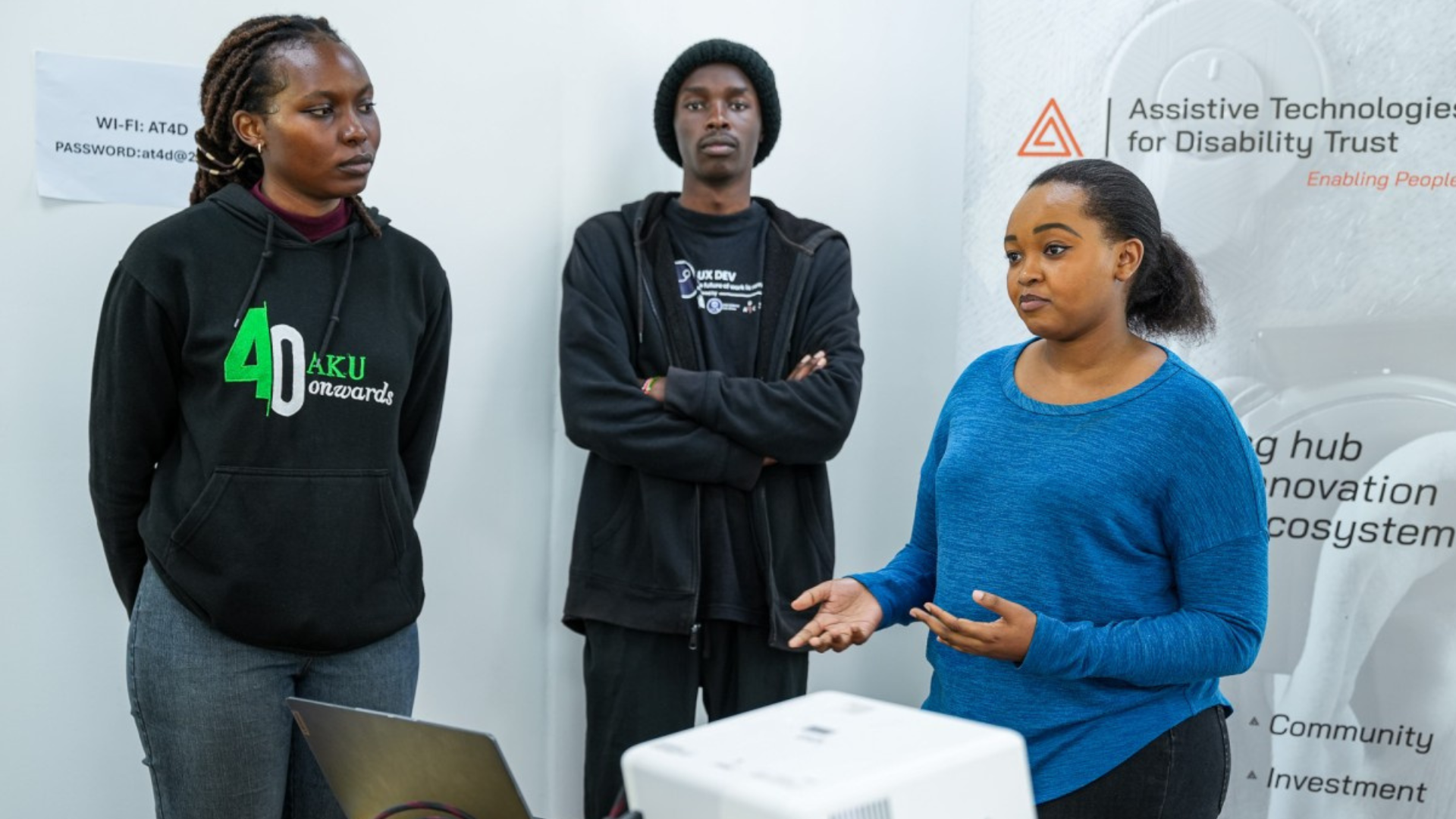
A 72-hour AI for Accessibility hackathon held from March 5 to 7, brought together developers, university students and persons with disabilities to co-create solutions from scratch. Fifteen projects emerged, with ten progressing into incubation alongside nine startups selected through an open call.
Among them is Chacha, a Kenyan AI-powered platform designed during the hackathon to help children improve speech through real-time feedback and guided exercises, targeting a longstanding shortage of speech and language therapy services across Africa.
Its founder, Peninah Gituku, said the co-creation process reshaped the product. “Caregivers helped us see where frustration actually lives in daily routines,” she said. “That changed how we built Chacha. We’re not replacing speech therapy, we’re designing something that supports it.”
The platform targets children from age 0 to 8 with mild speech impairments, combining pronunciation feedback with exercises shaped by input from both caregivers and therapists, a design choice intended to improve usability in home settings where formal therapy is often inaccessible or unaffordable.
For users involved in testing, the process itself marks a shift from traditional product development cycles. “The fact that the team asked about my day-to-day reality before writing more code made me feel seen and heard,” said Mary, a caregiver who participated in the programme.
The selected startups will now enter an eight-month incubation phase, where they will refine their products through mentorship, coaching and continued user testing in partnership with Kilimanjaro Blind Trust Africa.
Since launching in 2019, Innovate Now says it has supported 88 assistive technology ventures and engaged more than 200 founders across 10 cohorts, collectively reaching over 40,000 users. About 40% of those startups have brought products to market, while 38% have secured funding through grants and awards.