Did you know that Truthout is a nonprofit and independently funded by readers like you? If you value what we do, please support our work with a donation.
As Israel’s genocide in Gaza drags into its third year, more than two million Palestinians have been hemmed in by a military border. In “East Gaza,” as the Israeli Defense Forces-controlled zone east of the border has become known, more than two million Palestinians live surrounded by rubble, decaying corpses, and unexploded munitions, as they struggle to survive in makeshift shelters without adequate access to food, clean water, sewage, or protection against the harsh winter weather.
And yet, at the United Nations Security Council meeting on November 17, not a single country stood up to oppose President Donald Trump’s proposed “peace plan” in Gaza — which would establish a transitional international governance body for Gaza. Should this plan come to pass, it’s all too likely that Israel and the United States will not be held accountable in the near term for their war crimes and ethnic cleansing in Gaza.
But as conditions in Gaza have continued to deteriorate amid Israel’s violent siege, comparatively little international attention has been paid to conditions facing Palestinians in the occupied West Bank, where human rights groups are calling on the Israeli military to cease their attacks on Palestinian neighborhoods and refugee camps. As recently as last week, the Israeli Defense Forces (IDF) raided homes in the governorate of Tubas after expelling more than twenty families from the besieged Al Far’a refugee camp.
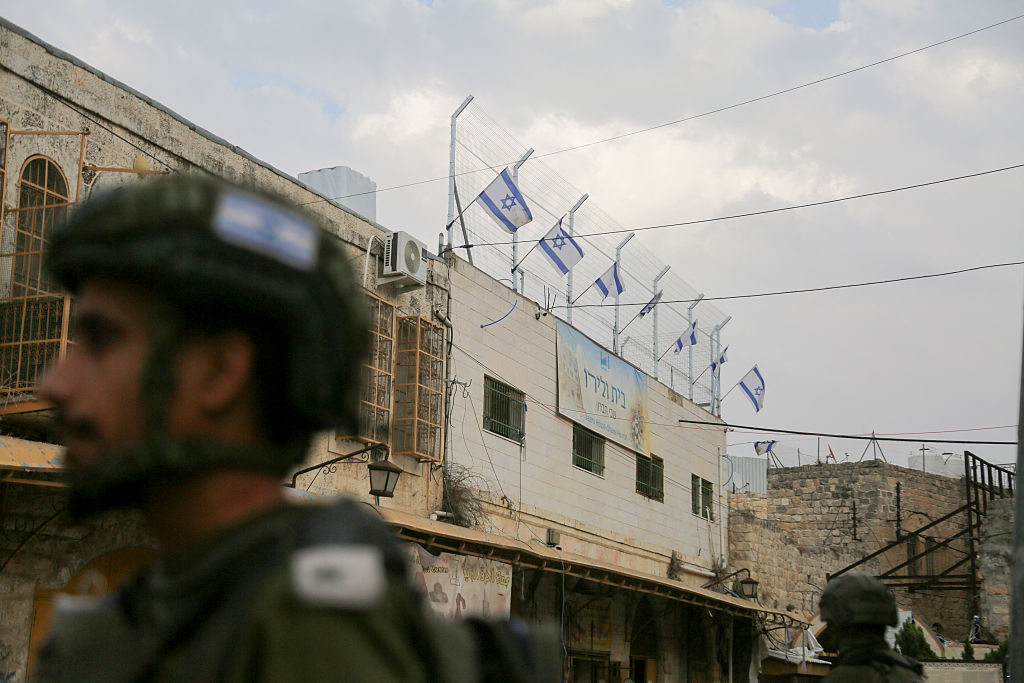
While the United States has sanctioned International Criminal Court judges for ruling against Israeli settlers who illegally occupy Palestinian land in the West Bank, the settlers have intensified their brutality, descending on Bedouin communities, villagers grazing their flocks, and Palestinians aiming to harvest olive tree crops. Using jeeps, bulldozers, ATVs, rifles, and other equipment supplied by the Israeli government and military, settlers beat civilians with clubs, torch vehicles, steal livestock, and demolish homes.
This violence is not a fringe phenomenon — it is deliberate and escalatory. Having already monopolized the land and segregated highways for Israeli use only, government leaders and settlers have signalled their intention to expand further, toward the goal of a fully colonized “Greater Israel.” As one delegate noted at the U.N. Security Council earlier this year, the escalating attacks on Palestinian civilians by the IDF and Israeli settlers in the area “remind us of Gaza,” and have raised concern that further violent escalation may lie ahead.
Why is there no accountability for settler terrorism? The U.N. Office of the High Commission for Human Rights (UNHCR) has called the settler attacks abhorrent. In a press briefing from November 14, the UNHCR wrote that “Permanently displacing the Palestinian population within occupied territory amounts to unlawful transfer, which is a war crime,” and that “The transfer by Israel of parts of its own civilian population into the territory it occupies also amounts to a war crime.”
But there has been little, if any, concrete pressure to stop Israel’s rightwing leaders from enabling and encouraging the violent tactics of groups like the “Hilltop Youth,” a group of young Israeli settlers who assault and terrorize Palestinians in the area. The Hilltop Youth, who take their name from a 1999 speech in which former Israeli Prime Minister Ariel Sharon claimed that Israel would seize all the hilltops in Palestine, were sanctioned by the Biden Administration in 2024 — but the highest echelons of Israel’s rightwing leadership regard them as frontline soldiers, and urge their continued assaults against non-Jews. In encouraging these young militants, some of whom are underage, the Israeli leadership is condoning what could be deemed the use of child soldiers.
“The ruling order in Palestine doesn’t see settler terror as a crime,” writes an independent journalist Andrey X, who has spent three years with unarmed civilian protectors in the West Bank. “Settler terror is an essential part of the state project.”
Activists with various unarmed civilian protection groups witness and record local offenses, at great personal risk. Jonas, an experienced community protection activist whose full name and identifying details are withheld for security reasons, says he has been trained to look assailants in the eye while attempting to deescalate confrontations, in part to keep tabs on which settlers are showing up in the neighborhood to attack and intimidate Palestinians.
Jonas says one person in local Palestinian communities usually serves as a point of contact, on a WhatsApp line, for the entire village. In the event of an Israeli incursion, people contact him, and when he contacts the international observers, they quickly dispatch a team of volunteers. Any of the Palestinian villager’s watch dogs will most likely have already been shot.
Nearly every morning, young settlers will drive their goats and sheep down the hill from the outpost into the villager’s yards, where, behind the shelter of guns, they attempt to drive the sheep and goats into their homes. The settlers then claim the villager’s livestock as their own, then herd them out of the village and back to their settlements. While settler harassment against Palestinian villagers has been relentless, the presence of activists like Jonas can in some cases prevent settler attacks or stop them from escalating.
Over Rosh Hashana, Jonas says, he was walking near an outpost about a kilometer up a mountain, when he was assaulted by an angry young person who appeared to be visiting the settlement for the holiday. Jonas says the man hurled stones at him as he carefully backed away up a rocky incline. One rock hit Jonas so close to the bone that he was later hospitalized for a hematoma. Still, Jonas kept eye contact and gently remonstrated with his attacker throughout the encounter.
“You know,” he recalls telling the young man, “You don’t have to do this . . . . Did anyone ever teach you to attack old men?”
Still, Jonas, as an international activist, says he is quite privileged compared to Palestinians who lack access to similar levels of health care or a passport that enables their freedom of movement. Unarmed Westerners who travel to the region to accompany Palestinian villagers risk deportation if they make an official complaint to government officials about settler violence — and when complaints are lodged, they’re typically met with silence. And while the IDF often acts in tandem with settlers in facilitating violence against Palestinian villagers, the settlers are at times even more extreme in their behavior — Jonas recounts that one settler told his friend, “I have automatic weapons in my house, and they’re for the IDF if they try to move me out.”
Lest we forget: the Israeli government has more or less told the world that it has nuclear weapons inside its Negev desert facilities, and they could use these devastating weapons against anyone that tries to stop Israel from establishing an ever-increasing apartheid state.
The current ceasefire agreement between Israel and Hamas, which took effect October 10, already appears doomed: Israel has repeatedly violated the terms of the agreement, more than 500 times. In Gaza, there is no peace — the quiet is still punctuated by Israeli gunfire and aerial attacks, and now, after years of relentless destruction, the region is at risk of being fully razed by the United States. Jonas, who has spent decades as an international activist in conflict and war zones, says he has never before seen the systemic cruelty perpetrated by Israelis in the West Bank and Gaza.
And the many countries who chose not to challenge this state of affairs by opposing Trump’s “peace plan” in the United Nations General Assembly will eventually suffer for their quiet passivity, through the direct and indirect impacts they will see at home as the result of ongoing violence in the region. While international leaders are beginning to speak up — including past and present members of U.N. bodies — their words are not enough. At this moment, no one can afford to remain silent.
Press freedom is under attack
As Trump cracks down on political speech, independent media is increasingly necessary.
Truthout produces reporting you won’t see in the mainstream: journalism from the frontlines of global conflict, interviews with grassroots movement leaders, high-quality legal analysis and more.
Our work is possible thanks to reader support. Help Truthout catalyze change and social justice — make a tax-deductible monthly or one-time donation today.