

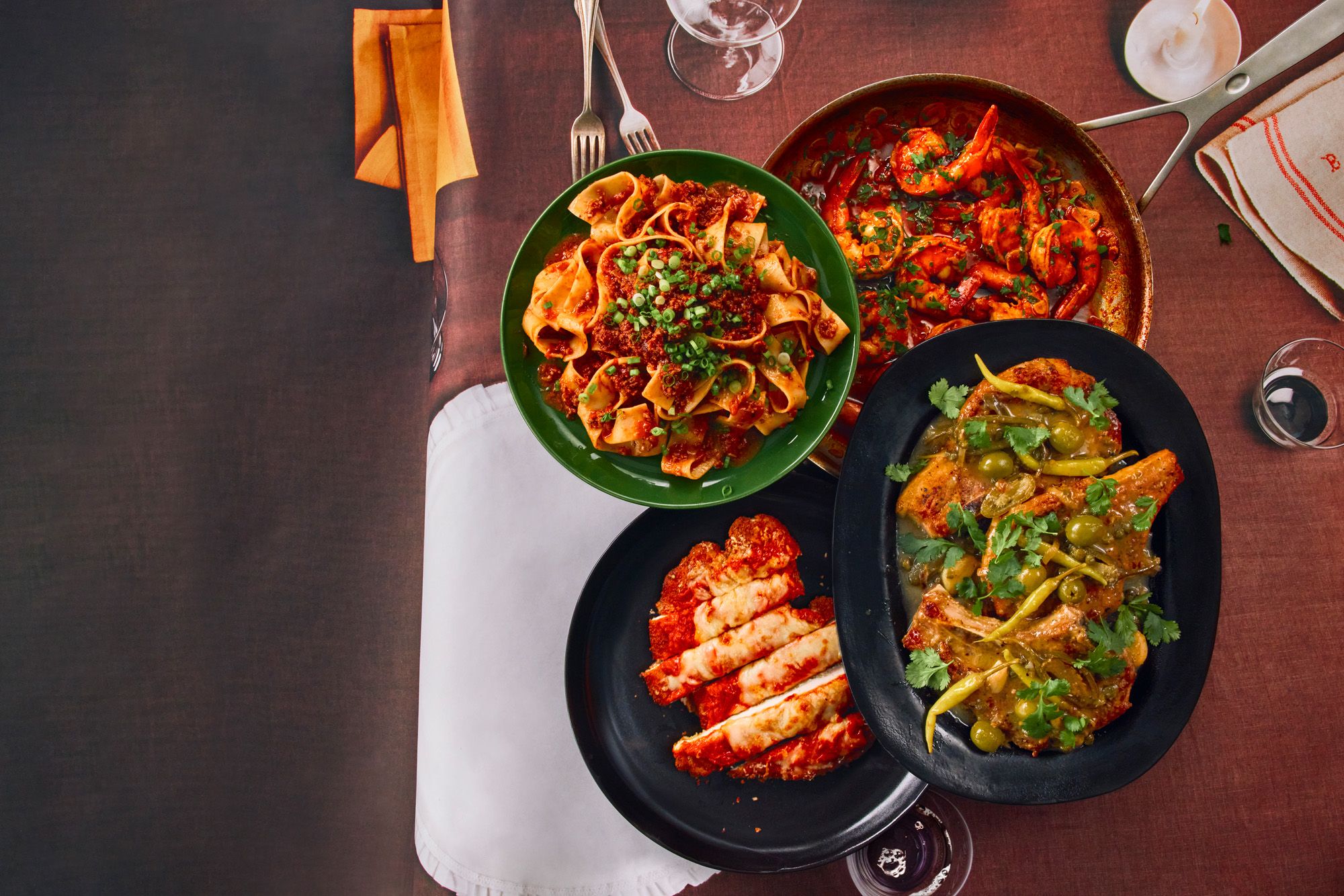
When I was growing up, my family wasn’t particularly adventurous when it came to the dinner table. We relied on a foundation of Italian American and French classics for most meals; my dad could make a two-day opera-soundtracked production out of even the most basic pasta sauces (an early lesson in marketing). So when I got to the Bon Appétit Test Kitchen in 2011, my culinary education was still just beginning—I couldn’t have told you the difference between cumin and coriander.
Tucked away in my old cubicle-size kitchen station, recipe by recipe, I was taken inside the minds of hundreds of pro chefs and developers. I could see the way layers of ingredients formed the building blocks of flavor, and how umami—that all-important sense of savory richness—could be hot-wired into recipes for nearly instant impact. Making and tasting dishes like Hot Joy restaurant’s Crab Fat–Caramel Wings, coated in savory crab paste and fish sauce caramel, and Mission Chinese Food’s Mapo Tofu, laced with fermented black beans and chiles, were my graduate degree in cooking.
By the time I became a parent, my home cooking was a far-ranging playbook that incorporated all kinds of pantry ingredients in pursuit of umami. I always maintained a deep fondness for the Italian American comfort foods of my youth and set about recreating them according to how I learned to cook in the Test Kitchen (sorry, Grandma!): with funk, zing, depth, and heat. I seek fast-acting amplified flavors and don’t hesitate to stir a spoonful of gochujang into marinara or toss pickled chiles into puttanesca sauce for pork chops. These dishes below might not follow my nonna’s rules for Italian American cooking, but to me they still taste like home.
I am just as likely to reach for gochujang as chile flakes when layering heat into marinara sauce for chicken parm. Gochujang goes beyond spiciness—its deeply fermented soybean flavor adds exceptional funk. If you are new to it, think miso plus chile peppers and you won’t be far off. I tend to look for the Sempio brand when out shopping, but most are perfectly great and remarkably similar to one another. If it is your first time buying gochujang, Lucky Foods makes a 4-oz. squeeze tube of its Seoul Gochujang, which is easy to reseal between uses, minimizing any oxidation. Any paste will darken over time and dry out slightly but it takes many months, by which point you will no doubt have found ways to work it into your soups, sauces, dressings, and condiments.


Sempio Gluten-Free Gochujang
Many of my favorite home-cooked meals involve a saucy finish made with copious amounts of white wine, butter, and garlic, but to me, that is often just a starting point. Harissa adds a layer of nuance, offering added body and gentle heat from spices like caraway and cumin. The challenge for recipe developers and home cooks alike has been finding reliable and consistent brands of harissa that balance aromatic spices and chile heat. Some can taste like mild roasted red peppers, while others will sear the taste buds right off your tongue. NY Shuk is the exception, a singular product that has impressed us for over a decade, based on a smooth brick red purée of guajillo chiles with fragrant garlic, cumin, and other spice notes. This kind builds slow heat that doesn’t overwhelm, whether using a spoonful as a condiment or an entire jar to braise chicken for a crowd.

Signature Harissa Premium Chili Pepper Condiment
Store-bought pickled chiles like jalapeños and guindillos, mixed with olives and capers, bring amped-up acidity that acts as a counterweight to rich pork chops. The heat and zing of chiles offset the salty elements of puttanesca, backed up with lots of fresh lemon juice. Best of all, every style of pickled chile has something to offer. From hot and sour tiny jalapeños in cans from La Morena to the scorching hot and gently sweet cherry peppers from brands like B+G, it is hard to find something you won’t love. They keep for months once opened and add instant oomph to garnishes and pan sauces alike.

I rarely have time to make my dad’s adaptation of Marcella Hazan’s four-hour ragù Bolognese, but when I want something similar, I take shortcuts. I don’t even bother to brown the meat, knowing I can offset the deep Maillard reaction–seared notes lost by adding Chinese black bean sauce. There can be an intimidation factor to working with fermented black beans and their derivative sauces since they are a wide category within Asian markets with numerous styles and brands (watch out for the kinds that include chiles, which get blazingly hot). Look for versions called Black Bean Sauce with Garlic, from brands like Lee Kum Kee and Kikkoman. They are balanced by just enough sweetness to offset the inherent salty character of the black beans, and infinitely complex. Just one tablespoon can completely transform a braise or stir-fry.

Lee Kum Kee Black Bean Garlic Sauce


