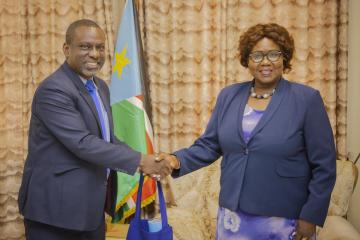
H.E. Josephine Lagu Yanga, Vice President of the Republic of South Sudan and Chair of the Service Cluster, has reaffirmed the Government’s commitment to strengthening cancer prevention and overall health systems during a courtesy visit by the World Health Organization (WHO) Representative in Juba.
Receiving Dr. Humphrey Karamagi at her office, the Vice President emphasized the Government’s resolve to expand access to quality healthcare services, scale up cancer screening and treatment, and mobilize greater national investment in the health sector.
The meeting, held at the Office of the Vice President, focused on strengthening the country’s health system, improving emergency preparedness, and expanding access to essential services. However, discussions placed particular emphasis on the rising burden of non-communicable diseases, especially cancer, and the urgent need to scale up prevention, screening, treatment, and palliative care.
The talks build on a growing momentum in South Sudan’s fight against cancer, coming on the heels of the official launch of the South Sudan Cancer Network on February 4 and a recent assessment visit by a delegation from the African Cancer Network to evaluate the country’s diagnostic and treatment capacity. Vice President Lagu Yanga, who chairs the Service Cluster, reaffirmed her office’s commitment to championing cancer control initiatives.
“We recognize the growing impact of cancer on our families and communities,” she said. “My office will continue to advocate for stronger cancer prevention, early detection and access to care, working closely with WHO.”
WHO outlined ongoing efforts to support the Ministry of Health in developing a comprehensive national cancer control strategy, integrating cervical cancer screening into routine services, and building the capacity of health workers. Discussions also explored collaboration with partners to secure reliable access to essential cancer medicines, and to strengthen systems for safe delivery of therapy.
Dr. Karamagi emphasized that comprehensive cancer care goes beyond treatment. “We must ensure that patients who require palliative and hospice care receive compassionate, dignified support,” he said. “Cancer care is a continuum, from prevention and screening to treatment and end-of-life care, and our systems must reflect that.”
Both sides agreed that progress will require sustained political commitment and increased domestic investment in the health sector. While international partners continue to provide critical support, WHO underscored the importance of national financing to build resilient, people-centered health systems capable of addressing both infectious diseases and the growing burden of non-communicable conditions.
The meeting concluded with a renewed commitment to deepen coordination between the Government, WHO and development partners to expand cancer screening, improve access to essential medicines and therapies, and strengthen preventive health interventions across the country, marking another step toward universal access to quality healthcare in South Sudan.