

Haley Zaremba
Haley Zaremba is a writer and journalist based in Mexico City. She has extensive experience writing and editing environmental features, travel pieces, local news in the…
More Info
Set us as your preferred Google source
Premium Content
By Haley Zaremba – Apr 13, 2026, 4:00 PM CDT
- Finland’s Posiva is on the verge of receiving an operating license for the world’s first permanent nuclear waste disposal facility, built 400 meters underground in 1.9-billion-year-old bedrock at a cost of 1 billion euros.
- Global spent nuclear fuel stocks are set to surge alongside the nuclear energy renaissance, but as of 2024, the U.S. alone faces a $44.5 billion liability with no permanent storage solution in place.
- The U.S. is inching forward: ARPA-E’s SCALEUP Ready program has directed $40 million to two deep borehole disposal projects, including one from Deep Isolation, which calls it the biggest milestone in the company’s history.

Nuclear energy is experiencing a resurgence in popularity on a global scale, thanks to a resurgence in energy security anxieties worldwide. The AI boom has majorly ramped up energy demand projections around the world at the same time that climate pledges are inching dangerously close with perilously little progress to show. Add to this a near-endless cycle of energy crisis and geopolitical conflict, and you’re presented with a majorly heightened energy trilemma: how to source energy that is sufficient, affordable, and sustainable. To solve this puzzle, nuclear energy — a reliable round-the-clock source of carbon-free energy production — can no longer be ignored.
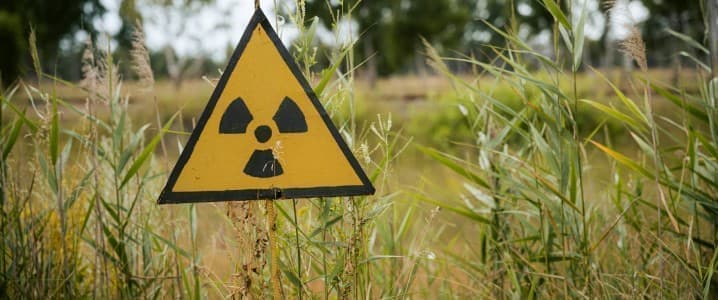
But a nuclear renaissance, while a no-brainer for energy security and climate goals, will also come with a major uptick in nuclear waste, posing a big problem for public health and safety, as well as for the taxpayers that fund its maintenance. Between the 1950s and 2022, it is estimated that nearly 400,000 tons of spent nuclear fuel were generated on a global scale. Of those 400,000 tons, one-third has been ‘recycled’ in a complex and costly process, and two-thirds remain in temporary storage, either in nuclear fuel pools on-site at individual nuclear energy plants or in dry cask storage sites.
However, neither of these storage options are considered to be permanent solutions, and the global quantity of radioactive nuclear waste is about to explode. In fact, the policy and science behind the storage and disposal of spent nuclear fuel remains a critical liability at a global scale, and especially in the United States. As of 2024, it was estimated that the United States’ spent fuel liability clocked in at a jaw-dropping $44.5 billion.


A report from the National Center for Energy Analytics published earlier this month blasts the United States, the world’s biggest nuclear energy producer, for its kick-the-can-down-the-road approach to this critical issue, decrying that “Federal [nuclear waste] management has been a major black eye and policy failing for nuclear energy generation and technology.”
However, the world is, at long last, currently making great progress toward establishing the world’s first-ever permanent nuclear waste disposal site. In fact, a site on the West Coast of Finland is expecting to receive its license to begin operations in just a few months, an incredibly short stretch of time compared to the more-than two decades that the facility has been under construction. The facility will house canisters of spent fuel 400 meters underground in a remote region, housed in earthquake-resistant 1.9 billion-year-old bedrock.
“The solution that we have, it’s the missing point for sustainable use of nuclear energy,” said Pasi Tuohimaa, the communications manager for Posiva, the company responsible for the oversight of the project. The venture cost 1 billion euros ($1.2 billion USD) and will be capable of housing 6,500 tons of spent nuclear fuel. Posiva says that their specialized canisters will safely store the hazardous waste “long enough for the radioactivity of spent fuel to decrease to a level not harmful to the environment.”
Over in the United States, despite a stop-and-go, pass-the-buck approach to managing nuclear waste, deep borehole nuclear waste storage is also inching forward. The U.S. Department of Energy’s ARPA-E SCALEUP Ready program has selected a project to fund for what it hopes will become the world’s first commercial-ready deep borehole nuclear waste disposal venture. The federal program will funnel $40 million to support two deep borehole projects.
“Being selected for this award is the single biggest milestone in Deep Isolation’s history,” said Rod Baltzer, President and CEO at Deep Isolation, one of the companies selected for the federal funding.
“It validates years of pioneering work on the Universal Canister System and positions us to deliver the world’s first full-scale, end-to-end, commercial-ready deep borehole disposal solution,” he went on to say. “We are creating a deployable, regulatory-approved system that will transform how the world manages nuclear waste safely, efficiently, and permanently.”
By Haley Zaremba for Oilprice.com
More Top Reads From Oilprice.com
- EU Considers Lower Energy Taxes as Hormuz Crisis Drives Costs Higher
- BP Joins Shell and TotalEnergies in Namibia’s Offshore Rush
- Petrobras Strikes New Offshore Hydrocarbon Discovery In Brazil
Download The Free Oilprice App Today



Back to homepage
Haley Zaremba
Haley Zaremba is a writer and journalist based in Mexico City. She has extensive experience writing and editing environmental features, travel pieces, local news in the…
More Info
Related posts
Leave a comment