The Federal Ministry of Health and Social Welfare has begun the state-level implementation of the National Policy on Cosmetics Safety and Health (NPCSH), starting with a stakeholder engagement in Lagos State.
READ ALSO: NAFDAC Uncovers Warehouse with ‘Banned,’ ‘Fake’ Cosmetics Worth Over ₦3bn In Lagos
The policy, which will be implemented over a five-year period, is designed to sanitise the cosmetics industry and address rising health risks linked to toxic substances found in some cosmetic products.
Officials say the initiative will strengthen regulation of cosmetic production and distribution, improve product labeling, and raise public awareness about the potential health dangers associated with unsafe cosmetic products.
The programme also brings together several government agencies and partners, including the National Agency for Food and Drug Administration and Control (NAFDAC), the Federal Ministry of Environment, the Nigeria Customs Service, the Lagos State Ministry of Health, Resolve to Save Lives, and the World Health Organisation.
Representing the Minister of Health and Social Welfare, Muhammad Pate, the Director of the Cosmetics Safety Management Programme at the Federal Ministry of Health, Paul Okhakhu, said the Federal Government was committed to developing strong regulations that would guide cosmetic production and ensure compliance across the country.
Also speaking, the Head of Department of the Cosmetics and Household Products Division at NAFDAC, Ikenna Nsofor, who represented the agency’s Director-General, Mojisola Adeyeye, stressed the agency’s determination to sanction individuals and companies that violate cosmetics safety guidelines.
On the part of the Lagos State Government, the Director of Pharmaceutical Services at the Lagos State Ministry of Health, Dr. Olawale Poluyi, who represented the Permanent Secretary, Dr. Dayo Olajide, said the state would review the policy with a view to domesticating and implementing it.
The National Policy on Cosmetics Safety and Health emphasises that cosmetics safety is a shared responsibility among regulators, manufacturers, and consumers.
It is expected to align Nigeria’s cosmetics sector with international best practices, strengthen regulatory coordination, and reduce health risks associated with unsafe cosmetic products.


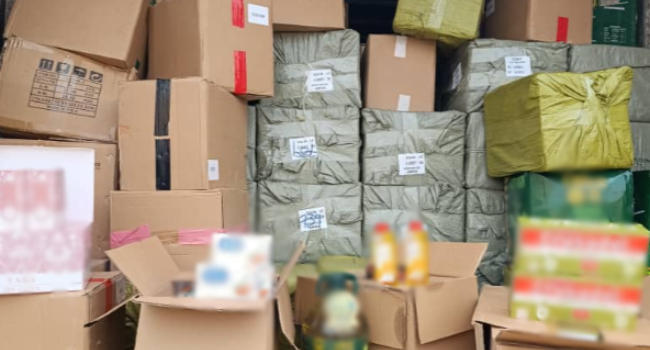
In February 2026, NAFDAC said it uncovered a warehouse stocked with banned, substandard, and unregistered cosmetic products in Lagos.
In a statement on its X (former Twitter) page, the agency disclosed that the products, valued at over ₦3 billion, were uncovered at the APT Trade Fair Complex.
It said that the facility was concealed within an uncompleted building.
“NAFDAC has uncovered a warehouse stocked with banned, fake, and unregistered cosmetic products valued at over ₦3 billion at the APT Trade Fair Complex in Lagos state.
“Items recovered include 728 cartons of Crusader soap, 718 cartons of E45 soap, and Extract Gold whitening soaps, which are products banned by the Federal Government,” it stated.
The agency further said that additional items, such as assorted perfumes, body oils, and cooking oils, were also found and placed on hold for further regulatory assessment.
It added that all seized products had been evacuated to prevent distribution, while the warehouse manager has been invited for further investigation as enforcement actions continue.
NAFDAC also warned that the sale and use of such products pose serious health risks.