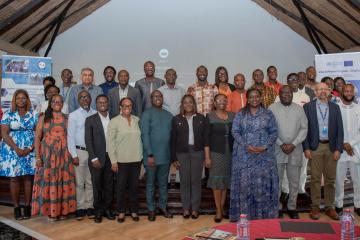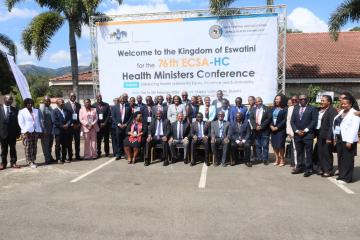
Ezulwini—Eswatini has assumed the chair of the East, Southern and Central Africa Health Community (ECSA-HC) conference following the 76th Health Ministers Conference held in Ezulwini from 30th January to 5th February 2026. The conference brought together regional and international delegates to deliberate on priority health challenges and regional cooperation.
The high-level meeting was attended by dignitaries from the region including former President of the United Republic of Tanzania, His Excellency Dr Jakaya Mrisho Kikwete; Director General of ECSA-HC Dr Ntuli Kapologwe, and Eswatini Deputy Prime Minister Honourable Thuli Dlala – demonstrating political commitment to advancing universal health coverage in the region. The WHO Regional Director for Africa, Dr Mohamed Janabi, was represented by Dr Susan Tembo, the WHO Country Representative for Eswatini.
In his remarks, Dr Kikwete called on countries to diversify health financing by engaging nontraditional donors, including nonstate actors, in response to declining traditional donor support. He emphasized the importance of African-led solutions and highlighted the value of platforms such as the ECSA-HC conference for exchanging ideas and developing practical responses to shared health system challenges. traditional donors, including non state actors, in response to declining traditional donor support. He emphasized the importance of African-led solutions
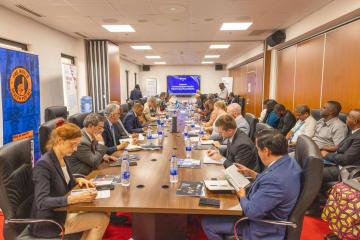
In the lead-up to the main conference, delegates participated in two parallel pre-conference meetings: one on strengthening action against antimicrobial resistance (AMR) in the ECSA region and another on health financing and optimizing investments in health systems. Dr Ambrose Talisua, health financing team lead at WHO’s African Union Liaison Office, was a panellist in the health financing meeting and WHO Eswatini participated in the AMR meeting.
Technical discussions on AMR focused on approaches to elevate AMR as a political and public health priority, drawing lessons from HIV and TB advocacy as models for mobilizing national support. Recommendations from the dialogue were presented to plenary on the final day for ministerial endorsement and submission to the 5th Global High-Level Ministerial Conference on AMR, scheduled for 29–30 June 2026 in Abuja, Nigeria.
A key moment at the conference was WHO’s launch of the “Scaling Innovations in Public Health Systems: Guidance and Toolkit,” an evidence-based framework to support governments to transition successful pilot innovations into system-wide adoption. The toolkit reinforces the importance of country ownership, demand-led innovation and strengthened public sector leadership. It also provides clarity on government roles in coordinating partners, engaging private-sector innovators and applying mission-oriented approaches to address complex cross-sector health challenges. Dr Kapologwe stressed the urgency of scaling proven interventions, noting that building resilient health systems requires full implementation of evidence-based WHO guidelines.
Speaking on behalf of Dr Janabi, Dr Tembo reaffirmed WHO’s commitment to support Member States to strengthen all all-hazards capacities anchored in health systems strengthening and resilience. “We will continue to support the adoption and implementation of evidence-based legislation, policies, standards and guidelines that strengthen emergency preparedness and health system performance and we will support countries to incorporate the latest global guidance into their national contexts,” said Dr Tembo.
During the ministerial deliberations, Member States committed to strengthen access to quality-assured antimicrobials, diagnostics and vaccines, and to explore pooled procurement mechanisms to increase purchasing power. Ministers also underscored the need to promote local and regional manufacturing where feasible to enhance supply resilience, affordability and sustainability. Participants emphasized the important of sustainable financing, with commitments to integrate AMR priorities into national budgets and routine financing mechanisms.
Stewardship was also highlighted as a cornerstone of AMR containment, including commitments to regional antimicrobial stewardship training and exploring the establishment of an ECSA College of Pharmacists. Enhanced governance structures and elevated ministerial oversight were also highlighted as essential for sustaining progress.
WHO participated in a high-level panel discussion on health financing and domestic resource mobilization. The discussion included a panel discussion on human resources for health, focusing on governance and leadership. Eswatini’s Ministry of Health contributed as a panellist, drawing on evidence generated with WHO support, to inform a substantive discussion. On the final day, WHO presented on sustainability and financing for neglected tropical diseases and malaria elimination programmes and participated in the panel on fostering partnerships for resilient health systems, represented by Dr Ambrose Talisuna from WHO’s African Union Liaison Office.
To conclude the conference, Malawi’s Minister of Health, Honourable Madalitso Baloyi, formally handed over the ECSA-HC chairmanship to Eswatini’s Minister of Health, Honourable Mduduzi Matsebula, marking a dignified leadership transition in line with ECSA-HC tradition and positioning Eswatini to guide the regional health agenda for the coming year.