

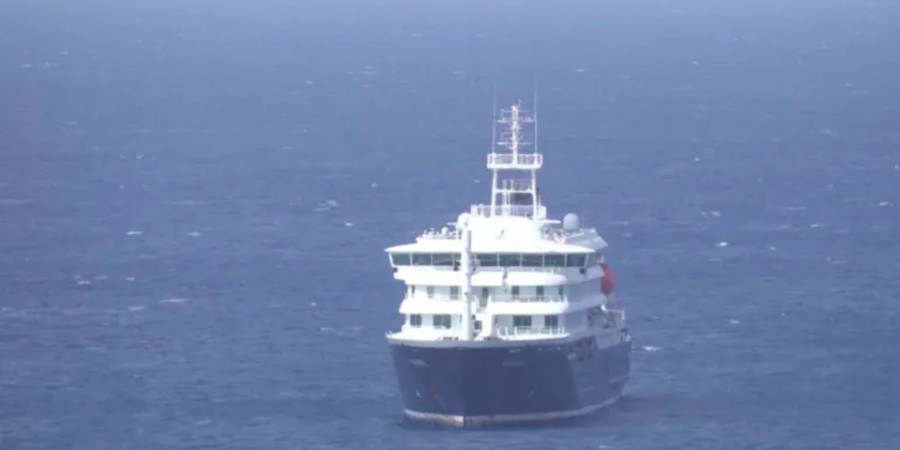
A cruise ship carrying nearly 150 people remains anchored off the coast of Cape Verde after a hantavirus outbreak left three passengers dead and multiple others ill, according to the World Health Organization. Health officials said there may have been limited human-to-human transmission aboard the MV Hondius, an unusual development for a virus that is typically spread through contact with infected rodents.
“We do believe that there may be some human-to-human transmission that is happening among the really close contacts,” WHO official Dr. Maria Van Kerkhove said.
The ship, operated by Oceanwide Expeditions, departed from Argentina about a month ago and is currently being monitored while anchored near West Africa.
Seven hantavirus cases have been identified so far, including two confirmed infections and five suspected cases, according to the WHO. The confirmed cases involve a Dutch woman, who later died, and a 69-year-old British national who was evacuated to South Africa for treatment.
The Dutch woman’s husband also died, though he has not been listed as a confirmed case. A German national who died on May 2 has likewise not been confirmed as infected.
In a statement, the Dutch couple’s family said: “The beautiful journey they experienced together was abruptly and permanently cut short.”
“We are still unable to comprehend that we have lost them. We wish to bring them home and commemorate them in peace and privacy.”
Two crew members, one British and one Dutch, are expected to be medically evacuated after developing what Oceanwide described as “acute respiratory symptoms.” Another individual linked to the German passenger is also set for evacuation. Medical teams from Cape Verde, working with the WHO, have boarded the vessel to assist with testing and monitoring. Oceanwide said 149 people from 23 countries remain on board under “strict precautionary measures.”
Van Kerkhove said investigators suspect the first case may have been contracted before embarkation, possibly involving the Andes strain of hantavirus, which circulates in Sohyh America and has documented rare person-to-person transmission.
“Our working hypothesis is that there’s probably a couple of different types of transmission that might be happening,” Van Kerkhove said.
The WHO said Spain has authorized the vessel to dock in the Canary Islands for further assessment, though Spanish officials said no final decision has been made.
One passenger told the BBC the mood on board remained “pretty good” despite uncertainty over when the ship will be allowed to dock.


