

HomeTechnology33 banks raise ₦3.37 trillion from Nigerians as CBN ends recapitalisation  

33 banks raise ₦3.37 trillion from Nigerians as CBN ends recapitalisation  

Published on

spot_img

Nigeria’s banking sector has wrapped up one of its biggest capital-raising exercises in recent history, with lenders pulling in a combined ₦4.65 trillion to meet new regulatory thresholds set by the Central Bank of Nigeria.

The capital raise drew heavily from local investors, who accounted for 72.55% (₦3.37 trillion) of the total, while foreign investors contributed 27.45% (₦1.28 trillion), a split the CBN says signals sustained confidence in Nigeria’s banking system despite macroeconomic headwinds.

In a press statement on Wednesday, the regulator said the over 24-month recapitalisation programme, which began in March 2024, has now been concluded, strengthening banks’ balance sheets and positioning the sector to better absorb shocks and fund economic growth.

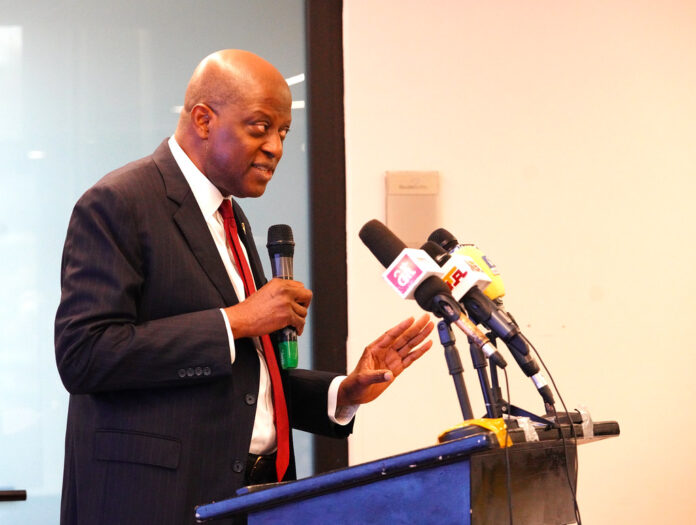
“The recapitalisation programme has strengthened the capital base of Nigerian banks,” said CBN governor, Olayemi Cardoso. “Reinforcing the resilience of the financial system and ensuring it is well-positioned to support economic growth and withstand domestic and external shocks.”

The recapitalisation exercise, first announced in 2024, was meant to strengthen banks’ balance sheets amid rising inflation, currency volatility, and growing credit risks, while positioning lenders to finance Nigeria’s long-term ambition of becoming a $1 trillion economy.

Under the new regime, banks must meet minimum paid-up capital based on their operating licences: international banks to ₦500 billion ($370.58 million), national banks to ₦200 billion ($148.23 million), regional banks to ₦50 billion ($37.06 million), merchant banks to ₦50 billion ($37.06 million), non-interest banks with national authorisation to ₦20 billion ($14.82 million), and non-interest banks with regional authorisation to ₦10 billion ($7.41 million).

Most banks clear the bar

According to the CBN, 33 banks have met the revised minimum capital requirements. A handful of institutions remain entangled in regulatory and judicial processes, which are being addressed through established supervisory and legal frameworks.

The regulator stressed that all banks are still fully operational.

With the recapitalisation phase now closed, the CBN is shifting focus to supervision.

Banks are now required to run regular stress tests and maintain capital buffers under a strengthened risk-based framework. The regulator also signalled that prudential guidelines and supervisory rules will be reviewed periodically to keep pace with evolving risks.

The CBN noted that banking services remained uninterrupted throughout the capital raise, preserving access for individuals and businesses, a critical factor in a period of economic adjustment.

According to the apex bank, the successful completion of the programme establishes a stronger and more resilient banking system, better positioned to support lending, mobilise savings, and withstand domestic and global shocks.

Latest articles

South Korea pushes looser rules for high-tech sectors

South Korean President Lee Jae Myung (R) speaks during a meeting with his senior secretaries at the presidential office Cheong Wa Dae in Seoul, South Korea, 09 April 2026. Photo by YONHAP / EPA April 15 (Asia Today) -- Lee Jae-myung said Tuesday that South Korea should shift to a "negative regulation" system in advanced

Snap Inc., Snapchat parent company, slashes workforce, turns to artificial intelligence

1 of 3 | Traders work on the floor at the New York Stock Exchange in 2017 as Snap's initial public offering debuts in New York City. The parent company of Snapchat announced Wednesday that it's cutting about 16% of its workforce in favor of artificial intelligence tools. File Photo by Monika Graff/UPI | License

OP-ED: Korean American nominee for U.S. envoy to S. Korea draws attention

1 of 2 | Michelle Park Steel, then a Republican member of the U.S. House of Representatives, speaks at a North Korea Freedom Week event in front of the U.S. Capitol in Washington, D.C. File. Photo by Asia Today April 15 (Asia Today) -- This commentary is the Asia Today Editor's Op-Ed. The administration of

Iran threatens U.S. shipping in Red Sea over blockade as Trump says talks with Iran likely to restart

1 of 2 | A container ship sails on the Strait of Hormuz, as seen in June 2025 from Ras Al Khaimah, United Arab Emirates. The strait lies between Oman and Iran and links the gulf to the Arabian Sea. On Wednesday, Iran threatened shipping in the Red Sea, the Gulf of Oman and the

More like this

South Korea pushes looser rules for high-tech sectors

South Korean President Lee Jae Myung (R) speaks during a meeting with his senior secretaries at the presidential office Cheong Wa Dae in Seoul, South Korea, 09 April 2026. Photo by YONHAP / EPA April 15 (Asia Today) -- Lee Jae-myung said Tuesday that South Korea should shift to a "negative regulation" system in advanced

Snap Inc., Snapchat parent company, slashes workforce, turns to artificial intelligence

1 of 3 | Traders work on the floor at the New York Stock Exchange in 2017 as Snap's initial public offering debuts in New York City. The parent company of Snapchat announced Wednesday that it's cutting about 16% of its workforce in favor of artificial intelligence tools. File Photo by Monika Graff/UPI | License

OP-ED: Korean American nominee for U.S. envoy to S. Korea draws attention

1 of 2 | Michelle Park Steel, then a Republican member of the U.S. House of Representatives, speaks at a North Korea Freedom Week event in front of the U.S. Capitol in Washington, D.C. File. Photo by Asia Today April 15 (Asia Today) -- This commentary is the Asia Today Editor's Op-Ed. The administration of