
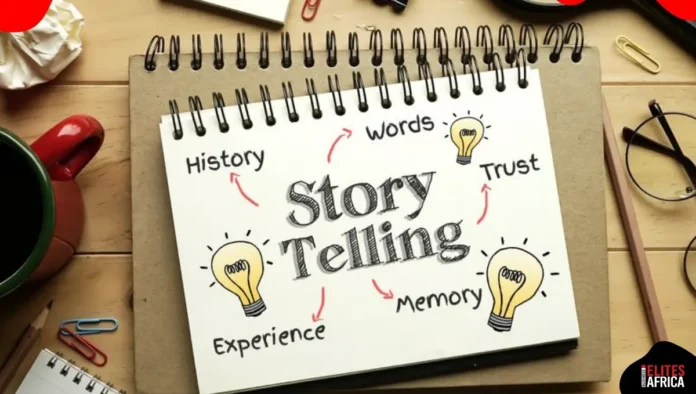


In 2026, storytelling makes money in Nigeria for one simple reason: it turns attention into trust, and trust into action. People don’t just buy products, follow creators, or support brands because of features.
They do it because something about the message feels clear, believable, culturally familiar, and worth paying for.
And in an economy where trust is scarce and competition is loud, the person who can tell the clearest and most credible story is the person who gets the sale, the client, the job, or the partnership.
Why storytelling pays more in 2026 than before
AI has made content cheap. Almost anyone can generate captions, scripts, ads, and articles in seconds.
That means volume is no longer a rare advantage. Differentiation is. What stands out in 2026 is not “more content,” but better meaning.
Storytelling is the skill that creates meaning fast, makes people feel something, and helps them understand exactly why you matter.
The Nigerian reality: people buy credibility, not claims
To understand why storytelling pays in Nigeria, you have to understand how Nigerians buy. Many Nigerians are cautious buyers because they have been disappointed too many times.
People have paid for products that didn’t work, services that didn’t deliver, and promises that turned into excuses. So the Nigerian consumer is not just buying your offer; they are buying your credibility.
Storytelling gives you a structured way to earn that credibility without shouting. When you tell a clear story about the problem you solve, what changes for the customer, and why your solution can be trusted, you reduce fear and increase confidence. Confidence is what leads to purchase.
How storytelling increases sales and pricing power
Storytelling improves conversion. A strong story moves people from “I’ve seen it” to “I trust it,” and from “I trust it” to “I’ll act now.”
This is where money lives. Many businesses in Nigeria are not struggling because their product is terrible; they are struggling because their message is confusing or generic. When your message is generic, customers compare you only on price.
When your message is specific and believable, customers compare you on value. Value allows you to charge more, retain customers longer, and reduce the constant pressure to discount.
Why storytelling wins in a noisy attention economy
People are scrolling through endless content every day. If you can’t make them care quickly, you lose them. Storytelling solves that because it has natural hooks. It starts with tension, introduces a relatable problem, shows what is at stake, and then shows a path to a better outcome.
That structure is how human attention works. This is why great storytellers consistently perform better on social platforms, even when they don’t have the biggest budget or the loudest voice.
Where Nigerians are cashing out with storytelling in 2026
Storytelling becomes profitable in Nigeria because it is directly tied to outcomes. Business owners use it to sell products and services with less resistance because their messaging reduces fear.
Freelancers and agencies use it to attract higher-paying clients because they can explain impact, not just tasks. Job seekers use it to stand out because they communicate results, not job descriptions.
Creators use it to turn followers into buyers because people don’t pay for content alone; they pay for trust and consistency. Founders use it to raise funding because investors back clear narratives supported by evidence.
Proof is the difference between a sweet story and a profitable story
Storytelling only pays when it is backed by proof. In 2026, people are more skeptical because AI has made it easier to produce polished messaging without substance. So the most profitable storytellers will be those who combine narrative with evidence.
Evidence can be numbers, screenshots, timelines, customer outcomes, process transparency, credible partnerships, or verifiable public work. The point is simple: your story should be believable even to a skeptic. That is how you earn trust in Nigeria.
The simple “story-to-cash” structure that works
To use storytelling as a money-making skill in 2026, your message needs a simple logic. You need to show who you serve, what problem they face, what is at stake if nothing changes, what solution you provide, and why your solution can be trusted.
Then you need a clear next step for the reader or viewer to take, because money comes from action, not applause. People can love your content and still not buy if you never lead them to a decision.