


Fashion
I Used to Love the Met Gala. Then the World’s Most Evil Couple Ruined It for Everyone.
I don’t really care to see an OpenAI employee walk the red carpet.
By
Christina Cauterucci
Enter your email to receive alerts for this author.
Sign in or create an account to better manage your email preferences.
I used to love the Met Gala. Without the justification of an awards ceremony, it’s a parade of dolled-up celebrities that gives full focus to the fashion. The garments edge closer to the avant-garde than those on the average red carpet, and it’s a thrill to see how the boldest stars—Rihanna, Lady Gaga, Janelle Monáe—interpret each year’s theme.
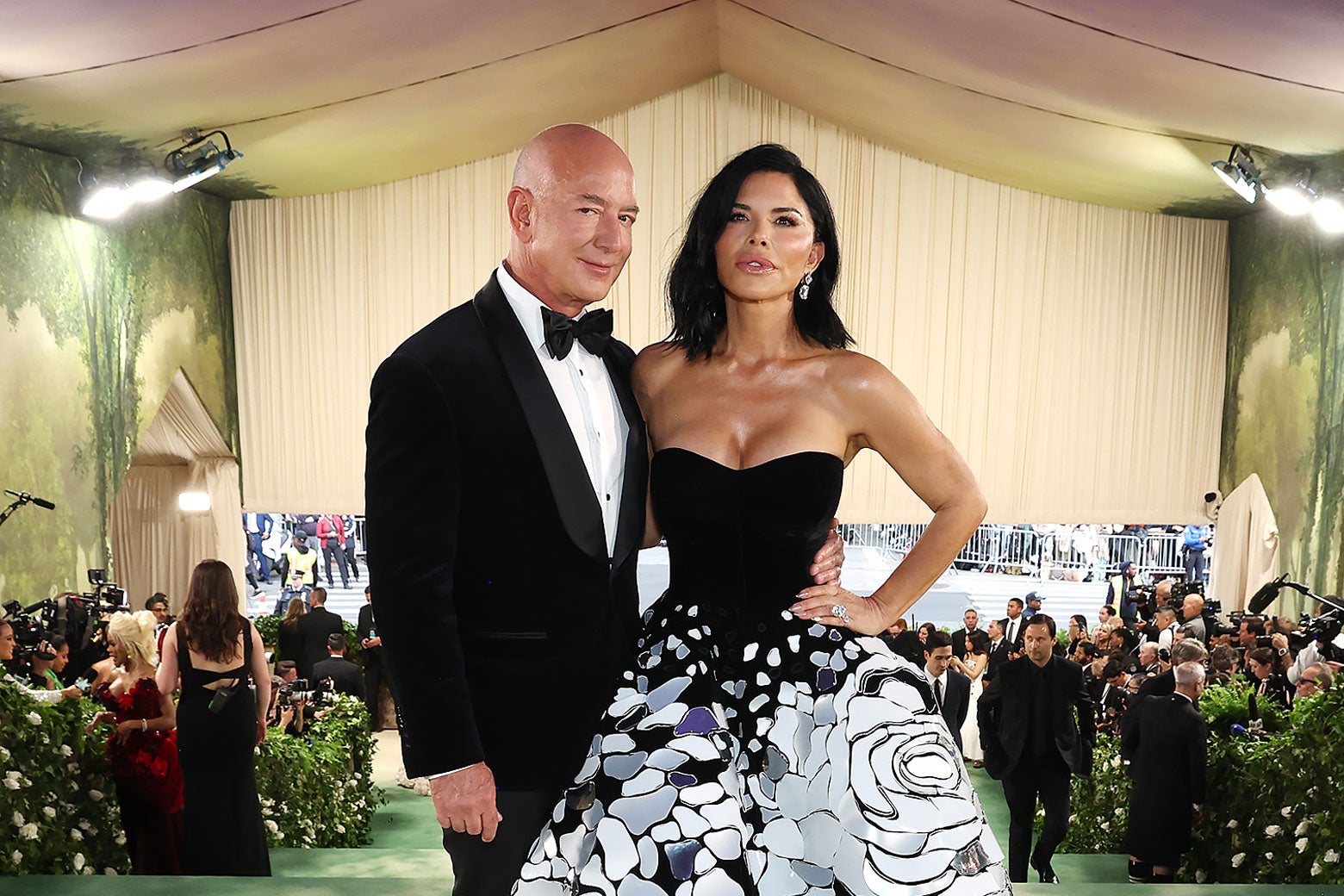
But a cloud of unease hung over yesterday’s event. Jeff Bezos and Lauren Sánchez Bezos were the main funders of the party, earning themselves the title of honorary chairs. In 2026, there is no shortage of material to inspire rage against the Bezos family: the mistreatment of Amazon workers, the coziness with and shameless sucking up to Donald Trump, the ruthless accumulation of billions in a society where tens of millions of people can’t afford to meet their basic needs. As such, in the lead-up to the party, there were whispers that some invitees would boycott the gala in protest.
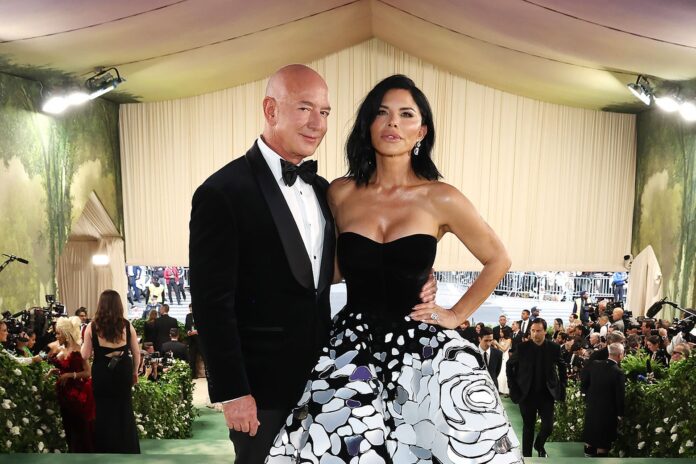
Besides a few notable absences—where was Zendaya?—the rumored exodus didn’t pan out. The beautiful displayed their beauty; the fortunate displayed their fortunes. Sánchez Bezos walked the carpet in custom Schiaparelli alongside event chairs Anna Wintour (who helped Sánchez Bezos choose her wedding dress last year) and Nicole Kidman, solidifying Mrs. Amazon’s position in the upper tiers of American celebrity. The trio formed a tribute to the three reasons why one might score a ticket to the Met Gala: taste, artistic talent, or an obscene degree of wealth.
Historically, gala attendees have exhibited at least two of these qualities; most have enjoyed all three. The guest list has been dominated by fashion A-listers and superstars of the entertainment world, curated with an exclusivity that gave the event an air of meaning. This wasn’t just another charity ball, another way for rich people to luxuriate in finery under the pretense of supporting an arts nonprofit. It was a gathering of artists and muses, a celebration of people who make things that make us feel things.
Not this year. This year, the Met Gala bowed down to tech titans. Executives from OpenAI, Instagram, Snapchat, and Amazon walked the carpet. Mark Zuckerberg attended for the first time. These are people who make things that make us addicted, poor, depressed, starved of real human connection, and alienated from the world around us—in other words, the opposite of art. According to Fortune, this was the first year that a figure from the tech world was the main sponsor and the first gala with tables occupied by multiple tech companies. It seems that money alone is now enough to get you in the door on the first Monday in May. Add a Met Gala invite to the growing list of experiences and positions rich people can nab with enough cash. (Another recent addition is space travel, which Sánchez Bezos bought her way into last spring.)
But even if the guest list had remained the same, the Bezos takeover alone would have permanently marred the reputation of an event that once carried actual cachet. Their prominence at this year’s gala was an insult to fashion. Jeff Bezos is no sartorial icon. Lauren Sánchez Bezos is tackiness personified, with meticulously squinched and inflated facial features and a vendetta against any garment that conceals her gargantuan breasts. The ease with which these two tasteless oligarchs purchased a position of honor at one of fashion’s biggest events, held to benefit one of the world’s finest art institutions, exposes the hollow core of greed at the center of two industries purportedly concerned with creative excellence.
If I’m being honest, my opinion of the Met Gala began to shift a few years before this Bezos moment. In 2021, Rep. Alexandria Ocasio-Cortez—a brilliant political mind who should have known better—made a feeble protest of the event’s excesses by showing up in a gown that read “Tax the rich.” On me and many others, the dress seemed to have the exact opposite of the effect she intended. It was an unseemly spectacle that drew attention to the conspicuous consumption of the 1 percent while Ocasio-Cortez unabashedly enjoyed it for herself.
But that silly outfit made a good point that has only become more relevant in the years since: The thing that has always united Met Gala attendees more closely than any other is not talent, nor taste, nor artistic accomplishment. It’s money.
Money, once you have enough of it, becomes its own raison d’être. Rich people hang out with rich people—it’s something they have in common that trumps everything else two people might have in common. Money erases distinctions of personality and values, such that a fount of empathy as beloved as Oprah might find herself at the Venice nuptials of one of the most callous and detested men in America. It’s why Beyoncé performed for the Qaddafi family and why Jennifer Lopez sang for a dictator in Turkmenistan. Even when people are comfortably wealthy enough to, say, turn down an invite to perform at a cryptocurrency Christmas party because it seems douchey as hell, money can overcome a universe of moral or aesthetic objections. The rich occupy a universe unto themselves.
So why not Bezos at the Met Gala? Why not Zuckerberg? Why not Elon Musk, who has attended the event both with and without a date of artistic merit? In the Trump 2.0 era, the degree to which greed drives American culture is crystal clear. Media and entertainment institutions are being censored, influenced, and bought up by right-wing ideologues; arts, tech, and politics have never felt so intertwined. Let their royalty, the robber barons and the starlets, enjoy the Met Gala together. Maybe one of them will get a show on Amazon Prime.
Get the best of culture
Get the best of movies, TV, books, music, and more.
-
Amazon
-
Celebrities
-
Fashion
-
Jeff Bezos