


Dar es Salaam—More Tanzanians are gaining access to essential oral health services, which is bringing the country closer to its goal of 45% oral health service coverage by 2030 and strengthening Universal Health Coverage (UHC) at the primary care level.
Through a WHO collaborative capacity-building initiative, Tanzania is expanding access to essential dental care, and strengthening the capacity of primary healthcare workers across the country using cost-effective, evidence-based interventions that are proven to reduce disease burden and improve access to care.
Oral diseases affect over 42% of people in the WHO African Region, yet access to oral health services are still limited. The Tanzania National Oral Health Survey 2020 reported 76.5% dental caries prevalence among adults and high levels of periodontal disease, fluorosis, and malocclusion. These challenges highlight the urgent need to scale up prevention, early detection, and minimally invasive treatments nationwide.
To address this gap, Tanzania joined Kenya and Zambia in a multicountry capacity building project led by Japan Institute for Health Security (JIHS) and Niigata University, (both WHO Collaborating Centres), with technical support from WHO AFRO. The initiative promotes the integration of WHO listed essential dental preparations like fluoride toothpaste, varnish, silver diamine fluoride (SDF), and glass ionomer cement (GIC) into primary healthcare systems. These materials are globally recognized as highly effective, affordable interventions for preventing and treating dental caries.
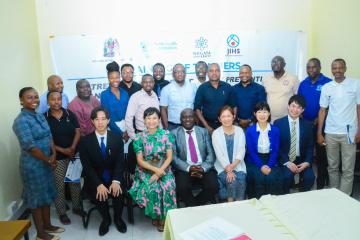
The first phase started with a training mission in Japan, where Tanzanian leaders of oral health and pharmacist received handson training and developed a national action plan. The second phase followed with a Training of Trainers programme held on 19 January 2026, strengthening trainers’ understanding of global and regional oral health strategies, build clinical competencies in application of fluoride varnish, SDF, GIC, and caries diagnosis and develop practical cascade training plans for regional and district rollout.
Speaking on behalf of WHO Country Representative to Tanzania, Dr. Alex Gasasira, the focal person for Non Communicable Diseases Tanzania, Dr. Alphoncina Nanai, commended Tanzania for transforming oral health “from a long neglected area into a national priority,” noting the country’s achievement in making oral health services available in 42% of primary care facilities nationwide. National Progress Bolstered by Public Awareness and Workforce Initiatives.
Tanzania has emerged as an oral health champion in the Region, with services now available in 42 percent of health facilities nationwide, supported by reforms in health financing, workforce development, and service expansion. A National Oral Health Strategic Plan (2026–2031) which will guide longterm investments in prevention, service delivery, essential medicines, and innovative workforce models is being finalised.
The Assistant Director for Oral Health, Dr. Baraka Nzobo emphasized, “Tanzania has undertaken extensive campaigns to increase public awareness of WHO-recommended fluoridated toothpaste (1000 ppm for children under 6 and 1500 ppm for individuals aged 6 and above). Engagements have included: sharing in Regional and district dental officers’ meetings, National NCD commemoration events, Tanzania Dental Association conferences, media campaigns and community outreach. Campaigns were also held during consultations with toothpaste manufacturers and distributors. Additionally, between 2024 and 2025, 549 dental therapists from 183 district hospitals received mentorship on modern, tooth-conserving treatment approaches, especially the use of GIC for managing dental caries.”
The Tanzania–Japan–WHO partnership aligns closely with the WHO Global Oral Health Action Plan (2023–2030) and Africa’s regional strategy to integrate oral health into UHC and NCD programmes. By combining international expertise with national leadership, Tanzania is emerging as a model for scalable, sustainable oral health transformation in the region.
About the Partners
Government of Tanzania (MoH): Leading national health reforms toward Universal Health Coverage.
WHO Tanzania: Providing technical support and coordination.
Japan Institute for Health Security (JIHS): WHO Collaborating Centre for Health Systems Development.
Niigata University (Japan): WHO Collaborating Centre for Translation of Oral Health Science.
WHO Regional Office for Africa (AFRO): Supporting implementation of oral health strategies across the continent.