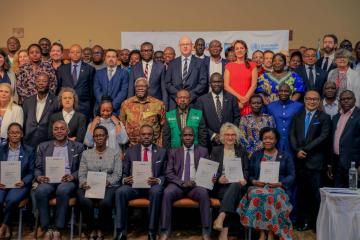
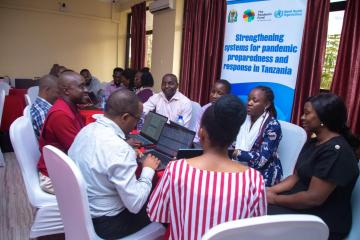
Dodoma—Tanzania has taken a major step toward strengthening its capacity to respond to public health emergencies and disasters through the successful completion of a three-day Emergency Medical Teams (EMT) Awareness Orientation Session. The high-level engagement brought together senior government officials, leaders, technical experts, and partners to advance the establishment of nationally coordinated EMTs in line with World Health Organization (WHO) standards.
Dr. Alex Gasasira, WHO Representative to Tanzania, stated: “The establishment of Emergency Medical Teams is a strategic step toward institutionalizing surge clinical capacity and coordinated emergency response. It strengthens national preparedness, protects vulnerable populations, and supports Tanzania’s progress toward WHO EMT certification.”
The orientation focused on the global EMT initiative, minimum standards, coordination mechanisms, governance structures, and the WHO classification and certification process to ensure the delivery of timely, safe, and quality clinical care during emergencies.
More than 50 participants from the Ministry of Health; the Prime Minister’s Office (PMO); the Prime Minister’s Office – Regional Administration and Local Government (PMO-RALG); the Ministry of Defence; the Police and Fire and Rescue Force (FRF); tertiary health facilities including Muhimbili National Hospital (MNH), Kilimanjaro Christian Medical Centre (KCMC), Benjamin Mkapa Hospital (BMH), and Dodoma Regional Referral Hospital (DRRH); referral hospitals; Zanzibar Ministry of health, Zanzibar Second vice president office — Disaster management commission and partners including UNICEF, AMREF, and CIHEB actively participated. This broad representation reflected the multisectoral approach required for effective emergency preparedness and response.
Speaking during the official meeting opening session, the Chief Medical Officer, Dr. Grace Magembe, emphasized: “Establishing functional Emergency Medical Teams is not only a response to disasters but an investment in resilience. It ensures that Tanzania is prepared to deliver life-saving clinical care whenever and wherever emergencies and disasters occur.”
WHO facilitators guided participants through Tanzania’s EMT roadmap, outlining key next steps toward team development, deployment readiness, and quality assurance, with an emphasis on sustained collaboration and technical support.
Director Makame Makame from the Zanzibar Disaster Management Commission highlighted that: “Working together as the United Republic of Tanzania strengthens national coordination and demonstrates the Government’s commitment to establishing Emergency Medical Teams capable of responding effectively to disasters and public health emergencies.”
He further appreciated WHO’s continued technical support in advancing the EMT agenda.
The orientation, supported by the Pandemic Fund, aligns with Tanzania’s broader efforts to strengthen preparedness for pandemics, disasters, and other public health emergencies. Moving forward, follow-up actions will focus on operationalizing the EMT roadmap, enhancing cross-sector coordination, advancing toward WHO certification, and ensuring sustainable financing for the long-term functionality of national Emergency Medical Teams, while reinforcing compliance with the International Health Regulations (IHR 2005) and overall outbreaks preparedness, readiness and response.