
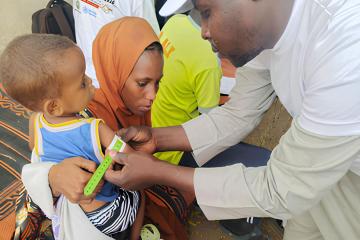


Abuja, Twenty‑seven‑year‑old Godiya Tumba walked several kilometres with her two children to reach a temporary health outreach in Wuro Jabbe, Adamawa State. Neither child had completed routine vaccinations.
“I came because they explained why vaccines matter,” she said. “Nobody had ever told me like this before.”
Her experience reflects a wider reality across Nigeria: science saves lives only when people can access it, understand it, and trust it.
This principle shaped World Health Day 2026, which brought evidence‑based care closer to communities especially those affected by insecurity, misinformation, and limited access to routine services.
Across the country, World Health Day 2026 focused on this principle bringing evidence‑based care closer to communities, especially those affected by insecurity, misinformation, and limited access to routine services.
Bringing national commitments to life
Nigeria continues to face persistent challenges in routine immunization, maternal health, and access to essential services particularly in hard‑to‑reach and insecure areas. Only about one‑third of children aged 12–23 months are fully vaccinated, reflecting slow progress in routine immunization coverage nationwide. Findings from the 2023–24 NDHS also highlight limited access to essential maternal health services, especially for women in rural and fragile settings .
Strengthening primary health care is central to the Health Sector Renewal Investment Initiative and the Primary Health Care Under One Roof policy. World Health Day 2026 translated these national commitments into action across multiple states.
“World Health Day 2026 reminds us that evidence alone is not enough. It must be delivered through systems people trust and services they can reach,” said Dr Pavel Ursu, WHO Representative in Nigeria.
Across participating states, health workers observed earlier care‑seeking, better understanding of health information, and stronger trust in routine services—signs that communities were responding to the renewed focus on accessible, evidence‑based care.
Reaching families where they are: Adamawa
In Namtari and Wuro Jabbe, temporary outreach posts brought essential services directly to families who rarely access routine care. Over the course of the outreach, 34 children received missed routine vaccinations, 174 pregnant women were screened, and 228 children were assessed for malnutrition. These services helped families seek care earlier and avoid preventable complications.
“My son had been coughing for weeks… They checked him and told me what to do. I feel relieved,” said Yusuf Adamu, a father from Namtari.
Young health workers leading conversations: Cross River
In Cross River State, more than 500 nursing students led community walks across Calabar, Itigidi, Ogoja and Obudu, engaging residents on polio, routine immunization, and misinformation. Their outreach strengthened public understanding of key health issues, while also building students’ confidence in communicating evidence clearly and responsibly.
“I want to use what I learn to help my community,” said Ephraim Ephraim Eyo, a nursing student.
Discussions on antimicrobial resistance further equipped these future health workers to address one of Nigeria’s growing health threats.
Trust built through familiar faces: Rivers and Bayelsa
In Rivers State, a 7.5‑kilometre community walk, radio programmes, and flyer distribution helped spread messages on healthy living and disease prevention. Because residents recognized the health workers from previous engagements, more families returned for routine services in the days that followed.
“People welcomed us because they had seen us before. Afterwards, more families came for routine services,” said Blessing Alex, a community health worker
In Bayelsa, Easter Sunday health talks brought faith leaders and health workers together, enabling accurate health information to reach people through voices they trust.
“Faith protects the soul. Science protects the body,” said Pastor Folashayo Aderemi to his Redeem Cristian Church of God (RCCG) congression
Delivering care despite insecurity: Katsina and Borno
In Katsina, insecurity limits access to care. Health teams used surveillance data to identify areas of greatest need and guide outreach, ensuring continuity of essential services even in difficult conditions.
In Borno’s Lumbu settlement, integrated outreach served families affected by displacement and insecurity. Health workers provided 181 outpatient consultations, conducted 143 malaria tests, screened 76 people for tuberculosis, and assessed 38 children for malnutrition. These early detections helped reduce complications and eased pressure on nearby health facilities.
Care that meets urgent needs: Delta State
Across all 25 LGAs in Delta State, health walks promoted disease prevention and early warning systems. During an outreach in Warri South, health workers assisted a woman in labour who safely delivered a healthy baby boy. Wheelchairs provided to people living with diabetes‑related disabilities improved mobility and quality of life for those who had long struggled to access assistive devices.
Strengthening systems across states
- In Plateau, the transition of all 207 federal wards to digital reporting and a unified workplan improved governance and accelerated reporting.
- In Yobe, outreach in Abujan Mai Mala reached 322 people, strengthening community understanding of routine services.
- In Benue, Kano, Anambra, Enugu, Oyo and Kwara, health walks, screenings and media engagement expanded public awareness. In Kano, 11 media houses amplified messages on routine immunization and disease prevention, reaching audiences far beyond the event sites.
WHO’s contribution
WHO supported federal and state authorities through:
- Technical guidance for planning and implementation
- Use of surveillance data to guide outreach
- Strengthening risk communication and community engagement
- Coordination with partners to sustain essential services
“In Nigeria, our commitment is to ensure that policies and interventions are driven by credible data and evidence,” said Dr Iziaq Salako, Minister of State for Health and Social Welfare.
WHD was more than an event
For mothers like Godiya Tumba, World Health Day was more than an event, it was the first time someone explained why vaccines matter. Her children received the doses they had missed, and she now knows where to seek care. Across Nigeria, thousands of families, students, health workers and community leaders experienced similar moments where science met trust, and evidence met action.
Looking ahead
World Health Day 2026 demonstrated how science‑driven national commitments can translate into real improvements when delivered through trusted systems and strong partnerships.
Nigeria’s next steps include:
- Sustaining frontline services in insecure and underserved areas
- Investing in health workers and data systems
- Countering misinformation through trusted community voices
- Strengthening PHC to accelerate progress toward universal health coverage