

Ouagadougou – On World Health Day 2026, under the theme “Together for health. Stand with science,” the World Health Organization (WHO) highlights individuals using science to improve lives in the African Region.
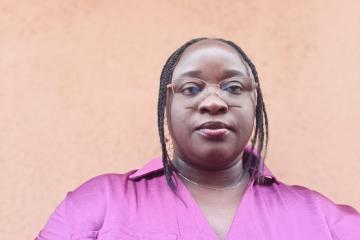
Dr Alice Guingané, a hepato-gastroenterologist and lecturer-researcher at Joseph Ki-Zerbo University in Ouagadougou, is actively engaged in clinical research and disease surveillance. She emphasises that supporting science saves lives.
What role does science play in your daily work?
Science is at the heart of my daily work. As a physician and a lecturer-researcher at a university hospital, my role is threefold: to provide care, to teach, and to conduct research. Science guides how I think, make decisions, and act.
In clinical care, it enables me to analyse symptoms rigorously, distinguish facts from beliefs, and make evidence-based decisions. In teaching, I strive to make scientific knowledge accessible, including through awareness sessions with patients and communities.
In research, I use epidemiological data to identify public health priorities, select effective interventions, and assess their impact in the field. Science also guides my values: respect for human dignity, responsibility, and commitment to the community.
What motivated you to engage in health research?
Above all, the desire to find solutions to patients’ problems. I will never forget a nine-year-old boy who died of liver cancer linked to hepatitis B. Like many others, he arrived at the hospital too late, even though a vaccine exists from birth.
This reality pushed me to understand why pregnant women did not access care in time, and how to improve prevention of mother-to-child transmission of hepatitis B. I oriented all my research around this issue, seeking solutions adapted to our context, training students, and conducting field projects.
Why is it essential that science be supported by society and local authorities?
Society is at the heart of health research: without community participation, even free services may remain underused due to sociocultural barriers.
Local authorities also play a key role in guiding, regulating and financing research. Producing one’s own data means being able to define one’s health priorities. Science enables evidence-based decision-making, reduces mortality, improves quality of life, and drives innovation and national sovereignty.
How does your work contribute to strengthening disease surveillance in Burkina Faso?
I am currently the principal investigator in Burkina Faso for a project on the triple elimination of HIV, syphilis, and mother-to-child transmission of hepatitis B. This integrated approach, supported by WHO, allows resources to be pooled and data to be generated that are directly usable by decision-makers.
I also participate in the HEPSANET network, which aims to strengthen epidemiological data on viral hepatitis in Africa. These initiatives contribute to better surveillance of diseases and their complications, particularly liver cancer.
What is needed to strengthen public trust in science?
Science must be accessible. It is essential to communicate research findings in clear and understandable ways and to create effective channels to reach communities, health professionals, and decision-makers.
Another major challenge is tackling misinformation. In our context, some traditional beliefs may conflict with modern medicine. Encouraging dialogue and the guided integration of different care practices is essential to strengthening trust.
As a woman scientist, what message do you have for young girls?
I would encourage them not to hesitate to pursue research it is a deeply rewarding endeavour. It requires organization and balance with family life, but it is not a sprint—it is a long-term commitment. Believe in your abilities, keep your passion alive, and you will accomplish extraordinary things.