
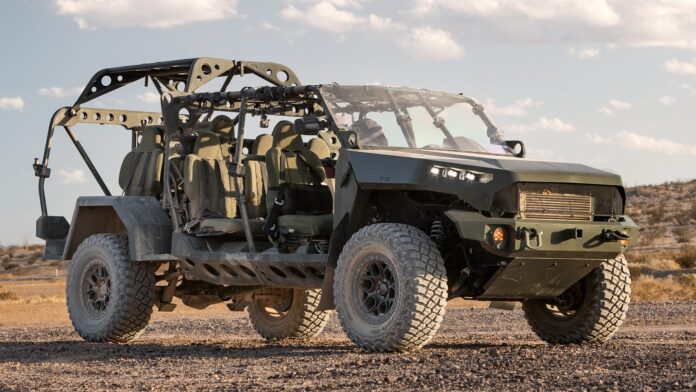


Although automakers such as GM and Ford do supply vehicles and technologies to the U.S. government and military forces, these generally come from separate arms of the businesses that have little to nothing to do with passenger vehicle produciton.
In fact, the Detroit Three, which also includes Chrysler, have only halted automotive production in favor of manufacturing arms, vehicles, and aircraft for the U.S. military one time in history: World War II. Now, according to a report, the Trump administration and Pentagon officials have approached Ford, GM, and other major manufacturers in the U.S. about shifting some civilian production volume toward weapons and other military supplies to supply the conflict in Iran.
According to a report from Reuters, the talks started before the war in Iran, as Defense Secretary Pete Hegseth adopted a more proactive approach to U.S. military actions, including air strikes on alleged drug boats in the Caribbean, the war in Ukraine, and supporting Israel in its war with Palestinians in Gaza. According to the report, these moves have drastically depleted billions of dollars’ worth of weapons potentially needed for the open conflict in Iran.
Among the Detroit automakers, GM has a division dedicated to military vehicle production, GM Defense. But the scope of support the Trump administration and the Pentagon are reviewing goes beyond supplying vehicles and automotive parts to include producing weapons of war typically supplied by defense contractors who specialize in their manufacture.
Wait, Where’s Stellantis?
What’s interesting is the company that owns the name behind perhaps the most famous wartime vehicle, Jeep, is missing from the report. Reuters mentions Ford, GM, Oshkosh, and GE Aerospace, but Stellantis is conspicuous by its absence. This may be due to the fact that Stellantis is headquartered in Europe, has a European CEO, and works closely with countries in the E.U. who have condemned the Iran war, including Italy and its prime minister, Giorgia Meloni.
Reuters was unable to confirm the involvement of Ford and GM. MotorTrend reached out to both companies separately. A GM spokesperson responded with the following: “For more than 100 years, GM has supported America’s security, safety, and those who protect our nation. While that commitment continues, we do not comment on speculation.” Ford has yet to respond.
Should civilian vehicle production be reduced, it could be devastating to the wider auto industry, including suppliers, as deliveries fall. In addition, new and used vehicles will inevitably get even more expensive as vehicle availability tightens. Similar outcomes occurred during the COVID-19 pandemic, and perhaps the only positive versus the shutdowns that occurred in 2020 is that employees will remain working at the plants.
It’s also possible the automakers will simply be unable to meet the timeline requested by the Pentagon. Automotive plants take a lot of money and occasionally months to retool. While swapping Chevy Tahoes for assembling something like GM Defense’s Infantry Squad Vehicle is relatively straightforward, going from SUVs to, say, missiles or heavy artillery is anything but.