
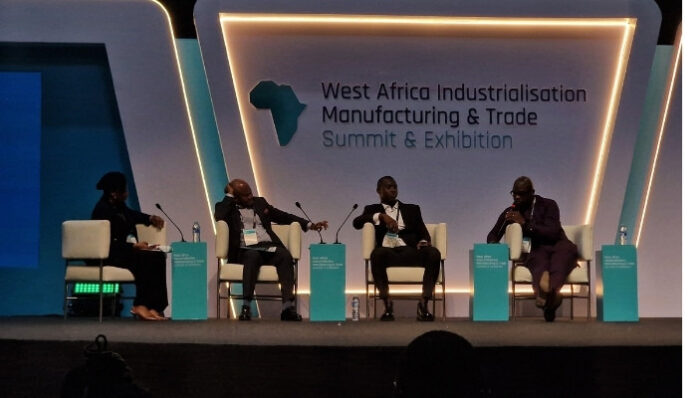


Investors say capital is available for manufacturing and industrial projects in West Africa, but persistent policy uncertainty and structural risks continue to limit how much of that funding reaches businesses.
Discussions at the West Africa Industrialisation, Manufacturing and Trade forum on Tuesday exposed a consensus among financiers that the region’s industrial financing gap is driven less by a lack of money and more by the risks associated with investing.
Fabrice Mpollo, senior investment manager at Norfund, said governance and policy clarity remain the most important factors shaping investment decisions in manufacturing across the region.
“The reality of the failures of infrastructure projects is because of the laws in these regions compared to Asia and Latin America,” Mpollo said. “The risk is there but it depends how we ascertain it. In our view as an investor in manufacturing, governance is key. We forget about financial engineering and others. Governance makes it work.”
Read also: Nigeria’s packaging boom lures foreign machine manufacturers
He noted that predictable policy environments in other regions have helped attract long-term industrial investment, while uncertainty in West Africa raises costs and discourages investors.
“In prospering economies, governance and discipline is settled. We need to be certain about the environment we operate in,” he said.
According to Mpollo, operational challenges such as port congestion and logistics delays create additional risks for manufacturers, often leading to significant financial losses that investors must factor into their decisions.
He cited the example of manufacturers facing unexpected costs due to supply chain disruptions, noting that companies are often forced to absorb these losses without government support.
“When there is port congestion, companies don’t have protection they have to pay the rent. They go back to the shareholders and say it cost us two million dollars last year. This money should go into other things,” he said.
He stressed that policy clarity is critical for investors trying to assess risk exposure.
“Clarity is important. If I get port congestion, will I get cushion from the government or not?” Mpollo said.
As a result of these uncertainties, investors typically demand higher returns to compensate for the risks of operating in the region.
“Capital requires higher returns,” he said. “There is money around but it doesn’t find its way here.”
Despite these challenges, Mpollo said Norfund remains committed to expanding its industrial investments in Nigeria, citing the country’s large market and long-term growth potential.
“We are doubling down on Nigeria. We are committed to take risk we understand it,” he said. “Nigeria is a big market. We want to do more industrial and doubling down on family business and help them grow.”
Other Financiers at the forum pointed out structural gaps in the types of funding available to manufacturers, noting that concessional and blended finance structures are often directed toward infrastructure projects rather than industrial firms.
Ufuoma Adasen, vice president for heavy industries, telecoms and technology at Africa Finance Corporation, said long-term concessional financing tends to favour infrastructure projects, leaving manufacturers more dependent on commercial financing.
“Equity, debt, as good as it is, it’s more targeted for long-term infrastructure projects,” Adasen said.
Read also: World Bank data shows Nigerian SMEs could grow twice as fast with equity, but few can access it
He noted that even when financing structures are available, projects must compete in a challenging market environment where imports often have a cost advantage.
“The way the world is, you’re literally always competing with imports,” she said. “While you might have projects that are not competitive and you’re a first-time sponsor without clout, you will struggle.”
Adasen added that many projects fail to attract financing because they are not considered bankable, a challenge that increases the time required to close deals and raises overall project risk.
“Because we realise the time to finance projects in the continent is long, we don’t have bankable projects,” she said.
To address these challenges, the Africa Finance Corporation has explored blended finance structures and credit enhancement mechanisms aimed at attracting institutional investors into African projects. However, she noted that financial innovation alone cannot solve the problem without broader policy support.
“Even if you have all the blended finance you need everything to work together and a lot of it has to come from the government side as well,” Adasen said. “Policy consistency, the overall economic environment has to work in tandem.”
Access to working capital in local currency also emerged as a key concern for manufacturers, particularly small and medium-sized enterprises that depend on short-term financing for day-to-day operations.
Industry participants said improving access to affordable local financing could help unlock investment and support industrial growth across the region.
Emerging financing trends such as climate funding are also beginning to influence manufacturing investment decisions, although access remains limited.
Investors are increasingly encouraging manufacturers to adopt renewable energy solutions and improve environmental compliance, but many companies still struggle to securManufacturing in west africae green financing.
Bethel Olujobi
Bethel Olujobi reports on trade and maritime business for BusinessDay with prior experience reporting on migration, labour, and tech. He holds a Bachelor’s degree in Mass Communication from the University of Jos, and is certified by the FT, Reuters and Google. Drawing from his experience working with other respected news providers, he presents a nuanced and informed perspective on the complexities of critical matters. He is based in Lagos, Nigeria and occasionally commutes to Abuja.
