
Wednesday, January 14, 2026

Select a plan

Support Independent African Journalism – Become a Donor Member

Monthly plan

$
10
$
0
billed monthly

Yearly plan

$
$
0
billed yearly

As a supporter, you’ll get:

  • Priority Support
  • Unlimited Access
  • Exclusive Content
  • Stay Informed
  • Member Perks
  • Subscriber Benefits
  • Recognition
  • Member Shout-Outs
  • Exclusive Deals & Offers

Search for an article

HomeWorld NewsMarine carbon removal gains momentum with launch of new coalition

Marine carbon removal gains momentum with launch of new coalition

Published on

Home Green Marine Marine carbon removal gains momentum with launch of new coalition

August 22, 2025,
by

Sara Kosmajac

A new coalition uniting private companies, non-profit organizations and academic institutions to support the “responsible” growth of marine carbon dioxide removal (mCDR) has officially been launched.

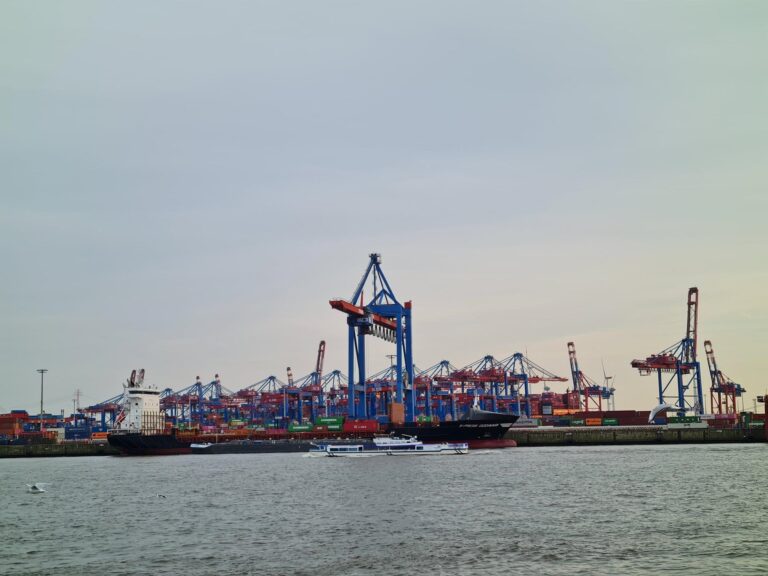
Illustration only. Photo by Navingo

As disclosed, the Marine Carbon Dioxide Removal Coalition (mCDR Coalition), launched on August 21, will seek to inform and push forward research, support evidence-based policy engagements, and build relationships between science, conservation, and governance stakeholders.

The launch is described as representing “the first dedicated forum of its kind for mCDR”. The coalition is reportedly co-chaired by the Carbon Business Council (CO2BC), which encompasses more than 100 carbon management companies, and the World Ocean Council (WOC), which brings together shipping and energy players, among others, with the aim of fostering a sustainable blue economy.

As noted, other active members of the mCDR Coalition are Banyu Carbon, Captura, Capture6, Ebb Carbon, Equatic, Isometric, Limenet, Planetary, Puro.earth, SeaO2, Vesta, and Vycarb. Moreover, initial observers are said to include Carbon180, Carbon Removal Canada, Cascade Climate, [C]Worthy, Institute for Responsible Carbon Removal at American University, and Ocean Visions.

According to the initiative’s representatives, the coalition—the members of which have been meeting for nearly two years to “align on shared challenges and opportunities” for the mCDR field—is to provide a platform for knowledge sharing and collaboration on marine carbon dioxide removal across several pathways.

In this sense, the formal launch is hoped to further interest in the endeavor and, as a result, inspire additional organizations to join.

“Net zero is now regarded as impossible without carbon removal. Covering 71% of the Earth’s surface, the ocean offers the scale and potential needed to achieve climate goals. The mCDR Coalition is working to responsibly advance this emerging and vital maritime sector while raising its profile globally,” Jill Storey, Marine CDR Advisor to the World Ocean Council, highlighted.

The maritime transport industry has begun exploring marine carbon dioxide removal as a potential tool to complement hard-to-abate decarbonization efforts, though uncertainties surrounding regulation, permanence, and costs mean its role remains firmly in the experimental stage.

The International Maritime Organization’s (IMO) member states have already committed to bringing shipping’s greenhouse gas emissions to net zero by or around 2050.

Simultaneously, the European Union’s FuelEU Maritime regulation and the extension of the EU Emissions Trading System (ETS) to shipping are expected to soon tighten compliance obligations for carriers.

Both frameworks, however, only count direct emissions reductions; mCDR efforts do not qualify. Despite this, Norway-based classification society DNV predicts that the carbon dioxide removal (CDR) sphere, specifically, could help capture 330 MtCO2 in 2050, equating to one quarter of total captured emissions.

Furthermore, several initiatives point to a potentially growing interest in linking ocean-based carbon removal with the shipping industry. For example, in 2023, Singapore’s Maritime and Port Authority (MPA) partnered with U.S.-based startup Equatic to test an electrochemical process that strips CO2 from seawater and enhances natural uptake from the atmosphere.

In addition to this, in November 2024, the U.S. White House and the National Oceanic and Atmospheric Administration (NOAA) released a national strategy for mCDR research, laying out a roadmap for how research could be “safely and effectively” accelerated, and helping determine if emerging approaches are viable climate solutions.

Latest articles

No power, no phone, no radio: why comms dropped out during the central Victorian fires

Australia has entered an era of climate instability, where communications during bushfires and extreme weather must perform under increasingly severe conditions. Digital services such as the VicEmergency app and mobile fire alerts have become central to how people receive bushfire warnings. They work well in everyday conditions, but rely on mobile phone coverage and household

This TikTok star sharing Australian animal stories doesn’t exist – it’s AI Blakface

The self-described “Bush Legend” on TikTok, Facebook and Instagram is growing in popularity. These short and sharp videos feature an Aboriginal man – sometimes painted up in ochre, other times in an all khaki outfit – as he introduces different native animals and facts about them. These videos are paired with miscellaneous yidaki (didgeridoo) tunes

Prioritising protein? What the new US dietary guidelines get right – and wrong – according to 2 nutrition experts

Last week, United States health secretary Robert F. Kennedy Jr released the government’s revamped dietary guidelines for 2025 to 2030. These recommendations on healthy eating are updated every five years and help shape food policy and education for millions of Americans. Under the slogan “eat real food”, the new guidelines recommend people “prioritise protein at

Trump wants to cap credit card interest to 10% for a year. Should Australia consider it?

US President Donald Trump has called for a one year cap on credit card interest rate charges at 10% – around half of the average current US rate – starting from January 20. Vanderbilt University analysis from September last year found there were “astronomical profit margins in the [US] credit card market”. It concluded a

More like this

No power, no phone, no radio: why comms dropped out during the central Victorian fires

Australia has entered an era of climate instability, where communications during bushfires and extreme weather must perform under increasingly severe conditions. Digital services such as the VicEmergency app and mobile fire alerts have become central to how people receive bushfire warnings. They work well in everyday conditions, but rely on mobile phone coverage and household

This TikTok star sharing Australian animal stories doesn’t exist – it’s AI Blakface

The self-described “Bush Legend” on TikTok, Facebook and Instagram is growing in popularity. These short and sharp videos feature an Aboriginal man – sometimes painted up in ochre, other times in an all khaki outfit – as he introduces different native animals and facts about them. These videos are paired with miscellaneous yidaki (didgeridoo) tunes

Prioritising protein? What the new US dietary guidelines get right – and wrong – according to 2 nutrition experts

Last week, United States health secretary Robert F. Kennedy Jr released the government’s revamped dietary guidelines for 2025 to 2030. These recommendations on healthy eating are updated every five years and help shape food policy and education for millions of Americans. Under the slogan “eat real food”, the new guidelines recommend people “prioritise protein at
Exit mobile version
Share via
Send this to a friend