


Get the Popular Science daily newsletter💡
Breakthroughs, discoveries, and DIY tips sent every weekday.
What came first, the potato or the tomato? A new genetics study says the answer is that juicy, fragrant tomatoes were the first to arrive on planet Earth, and eventually helped starchy spuds do the same.
About 9 million years ago, a natural inbreeding in the wild between tomato plants and a potato-like plant species in present-day South America gave way to what we know as the potato. This new (and nutritious) plant arose from an evolutionary event that triggered the formation of the tuber–the underground structure that plants like potatoes, yams, and taros use to store food. The findings are detailed in a study published July 31 in the journal Cell.
“Our findings show how a hybridization event between species can spark the evolution of new traits, allowing even more species to emerge,” Sanwen Huang, a study co-author and agricultural genomicist at the Chinese Academy of Agricultural Sciences, said in a statement. “We’ve finally solved the mystery of where potatoes came from.”
A puzzling plant
Potatoes are one of humanity’s most important crops. Spuds provide basic nutrients including carbohydrates, dietary fiber (found in their skin), and vitamins and minerals like potassium, magnesium, and iron. They are also considered a climate-friendly crop by the United Nations, due to their low greenhouse gas emissions compared to other crops. They can also grow in areas where some natural resources are limited and expensive. Potatoes are versatile and can grow in a wide variety of conditions, making them a good crop choice for several regions.
Despite being such a staple crop, the origin of this starchy staple has puzzled scientists. Modern potato plants physically look almost identical to three potato-like species from Chile called Etuberosums. However, Etuberosums do not have the signature tubers that allow potatoes to store nutrients and easily reproduce. This is part of why Etuberosums are considered “potato-like” and not full spuds. Phylogenetic analysis also shows that potato plants are actually more closely related to tomatoes than Etuberosums.
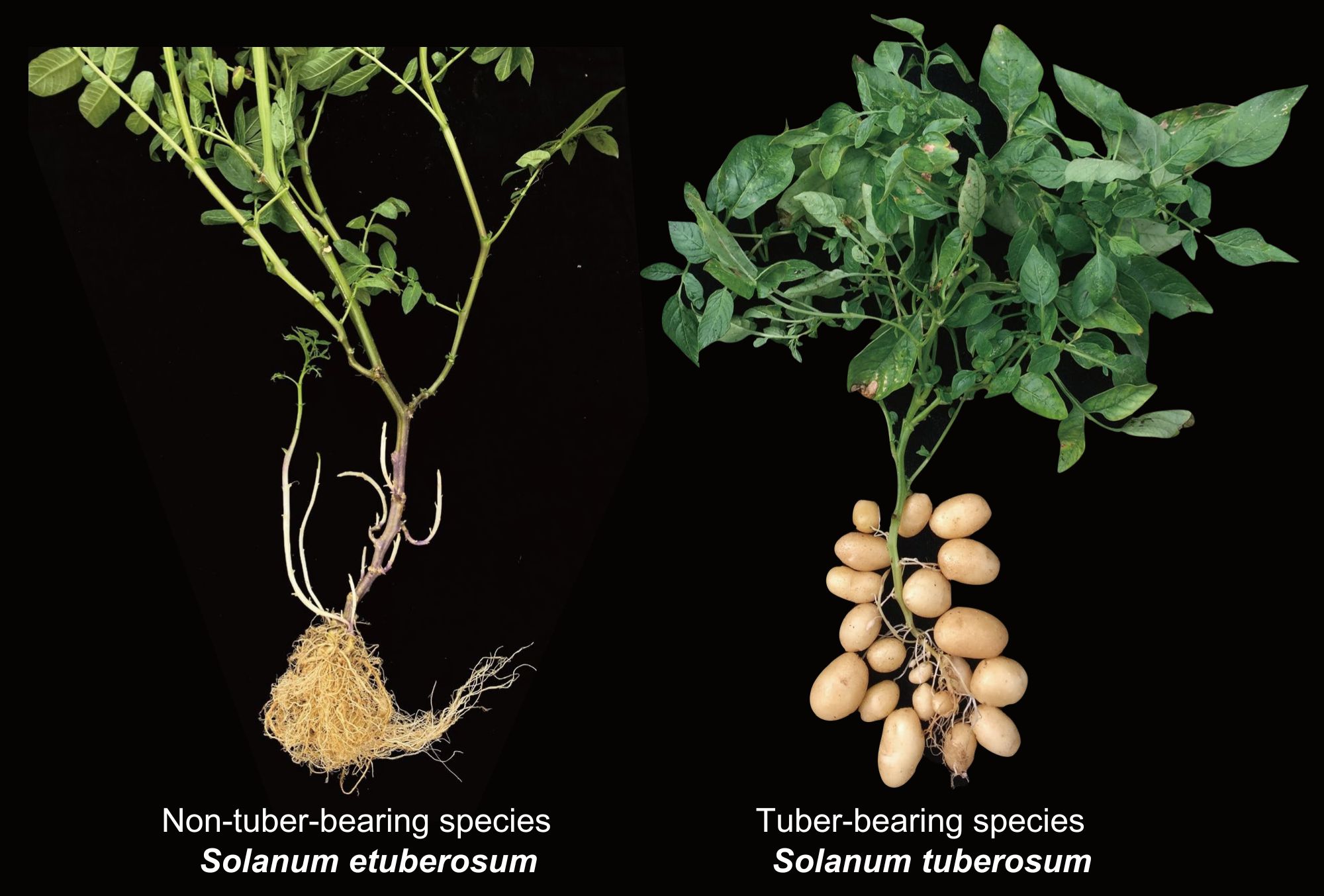
To look closer, the research team from this new paper studied 450 genomes from cultivated potatoes common on farms and 56 wild potato species.
“Wild potatoes are very difficult to sample, so this dataset represents the most comprehensive collection of wild potato genomic data ever analyzed,” added Zhiyang Zhang, a study co-author and biologist at the Agricultural Genomics Institute at Shenzhen, part of the Chinese Academy of Agricultural Sciences.
Every potato species contained a mix of genetic material from both Etuberosum and tomato plants. According to the team, this suggests that modern potatoes originated from a hybridization event–when individuals from two different species successfully reproduce–between these plants millions of years ago. While Etuberosums and tomatoes are distinct species, they do share a common ancestor that lived about 14 million years ago. Even after diverging for about 5 million years, both could interbreed. This interbreeding is what gave rise to the earliest potato plants with tubers roughly 9 million years ago.
[ Related: Scientists finally figured out why tomatoes don’t kill you. ]
A model of survival
The researchers also traced the origins of the key tuber-forming genes within the potato. The gene that tells the plant when to start making tubers (called SP6A) came from the tomato side of the family and not the potato-like plants. A separate important gene which helps control growth of the underground stems that form tubers (called IT1) came from the Etuberosum side. Without either of these genetic pieces, it would be impossible for the resulting hybrid offspring to produce tubers.
Additionally, this evolutionary innovation overlapped with the rapid uplift of the Andes mountains. New ecological environments were emerging with all of this upheaval. Early potatoes were able to respond with a tuber that stores nutrients underground–a very helpful trait for surviving harsh mountain weather conditions. Tubers also allow potato plants to reproduce without pollination or seeds. Buds sprout right from the tuber to grow new plants, so this trait helped potatoes rapidly spread. They eventually filled diverse ecological niches from the mild lower-lying grasslands up to high and cold meadows in Central and South America.
“Evolving a tuber gave potatoes a huge advantage in harsh environments, fueling an explosion of new species and contributing to the rich diversity of potatoes we see and rely on today,” Huang said.

More deals, reviews, and buying guides
The PopSci team has tested hundreds of products and spent thousands of hours trying to find the best gear and gadgets you can buy.