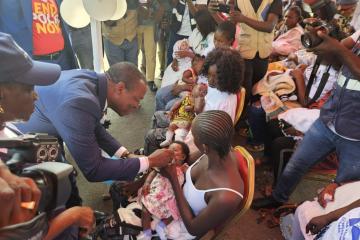
Angola and the Democratic Republic of the Congo have taken a decisive step in the fight against polio with the launch of a synchronized vaccination campaign on the Luvu border, as part of a coordinated response to a public health problem that continues to threaten thousands of children in the region.
The initiative, which marks the second phase of Angola’s national vaccination campaign, running from 22 to 24 May 2026, focuses on an approach to immediately halt the virus’s circulation and achieve high immunization rates, particularly in areas of high population mobility.
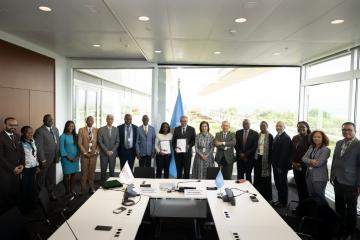
Synchronizing campaigns across the two countries addresses the reality of communities that cross the border daily, thereby facilitating the virus’s spread. “Viruses know no borders and, therefore, the response must also transcend borders, based on solidarity, cooperation and shared responsibility between sister nations,” stated the Secretary of State for Health for the Hospital Sector, Dr Leonardo Europeu, during the campaign launch.
The epidemiological context underscores the urgency of a joint and coordinated response. Angola continues to report circulation of type 2 poliovirus, with multiple detections since 2024, due to gaps in vaccination coverage and insufficient immunity in some communities. A single case is enough to put all children at risk, health authorities warn.
To address this situation, the country plans to vaccinate around 8.5 million children under the age of five, mobilizing more than 14,000 vaccination teams and 50,000 professionals and volunteers nationwide. The strategy includes door-to-door vaccination, catch-up campaigns, and a special focus on hard-to-reach areas and border regions.
On the ground, the campaign goes beyond the technical aspects. Strong community mobilization, involving traditional leaders, religious organizations, and international partners, has been essential to building confidence in vaccines and ensuring families’ participation.
Polio remains a highly contagious and debilitating disease, capable of causing permanent paralysis. However, it is entirely preventable through vaccination, making each dose administered a concrete step toward protecting children.
During the event, the World Health Organization (WHO) Representative in Angola, Dr. Indrajit Hazarika, emphasized the campaign’s symbolic and strategic importance. “This joint launch with the Democratic Republic of the Congo is much more than a symbolic act. It represents shared responsibility, collective commitment, and the determination to eradicate a disease that continues to threaten the future of our children,” he said. He added that “vaccination is not just a public health intervention; it is a fundamental right of the child and a collective responsibility.”
Although Africa was declared free of wild poliovirus in 2020, the persistence of variants derived from the virus shows that the challenge is far from over. Against this backdrop, the Global Polio Eradication Initiative (GPEI), which includes the World Health Organization, has been emphasizing the need for a comprehensive and sustained response.
Priorities include increasing vaccination coverage, reducing the number of unvaccinated children, and strengthening epidemiological surveillance, including the early detection of cases of acute flaccid paralysis. It is also essential to improve sanitation and hygiene to curb the virus’s transmission. At the same time, ongoing cross-border coordination remains a critical element in achieving the ultimate goal: the global eradication of polio.