

Wednesday, January 14, 2026
HomeWorld NewsGreat white sharks spending more time off New England...

Great white sharks spending more time off New England…

Published on

spot_img


/ CBS/AP

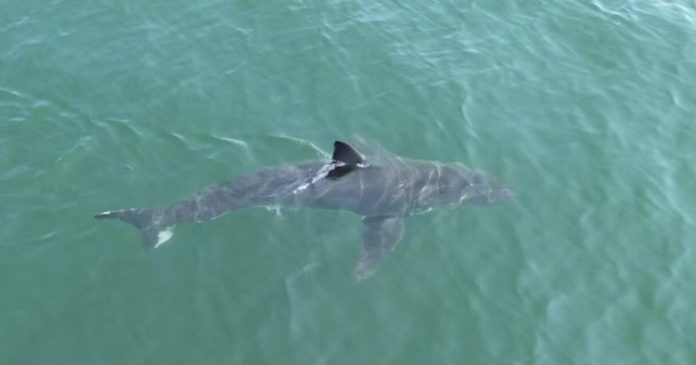
Great white shark spotted near Maine beaches

Large great white shark spotted near Maine beaches

00:22

New data shows that great white sharks are spending more time in the chilly waters off New England and Canada’s Atlantic coast.

That means boaters, beachgoers and fishermen who spend time in the northern waters are learning to live with the predators made famous by the movie “Jaws” 50 years ago. Sightings of the sharks are up in places like Maine, where they were once very rarely spotted.

Scientists link the white shark sightings to increased availability of the seals the sharks feast on, and say beachgoers are generally very safe from shark bites.

Here’s a breakdown by the numbers.

Maine

The Maine Department of Marine Resources has been monitoring great white shark activity in the Gulf of Maine since 2020. The department has said it intends to use the data to better understand white shark distribution off the state’s coast. 

According to a report published by the department last year, 93 white sharks had been detected in Maine’s waters between the start of the monitoring period. Nineteen unique white sharks were recorded in 2024 alone, on 47 different dates, the department reported.

Earlier this month, drone video showed a great white shark lurking near some of Maine’s most popular beaches, prompting police to issue a warning in one coastal town where a woman died in a shark attack.

In addition to the great white shark, at least seven other shark species live in Maine’s waters. They are the basking shark, porbeagle, blue shark, sand tiger shark, common thresher, shortfin mako and spiny dogfish.

Most of these sharks pose a very minimal threat to humans, and some are harmless. Maine has confirmed only two unprovoked shark attacks since 1837, with the most recent one occurring in 2020.

Great Whites Going North

The beach attracts a large crowd not far from recent sightings of white sharks, Wednesday, Aug. 13, 2025, in Scarborough, Maine.

Robert F. Bukaty / AP


Nova Scotia

The number of white sharks detected off Halifax, Nova Scotia, increased about 2.5 times from 2018 to 2022, according to a paper published in May in the journal Marine Ecology Progress Series. 

Even farther north, the number detected in the Cabot Strait that separates Nova Scotia and Newfoundland increased nearly four times over, the paper said.

Attacks remain rare

Maine’s first recorded fatal shark attack happened in 2020, when a great white shark killed 63-year-old Julie Dimperio Holowach off Bailey Island.

But shark experts describe fatal shark bites as exceedingly rare, in Maine and everywhere else.

The International Shark Attack File at the Florida Museum of Natural History keeps a record of documented shark attacks. While the great white shark holds the record for most documented attacks on humans, the totals are still very low.

The white shark has been the source of 351 documented unprovoked shark attacks, and 59 of those have been fatal, the International Shark Attack File has reported. The Shark Attack File noted in its latest annual report that an uptick in deadly attacks on humans by white sharks, observed in 2023, did not continue into 2024.

  • Nova Scotia
  • Shark
  • Science
  • Maine
  • Canada

Latest articles

No power, no phone, no radio: why comms dropped out during the central Victorian fires

Australia has entered an era of climate instability, where communications during bushfires and extreme weather must perform under increasingly severe conditions. Digital services such as the VicEmergency app and mobile fire alerts have become central to how people receive bushfire warnings. They work well in everyday conditions, but rely on mobile phone coverage and household

This TikTok star sharing Australian animal stories doesn’t exist – it’s AI Blakface

The self-described “Bush Legend” on TikTok, Facebook and Instagram is growing in popularity. These short and sharp videos feature an Aboriginal man – sometimes painted up in ochre, other times in an all khaki outfit – as he introduces different native animals and facts about them. These videos are paired with miscellaneous yidaki (didgeridoo) tunes

Prioritising protein? What the new US dietary guidelines get right – and wrong – according to 2 nutrition experts

Last week, United States health secretary Robert F. Kennedy Jr released the government’s revamped dietary guidelines for 2025 to 2030. These recommendations on healthy eating are updated every five years and help shape food policy and education for millions of Americans. Under the slogan “eat real food”, the new guidelines recommend people “prioritise protein at

Trump wants to cap credit card interest to 10% for a year. Should Australia consider it?

US President Donald Trump has called for a one year cap on credit card interest rate charges at 10% – around half of the average current US rate – starting from January 20. Vanderbilt University analysis from September last year found there were “astronomical profit margins in the [US] credit card market”. It concluded a

More like this

No power, no phone, no radio: why comms dropped out during the central Victorian fires

Australia has entered an era of climate instability, where communications during bushfires and extreme weather must perform under increasingly severe conditions. Digital services such as the VicEmergency app and mobile fire alerts have become central to how people receive bushfire warnings. They work well in everyday conditions, but rely on mobile phone coverage and household

This TikTok star sharing Australian animal stories doesn’t exist – it’s AI Blakface

The self-described “Bush Legend” on TikTok, Facebook and Instagram is growing in popularity. These short and sharp videos feature an Aboriginal man – sometimes painted up in ochre, other times in an all khaki outfit – as he introduces different native animals and facts about them. These videos are paired with miscellaneous yidaki (didgeridoo) tunes

Prioritising protein? What the new US dietary guidelines get right – and wrong – according to 2 nutrition experts

Last week, United States health secretary Robert F. Kennedy Jr released the government’s revamped dietary guidelines for 2025 to 2030. These recommendations on healthy eating are updated every five years and help shape food policy and education for millions of Americans. Under the slogan “eat real food”, the new guidelines recommend people “prioritise protein at
Share via
Send this to a friend