

HomeBusinessEgbetokun’s Removal as IGP: Fresh Claims Surface Over Allocations, Promotions and Disu

Egbetokun’s Removal as IGP: Fresh Claims Surface Over Allocations, Promotions and Disu

Published on

spot_img

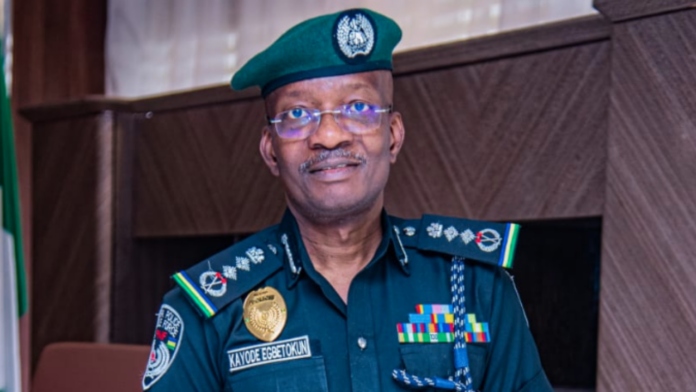
Fresh details have emerged over the circumstances surrounding the exit of former Inspector-General of Police, Kayode Egbetokun, with reports pointing to a mix of operational lapses, internal disagreements and concerns within the Presidency over the handling of security and police administration. 

Officially, the Presidency said Egbetokun resigned for “pressing family considerations,” while confirming that President Bola Tinubu appointed Tunji Disu as acting IGP.

According to reports, one of the major issues linked to Egbetokun’s departure was the alleged failure to release monthly allocations to some state police commands for as long as six to seven months. 

Those funds were meant to cover operations, logistics and administration. Sources said the development weakened the ability of affected commands to respond effectively to rising insecurity in several states, at a time when the Presidency was already worried about kidnappings, killings and attacks in parts of the country.

Another matter said to have strained relations involved the treatment of Tunji Disu before his appointment as acting police chief. 

Reports claimed Disu had been removed from the Special Protection Unit after carrying out the withdrawal of police personnel from VIPs, a policy that reportedly had backing from the Presidency. The move was said to have angered top officials, especially after Disu was allegedly redeployed again despite instructions to return to the SPU.

There were also allegations that Egbetokun’s tenure was affected by controversy over special promotions within the force. Some officers were reportedly elevated without meeting the usual requirements relating to exams, qualification or length of service, raising concerns about fairness, morale and discipline in the police hierarchy. Critics said the practice created resentment among officers who believed promotion standards were being unevenly applied.

At the same time, attention has shifted to the leadership transition under Acting IGP Tunji Disu. Reports say several senior officers, including some believed to be higher-ranking or more senior, are now seeking to remain in service under the new arrangement. That has added another layer of internal pressure as the force adjusts to the change in leadership.

Disu’s appointment was confirmed by the Presidency last week, and the Police Council has now formally confirmed him as Inspector-General in line with the Police Act process. He took over at a time of heightened public concern over national security and growing calls for stronger, more effective policing.

Taken together, the developments suggest that Egbetokun’s exit was shaped by more than one issue. While the official explanation remained personal, reports from within the system paint a broader picture of security pressure, administrative controversy and internal disagreements that may have hastened the leadership change at the top of the Nigeria Police Force.

Latest articles

Asia markets set to open higher amid renewed Iran-U.S. tensions

Currency dealers monitor exchange rates as an electronic screen (top) shows South Korea's benchmark stock index (KOSPI) in a foreign exchange dealing room at the Hana Bank headquarters in Seoul on March 13, 2026. Jung Yeon-je | Afp | Getty Images Asia-Pacific markets were mixed Monday, as investors continue to keep a cautious eye on

Oil prices jump after Iran and U.S. attack commercial ships as tensions escalate over Strait of Hormuz

A picture taken on March 12, 2017, shows a view of an oil facility in the Khark Island, on the shore of the Gulf. Atta Kenare | Afp | Getty Images Crude oil prices surged Sunday, as the U.S. and Iran teetered on the brink of a renewed war after attacks on commercial ships in

Here are things going right for stocks despite new Iran war setbacks

Subscribe to CNBC PRO Subscribe to Investing Club Licensing & Reprints CNBC Councils Select Personal Finance Join the CNBC Panel Closed Captioning Digital Products News Releases Internships Corrections About CNBC Site Map Podcasts Careers Help Contact News Tips Got a confidential news tip? We want to hear from you.Get In Touch CNBC Newsletters Sign up

U.S. struck, seized Iranian-flagged ship Touska in Gulf of Oman, Trump says

U.S. President Donald Trump speaks to the media, before boarding Air Force One on his way to Virginia, at Joint Base Andrews in Maryland, U.S., April 10, 2026. Evelyn Hockstein | Reuters A U.S Navy guided missile destroyer fired on and disabled an Iranian-flagged cargo ship in the Gulf of Oman before Marines boarded and

More like this

Asia markets set to open higher amid renewed Iran-U.S. tensions

Currency dealers monitor exchange rates as an electronic screen (top) shows South Korea's benchmark stock index (KOSPI) in a foreign exchange dealing room at the Hana Bank headquarters in Seoul on March 13, 2026. Jung Yeon-je | Afp | Getty Images Asia-Pacific markets were mixed Monday, as investors continue to keep a cautious eye on

Oil prices jump after Iran and U.S. attack commercial ships as tensions escalate over Strait of Hormuz

A picture taken on March 12, 2017, shows a view of an oil facility in the Khark Island, on the shore of the Gulf. Atta Kenare | Afp | Getty Images Crude oil prices surged Sunday, as the U.S. and Iran teetered on the brink of a renewed war after attacks on commercial ships in

Here are things going right for stocks despite new Iran war setbacks

Subscribe to CNBC PRO Subscribe to Investing Club Licensing & Reprints CNBC Councils Select Personal Finance Join the CNBC Panel Closed Captioning Digital Products News Releases Internships Corrections About CNBC Site Map Podcasts Careers Help Contact News Tips Got a confidential news tip? We want to hear from you.Get In Touch CNBC Newsletters Sign up