


- This week in Nairobi, yet another report on the planet’s decline was released, at the seventh United Nations Environment Assembly (UNEA-7), amid dire alarms on everything from wetlands to pollution and climate disinformation.
- Yet cost-effective solutions exist, and leaders called for multilateral approaches that move toward a more circular economy.
- Grassroots leaders say they find hope in real-world examples of restoration and reform efforts led by community groups and in the growing evidence that, even in a destabilized world, communities, institutions and governments are laying the foundations of a livable future.
Another major scientific warning about the planet’s accelerating decline landed this week, and once again, the numbers are sobering. Released at the U.N. Environment Assembly in Nairobi, the seventh Global Environment Outlook (GEO-7) depicts a world facing intensifying climate shocks, rapid biodiversity loss, expanding land degradation and pollution levels now responsible for 9 million premature deaths each year. It adds to a growing chorus of assessments urging faster, deeper action to avoid crossing catastrophic environmental tipping points.
The report arrives in a moment crowded with dire alarms: studies on wetlands, emissions, tipping points, chemical pollution and collapsing biodiversity; UNEP’s Adaptation Gap Report showing adaptation finance falling as climate impacts deepen; and new research warning that climate misinformation is turning a global crisis into a governance breakdown. Combined with greenwashing and political hostility toward science in many countries, finding hope can sometimes feel like an uphill task.
And yet GEO-7 does contain it. It shows that even as the planet edges toward danger, pockets of progress are emerging — from shifts in energy and food systems to restoration efforts and rising momentum for circular economies.
“The environment is changing — not just climate change, but loss of biodiversity, pollution, land degradation. So, all of these issues are getting worse,” Robert Watson, a co-chair of GEO-7 and former chair of the IPCC, told Mongabay in Nairobi. These crises, he said, are inseparable: “They are all interconnected and must be addressed together.”
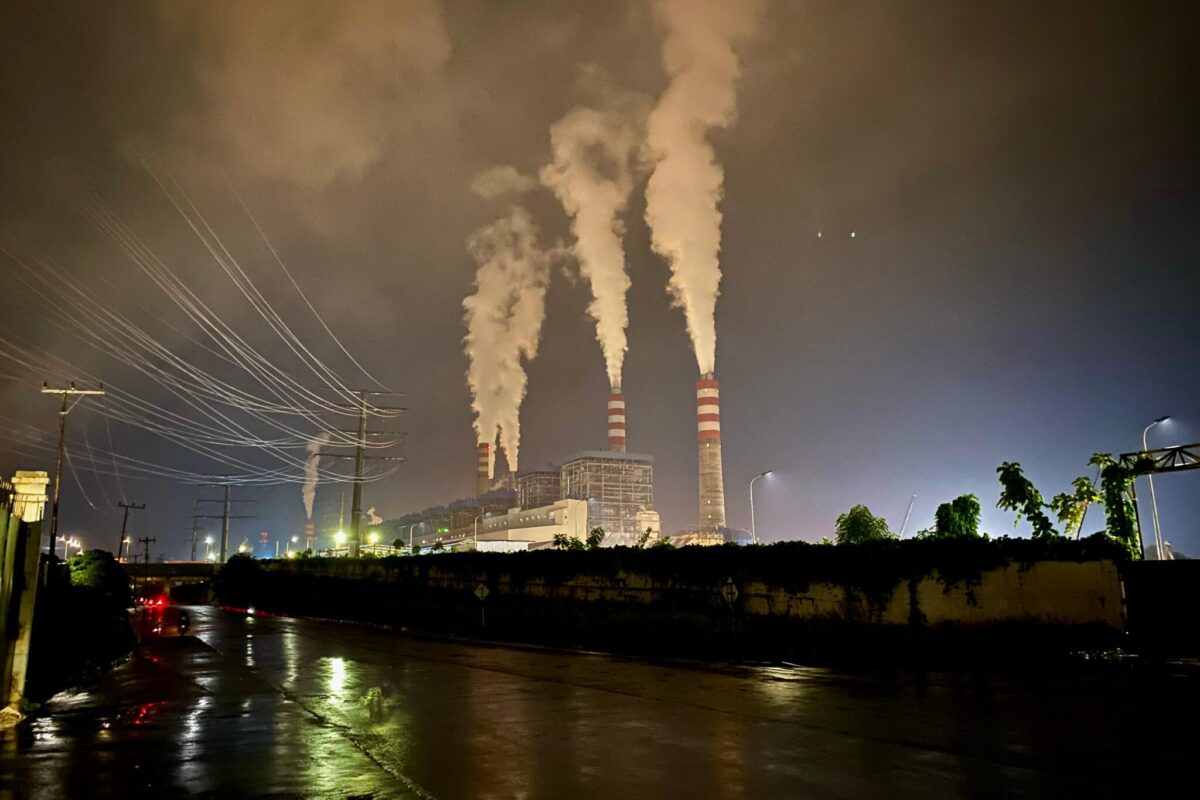
However, the report outlines transformation pathways across five major systems — economy and finance, energy, food, materials and waste and the environment — calling on countries to rethink how prosperity is measured, shift to sustainable diets, decarbonize energy, restore ecosystems and embed circularity into consumption and production. Watson noted that the roots of the crisis lie in how societies are organized. “The way we’re producing our food today, the way we’re producing our energy and using our energy is leading to environmental degradation,” he said. Addressing that, he argued, requires reforming governance and financial systems, not simply adjusting environmental policies.
Progress remains uneven. “Some countries are definitely acting on [the crisis]. Other countries are not acting on it. So, it’s highly variable,” he told Mongabay. The same applies to business: “Some of the private sector companies are really becoming more sustainable. Some are acting quickly. Some are acting slower.”
Still, Watson insisted GEO-7 should not be read only as a warning. Solutions exist, and many are cost-effective. “It will be cost-effective to change our energy system. It will be cost-effective and socially acceptable and environmentally sustainable to change our food system,” he said. But those gains require upfront investment. “You do have to invest now in order to realize these benefits in the long term. This is not a freebie today.”
Leaders and environmental advocates from across regions underscored the same message. Norway’s minister of climate and environment, Andreas Bjelland Eriksen, stressed the importance of cooperation, even in tense geopolitical times. “Norway is here to support the U.N. Environment Assembly. I still believe that multilateralism is the way forward for combating rising emissions, biodiversity loss and plastic pollution,” he said in a statement to Mongabay. In such a climate, he added, “It is even more important to let science guide our actions,” noting that the report clearly spells out “the prerequisite to move towards a more circular economy.”
Voices from Latin America and Asia echoed the urgency — and the complexity. Former Colombian vice minister of environment Mauricio Cabrera Leal told Mongabay the report reflects what is being observed in Colombia: visible environmental decline, biodiversity loss and indicators “approach[ing] the point of no return,” even as deforestation falls and new plans emerge. Concrete action, he said, remains “very complex to implement,” citing resistance to traceability in mineral supply chains. “The future is truly compromised for future generations,” he warned.
From India, climate activist Harjeet Singh of the Satat Sampada Climate Foundation called the Outlook “a stark warning” that humanity is in “uncharted territory” but said transformation is still possible if countries confront vested interests and center Indigenous peoples and vulnerable communities. He emphasized that long-term benefits “far outweigh the costs of inaction.”
Civil society leaders working on the ground also found reasons for hope. Durrel Halleson, WWF Africa’s head of policy and partnerships, said GEO-7 offers more than a diagnosis. “What gives me optimism is that the GEO-7 report is not only a warning, but also a road map,” he told Mongabay. He pointed to real-world examples — from energy and food systems to financial and governance reforms — already being implemented by community groups and conservation organizations worldwide.

Grassroots leaders see these changes daily. Tabi Joda, founder of One Billion Trees for Africa, said restoration led by local communities remains one of the strongest signs of progress. “When communities restore their land, they restore their dignity, the ecosystem responds far faster than people imagine,” he told Mongabay. The expansion of such efforts, he said, shows resilience is not theoretical — it is happening on the ground.
Peace Nganwa of Maliasili, which supports local conservation groups, said community work across Africa and beyond proves decline can be reversed. In Rwanda, Kenya, Tanzania and many other countries, she said, local groups have restored forests, rebuilt soils, protected wildlife and strengthened water systems — evidence of “measurable, scalable gains for people, climate and biodiversity,” even as global indicators worsen.
Governance reforms can accelerate those gains, as it has been shown in some countries. In Madagascar, senior manager at Maliasili, Josia Razafindramanana, told Mongabay that newly signed co-management agreements between the government and civil society are already reducing deforestation in key protected areas. By empowering communities, she said, countries can strengthen both conservation and livelihoods.
Others highlighted growing cooperation on global commons. Margarita Astralaga of the Global Commons Alliance told Mongabay she sees hope in the “large number of people, organizations and institutions working more and more in a collaborative manner to drive the systems change required.”
Circular economy momentum is also rising. Augustine Njamnshi of the Pan African Climate Justice Alliance told Mongabay that plastic pollution, once a peripheral issue, is now central to global action. “Over the years, it became a crisis. The positive thing is that it is gradually drawing global attention, and the appetite for circular economy as a solution is growing, particularly in Africa,” he said.
Experts say global climate politics may also be shifting. Fatima Denton of the U.N. University Institute for Natural Resources in Africa told Mongabay she sees signs of transformation in how climate justice, finance and vulnerability are understood — including the growing agency of the Global South and recognition that climate change is fundamentally about “people, places and prosperity.”
In the end, Watson said the path forward still depends on whether political leaders accept the science. Asked what he would tell a climate-denying leader such as the current U.S. president, he replied: “I’d simply point and say to him, the evidence is definitive. We’re changing our environment and there are cost-effective ways to save our environment.”
His words capture the paradox running through GEO-7: The crisis is deepening, yet so is the evidence that solutions work. For more than half a dozen people who spoke to Mongabay, hope lies not in ignoring the peril, but in the growing evidence that, even in a destabilized world, communities, institutions and governments on every continent are quietly laying the foundations of a livable future.
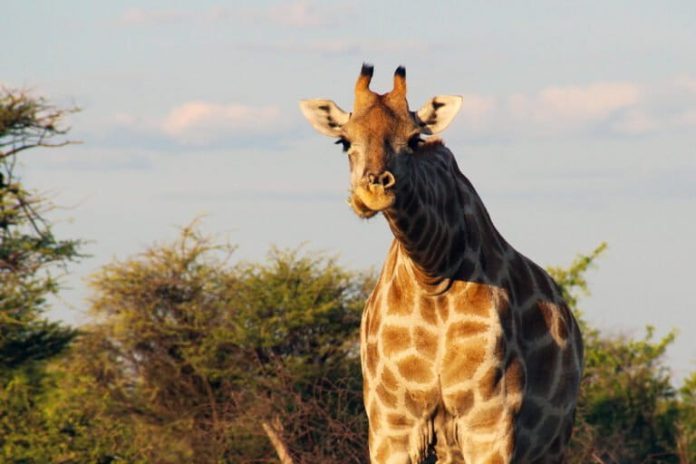
Banner image: A giraffe in Etosha National Park, Namibia. According to WWF’s 2024 Living Planet Report, the average size of wildlife populations fell by a staggering 73% between 1970 and 2020. Photo by Patrizia Cocca/GEF.
Credits
