
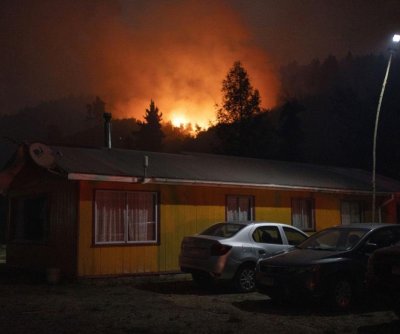


A wildfire rages in the municipality of Chaimavida Concepcion, Chile, on Monday. The fires, which began last Saturday, have destroyed more than 30,000 hectares in the Biobio and Nuble regions and forced tens of thousands of people to evacuate, according to authorities. Photo by Driana Thomas/EPA
Jan. 20 (UPI) — Large-scale wildfires have torn through southern Chile since Friday, killing at least 20 people, destroying nearly 600 homes and impacting more than 7,000 residents, Chile’s National Disaster Prevention and Response Service said.
Interior Minister Alvaro Elizalde said Tuesday that 28 wildfires remain actively burning nationwide. Since the emergency began, authorities have recorded 142 fires that have burned more than 93,000 acres, local radio outlet Radio Biobio reported.
Fueled by high temperatures, strong winds and extremely dry conditions, the fires have spread across four southern regions, forcing the evacuation of thousands of residents and prompting a large-scale national emergency response.
Fire crews from the National Forestry Corporation, known as Conaf, along with firefighters, the armed forces and emergency teams, are working to contain the flames and protect rural and urban communities.
The hardest-hit regions also account for most of the fatalities. Authorities said many victims were unable to evacuate in time or were overtaken by the fire while trying to protect their homes.
President Gabriel Boric’s government declared a state of emergency in the affected areas to facilitate security operations and evacuations and announced financial and housing assistance for displaced families, the newspaper La Tercera reported.
Boric urged residents to comply with evacuation orders and warned that weather conditions remain unfavorable.
As investigations continue into the causes of the fires, some of which may have been intentionally set, authorities cautioned that the risk of new outbreaks remains high in the coming days and called for heightened prevention measures nationwide.
Preliminary estimates suggest total economic losses in the two most affected regions, Nuble and Biobio, could approach $500 million when productive, rural and urban damage are combined, according to a report by local outlet Emol.
Chile has faced a series of increasingly frequent and destructive megafires over the past decade. A turning point came during the 2016-2017 fire season, considered the most severe on record, when more than 1.4 million acres burned nationwide amid heat waves, low humidity and heavy fuel accumulation.
Another major fire season struck the country’s central-southern regions in the summer of 2023, with government figures reporting more than 1.06 million acres burned by the end of that season. This was followed by an urban-wildland megafire in February 2024 in the Valparaiso region that killed more than 100 people.
Together, these events have reinforced a pattern in which more intense heat waves, prolonged drought and urban expansion into vegetated areas increase the likelihood of extreme and fast-moving wildfires.