



Felicity Bradstock
Felicity Bradstock is a freelance writer specialising in Energy and Finance. She has a Master’s in International Development from the University of Birmingham, UK.
More Info
Set us as your preferred Google source
Premium Content
By Felicity Bradstock – Mar 08, 2026, 10:00 AM CDT
- Cuba is facing a severe energy crisis with regular blackouts, primarily due to US intervention in Venezuela halting critical fuel exports and leading to domestic fuel rationing.
- The Cuban government has committed to increasing renewable energy to 26 percent of its total energy supply by 2035, up from the current 9 percent, as part of its National Energy Transition Strategy.
- China has become a major partner, providing financial support and expertise for large-scale projects like the La Herradura 1 wind farm and a plan to develop 92 solar parks by 2028, but the transition still faces major hurdles in funding (estimated at $8-10 billion) and a lack of skilled technical workers.
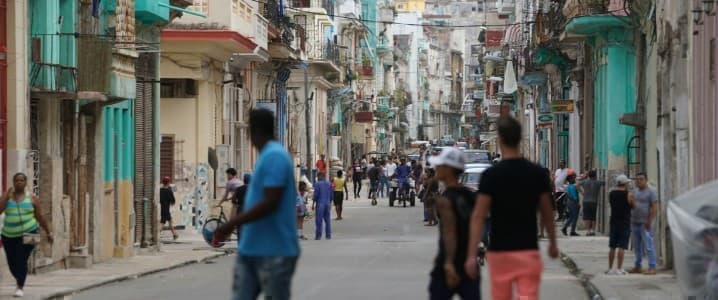
Cuba has long been suffering from an energy crisis, with residents facing regular blackouts, which has been exacerbated by the recent United States intervention in Venezuela and the halt of critical energy exports to Cuba. Now, the island nation is assessing a potential future in renewables to diversify its energy mix and boost security.
In February, Cuba’s energy crisis deepened as fuel rationing was implemented, following U.S. President Trump’s campaign to provoke regime change by cutting off the island’s energy supply, most of which came from Venezuela. In January, Trump threatened to impose tariffs on any country that sends oil to Cuba.
Mexico initially continued to supply Cuba with crude, justifying the move as humanitarian aid, although President Sheinbaum halted oil shipments to the island nation in February in response to Trump’s tariff threat. “It’s currently on hold, and we are seeking to avoid any negative impact on Mexico and, as always, to find the best diplomatic solution for Cuba to receive the fuel,” President Sheinbaum stated during a press conference on 9th February. Mexico, instead, sent large quantities of humanitarian aid to Cuba last month.
Russia has said it will continue to supply Cuba with crude, although this could take some time to be seen. Meanwhile, Cubans are turning to charcoal for cooking and to solar panels for electricity generation. The Cuban government is rationing fuel for use in essential services and indispensable economic activities.
As Cuba hurries to find alternative fuel sources to tackle the immediate shortages, a long-term solution must be found to reduce reliance on foreign oil imports and strengthen the country’s energy security. Cuba is highly vulnerable to extreme weather, which makes its dependence on fossil fuels alarming. One obvious solution to Cuba’s energy concerns is the development of the country’s renewable energy resources.
Related: Why Trump Wants Magnets More Than Gold
The Cuban government recently committed to the UN Framework Convention on Climate Change (UNFCCC), pledging that the country would increase its renewable energy capacity to 26 percent of the total energy supply by 2035. At present, renewables, mainly solar, contribute just 9 percent of the state electricity utility’s supply.
Cuba installed its first solar panels in the late 1980s and opened its first wind farm in 1999. However, the development of its renewable energy capacity has remained limited, until recently, due to a lack of political will and funding. However, the government published its National Energy Transition Strategy in September 2024, aimed at increasing Cuba’s domestic crude output and developing its renewable energy sources.
China has since become a key partner, supporting Cuba financially and providing expertise for the development of the green energy sector. The island’s largest wind farm to date – La Herradura 1 – is currently under construction, funded by Chinese investment. The first stage consists of the installation of 22 wind turbines to generate 33 MW of clean power.
In December 2024, China signed a deal with Cuba to develop seven solar parks with a combined capacity of 35 MW. The Cuban government aims to develop 92 solar parks with a total capacity of 2GW by 2028, supported by Chinese financing. A reported 35 of these solar parks were completed by October 2025.
However, to make these solar parks more reliable, Cuba must invest in battery storage as well as in the country’s long underfunded transmission network. At present, around 16 percent of the electricity produced in Cuba is lost due to failures in transmission.
Investing in battery storage may not be on the cards. Ricardo Torres, an energy economist at the American University in Washington, explained, “The energy transition outlined by the government would require investments of around $8 billion to $10 billion over the next decade… Cuba simply does not have that kind of money, and China will not pay for everything.”
In addition to funding, Cuba will need to provide the necessary technical expertise to manage renewable energy and modern transmission projects, and the country currently lacks skilled workers in this field.
Despite several hurdles still to overcome to develop Cuba’s large-scale renewable energy capacity, several wealthier households and businessowners are now investing in solar panels. While poorer Cubans are turning to charcoal or wood for energy, an increasing number of solar panels can be seen in wealthier neighbourhoods, particularly in the capital of Havana.
The number of solar panel installation firms has risen significantly since 2024, when the Cuban government relaxed restrictions on importing solar panels, which are mostly produced in China. However, with a small solar package costing around $2,000, most Cubans do not have access to this equipment.
Cuba aims to significantly increase its renewable energy capacity in the coming years, to decrease the country’s reliance on foreign imports of fossil fuels and increase its energy security. However, this will require high levels of funding and expertise, which Cuba will not be able to achieve without international support. Meanwhile, the island nation is facing a severe energy crisis.
By Felicity Bradstock for Oilprice.com
More Top Reads From Oilprice.com
- Virtual Power Plants Are Key to Unlocking America’s Energy Transition
- What Carter and Reagan Got Right About Oil Shocks
- President Milei’s Nuclear Ambitions Face Local Resistance in Patagonia
Download The Free Oilprice App Today


Back to homepage
Felicity Bradstock
Felicity Bradstock is a freelance writer specialising in Energy and Finance. She has a Master’s in International Development from the University of Birmingham, UK.
More Info
Related posts
Leave a comment