


Lomé—When his daughter developed a high fever, Jean did not hesitate: he went straight to the health centre. A farmer from Agokpo, in the Plateaux region about 100 kilometers north of Lomé, he recalls the day his 8 year old daughter Adèle was admitted. Beyond the speed of care, what struck him most was the warm welcome and the clarity of the explanations. “As soon as we arrived, she was tested. The health workers explained that it was malaria. They gave us the treatment, and apart from paracetamol, everything was covered,” he recounts.
His experience is far from unique. In Togo, malaria remains a major public health challenge. Transmitted by mosquitoes, the disease mainly affects children under 5 years and pregnant women. In 2025, more than 2.2 million cases and 939 deaths were recorded. Despite these high figures, gradual improvement is visible: since 2019, deaths have fallen by 16% and overall cases by 2%.
In rural areas such as Agokpo and Asrama, access to care is still sometimes difficult for families. Distance, cost and lack of information continue to delay consultations, increasing the risk of complications, especially among children.
To address these challenges, the government has strengthened its actions with support from the World Health Organization (WHO). By promoting the use of data, surveillance and planning, this approach helps target interventions where they are most needed. It also strengthens the health system’s capacity to respond more effectively to the needs of children and their families. In the Centrale region, malaria cases among children under 5 years dropped by about 80% in 2024, and deaths were reduced nearly fourfold.
One of the most important measures is free diagnosis and treatment of malaria. This change has led to a shift in behaviour: families seek care earlier, preventing severe forms of the disease. “Without free care, I probably would have waited before going,” admits Jean, who also emphasizes the advice he received on the daily use of mosquito nets.
In health centres, the effects are already visible. In Asrama, Sèdomon Tchedjingni, head of the social-medical centre, notes an improvement in practices. “Before, some parents hesitated to come because of cost. Today, children arrive earlier and we avoid more severe cases,” he explains. Faster treatment also makes the work easier and improves outcomes.
These advances are part of a national strategy coordinated by the National Malaria Control Programme. Its coordinator, Dr Somiabialo Atekpe, cautions that the disease remains widespread. “Malaria is still the leading reason for consultations, but the results show a positive trend thanks to the combination of free care, surveillance and prevention,” he says.
For the WHO Representative in Togo, Dr Nouhou Hamadou, progress relies on integrated action. “When prevention, rapid diagnosis and treatment are accessible, the effects are visible. Efforts must continue to better protect the most vulnerable,” he stresses.
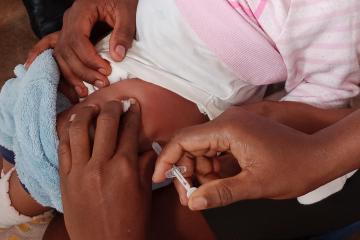
Beyond treatment, prevention plays a central role. In Asrama Fiokomé, Emala, a seamstress, has experienced malaria’s impact on her family. Her eldest fell ill in 2025, a difficult experience. Today, she sees a change with her infant, who has received doses of the malaria vaccine. “With my youngest child, I feel more at ease. So far, he has never contracted the disease,” she confides.
Introduced in 2025 and integrated into the Expanded Programme on Immunization, the vaccine complements existing tools such as insecticide treated nets and seasonal chemoprevention in high transmission areas. With WHO support, its rollout has been progressively organized, from technical support to field monitoring, ensuring proper integration into health services.
For Emala, regular follow up is essential. “I keep the appointments and follow the health centre’s advice. It reassures me and helps me better organize my life,” she explains, noting that this stability also allows her to focus on her work and family.
At the national level, the combination of these interventions is already producing visible results. In several districts, health teams report fewer cases among children and fewer hospitalizations for severe forms. Most patients are treated according to national guidelines, and coverage of preventive interventions remains high.
Challenges persist, however, especially during the rainy season when transmission increases, and in some rural areas where access to health services is still limited. Maintaining efforts and strengthening targeted actions therefore remain essential.
For families, these changes are felt in daily life. Emala compares her experience with her two children and sees the progress made. “Today, I am more at peace. I no longer have that constant worry of rushing to the hospital or paying for care,” she says.
She also insists on simple practices that protect children. “Vaccination, mosquito nets, quick consultation… when you follow the health workers’ advice, you really see the difference,” she affirms.
Through these experiences, one reality stands out: more accessible care, stronger prevention and greater trust in the health system are gradually reducing the impact of malaria in Togo.