

Tuesday, January 20, 2026

Select a plan

Support Independent African Journalism – Become a Donor Member

Monthly plan

$
10
$
0
billed monthly

Yearly plan

$
$
0
billed yearly

As a supporter, you’ll get:

  • Priority Support
  • Unlimited Access
  • Exclusive Content
  • Stay Informed
  • Member Perks
  • Subscriber Benefits
  • Recognition
  • Member Shout-Outs
  • Exclusive Deals & Offers

Search for an article

HomeWorld NewsBrain activity of passengers might aid self-driving vehicles

Brain activity of passengers might aid self-driving vehicles

Published on

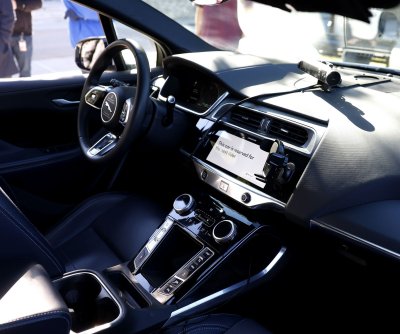
Chinese researchers tested whether monitoring passengers’ brain activity could help self-driving systems make safer decisions in risky situations. File Photo by John Angelillo/UPI | License Photo

Cars from companies like Tesla already promise hands-free driving, but recent crashes show that today’s self-driving systems can still struggle in risky, fast-changing situations.

Now, researchers say the next safety upgrade may come from an unexpected source: The brains of the people riding inside those cars.

In a new study, Chinese researchers tested whether monitoring passengers’ brain activity could help self-driving systems make safer decisions in risky situations.

The team used a noninvasive technology called functional Near-Infrared Spectroscopy, which tracks brain activity linked to stress, emotions and risk perception in real time.

“Functional Near-Infrared Spectroscopy, as a non-invasive real-time brain activity monitoring method, can provide cognitive information related to human risk perception and emotional states, and is thus considered a tool that can enhance autonomous driving systems,” lead author Xiaofei Zhang, a professor at Tsinghua University in Beijing, said in a news release.

“Our study introduces an intelligent decision-making algorithm based on fNIRS by analyzing passengers’ physiological states, aiming to improve the safety and decision-making efficiency of autonomous vehicles when facing risky scenarios,” Zhang added.

The researchers built a new system that combines brain data from passengers with an autonomous vehicle’s driving software.

When the system detects that passengers are experiencing higher levels of risk or stress, the vehicle automatically shifts to a more cautious driving strategy.

Based on a form of deep reinforcement learning, the algorithm is designed to learn faster and make safer choices by factoring in human reactions.

In tests, the system switched to a more conservative driving mode when passengers appeared uneasy, helping the vehicle respond more carefully in dangerous situations.

The study found that this approach outperformed traditional autonomous driving methods in several areas, including learning speed, overall safety and comfort.

However, the researchers noted some limits. The driving scenarios tested were relatively simple, and participants came from a narrow age range and similar backgrounds. Because of this, the findings may not apply to all real-world driving situations.

“Future research will aim to validate the algorithm in more complex and realistic driving scenarios and further enhance the accuracy and robustness of driving risk assessment by integrating information from vehicle sensors,” Zhang said.

The findings were published in the journal Cyborg and Bionic Systems.

More information

The Union of Concerned Scientists has more on self-driving cars.

Copyright © 2025 HealthDay. All rights reserved.

Latest articles

Israel demolishes UNRWA headquarters in East Jerusalem

Israeli bulldozers demolish parts of the headquarter of the United Nations Relief and Works Agency in the east Jerusalem neighborhood of Sheikh Jarrah on Tuesday. Photo by Atef Safadi/EPA Jan. 20 (UPI) -- The Israeli government began demolishing the East Jerusalem building that houses the United Nations' agency that provides aid to Palestinian refugees Tuesday

‘Fast & Furious: Hollywood Drift’ to open at Universal Studios Orlando

1 of 2 | A new "Fast & Furious" roller coaster will replace the thrill ride "Rip Ride Rockit" at Universal Studios Orlando. Image courtesy of Universal Jan. 20 (UPI) -- A new roller coaster called Fast & Furious: Hollywood Drift is set to open at Universal Studios Orlando in 2027. "Replacing the former Hollywood

Deadly wildfires hit Chile, destroy hundreds of homes, leave 20 dead

A wildfire rages in the municipality of Chaimavida Concepcion, Chile, on Monday. The fires, which began last Saturday, have destroyed more than 30,000 hectares in the Biobio and Nuble regions and forced tens of thousands of people to evacuate, according to authorities. Photo by Driana Thomas/EPA Jan. 20 (UPI) -- Large-scale wildfires have torn through

Watch: 12 tech workers keep 25 balloons in the air for one minute

Jan. 20 (UPI) -- Serial Guinness World Record-breaker David Rush teamed up with 11 other tech industry workers at a trade show to take on the title for most balloons kept in the air for one minute while standing. Rush, who holds the most concurrent Guinness World Records titles, led the 12-person team in attempting

More like this

Israel demolishes UNRWA headquarters in East Jerusalem

Israeli bulldozers demolish parts of the headquarter of the United Nations Relief and Works Agency in the east Jerusalem neighborhood of Sheikh Jarrah on Tuesday. Photo by Atef Safadi/EPA Jan. 20 (UPI) -- The Israeli government began demolishing the East Jerusalem building that houses the United Nations' agency that provides aid to Palestinian refugees Tuesday

‘Fast & Furious: Hollywood Drift’ to open at Universal Studios Orlando

1 of 2 | A new "Fast & Furious" roller coaster will replace the thrill ride "Rip Ride Rockit" at Universal Studios Orlando. Image courtesy of Universal Jan. 20 (UPI) -- A new roller coaster called Fast & Furious: Hollywood Drift is set to open at Universal Studios Orlando in 2027. "Replacing the former Hollywood

Deadly wildfires hit Chile, destroy hundreds of homes, leave 20 dead

A wildfire rages in the municipality of Chaimavida Concepcion, Chile, on Monday. The fires, which began last Saturday, have destroyed more than 30,000 hectares in the Biobio and Nuble regions and forced tens of thousands of people to evacuate, according to authorities. Photo by Driana Thomas/EPA Jan. 20 (UPI) -- Large-scale wildfires have torn through
Exit mobile version
Share via
Send this to a friend