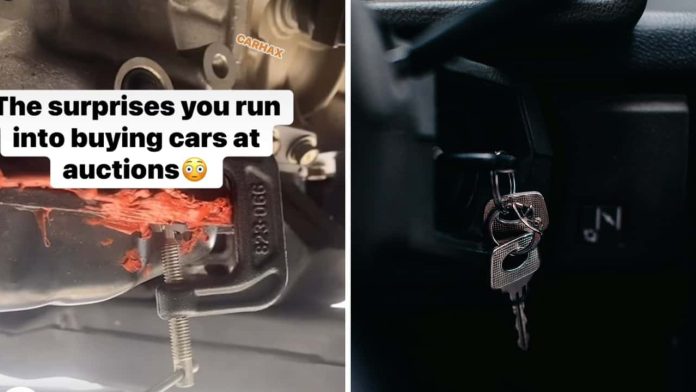


When rags pass for suspension bushings and gasket leaks get “fixed” with bathroom-grade silicone, it’s time to ask: What else is being hidden under that fresh wax job? Auction cars may look showroom-ready, but what you can’t see could wreck your wallet.
In a viral video, the CarHax AI Facebook account takes us under a car up for auction that’s packed with unbelievable DIY fixes that seem destined to fail five minutes after the unlucky new owner drives it off the lot. There are rags wrapped around the sway bar, an oil pan caked in silicone, and a C-clamp with the red high-temp silicone literally holding it in place.
The video serves as a warning for anyone entering the often “as-is” sales environment of auto auctions.
Hidden Dangers of a Shiny Auction Buy
For buyers trying to save money or find hard-to-get vehicles, auctions can seem like a treasure trove. But beneath the surface, these deals often come with serious risk. Cars sold at auction, especially public or salvage auctions, are frequently sold “as-is.” That means the buyer accepts all faults, known or unknown, with no right to return and no warranty.
That lack of protection makes it a prime hunting ground for sellers trying to offload problem vehicles.
Many auction cars originate from insurance write-offs, rental fleets, dealer trade-ins, or repossessions. Some are former flood cars that have been cleaned up just enough to pass a quick visual inspection. Others have been subject to extensive DIY repairs using whatever materials were available, as shown in the CarHax AI clip, which had clear evidence of roadside patchwork disguised beneath a freshly washed exterior.
There’s a long-running industry joke among mechanics that “shiny means nothing,” and the video brings that point to life. While it’s difficult to trace how many cars sold at auction have these types of haphazard repairs, stories of buyer’s remorse aren’t hard to find.
Entire subreddits like r/MechanicAdvice and r/Autobody contain dozens of posts from first-time auction buyers facing hidden frame damage, electrical gremlins, or engines held together by prayer. And according to the National Auto Auction Association, more than 7 million vehicles were sold at North American auctions in 2023, including a growing number from online-only marketplaces like Copart and IAAI, which specialize in salvage and insurance vehicles.
Despite the risks, auctions remain attractive to many buyers, especially in today’s used vehicle market, where high demand and limited supply have kept prices inflated. According to Kelley Blue Book, average used car listing prices in the U.S. remained above $23,000 in early 2025, a sharp increase from pre-pandemic norms. That pricing pressure pushes budget-conscious shoppers toward alternatives, including auctions, where vehicles can sell for thousands less than retail.
Some buyers are also lured in by the thrill of competition or the hope of flipping a car for profit. Others have limited access to financing and see auctions as a last resort. The rise of digital auction platforms post-COVID has also opened the gates to average consumers who previously would have needed dealer credentials to participate. Sites like ACV Auctions and BacklotCars now cater to a wider audience, but many still maintain limited return policies and require upfront registration fees.
Even reputable dealer-only auctions, like those run by Manheim, don’t guarantee quality unless a specific condition report or arbitration policy covers the car. And in lower-tier auctions or salvage yards, it’s not uncommon for sellers to apply cosmetic fixes like new paint, replacement trim, or basic detailing to make a car seem road-ready when it’s anything but.
For experienced mechanics or buyers with access to diagnostic tools and a shop, those risks may be manageable. But for casual buyers, the lack of transparency and pressure to act fast can turn a bargain into a money pit.
How to Spot Trouble Before It Hits Your Driveway
The best advice for auction buyers is simple but often overlooked: Bring someone who knows what they’re looking at. Many auctions allow a short inspection window before bidding, even if test drives aren’t permitted. This is the moment to slide under the car, pop the hood, and look beyond the shine. Tell-tale signs of deeper issues include mismatched paint panels, uneven panel gaps, evidence of fresh undercoating (which can hide rust), or components that seem unusually clean compared to the rest of the engine bay.
A flashlight and a code scanner can go a long way. Scan the car’s VIN using a service like Carfax or AutoCheck to look for accident reports, salvage branding, or odometer rollbacks. Many auction platforms now offer these checks as part of their listings, but it’s worth verifying with a third-party tool.
For online-only auctions, the risk increases dramatically. Copart and IAAI list thousands of cars each day, but the listings are often minimal, with grainy photos and basic condition tags like “runs and drives” that aren’t always reliable. Experts recommend sticking with listings that include a full condition report and detailed imagery. Even then, the phrase “runs and drives” simply means the car moved under its own power at some point, and doesn’t guarantee roadworthiness.
Finally, know your limits. If you’re not prepared to do repairs or factor in an immediate post-auction inspection, you may want to avoid auctions altogether. The upfront savings can quickly evaporate if the vehicle needs major engine or suspension work to ensure safe operation on the road.
Motor1 reached out to CarHax AI via direct message.
Now Trending