
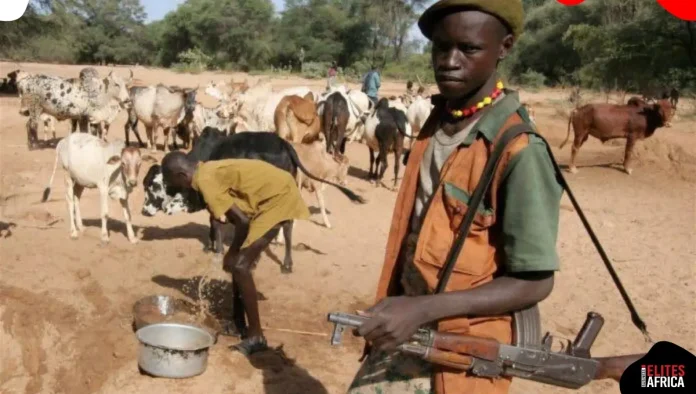



President Bola Ahmed Tinubu’s recent directive urging herders to surrender illegal firearms and embrace government-backed ranching reforms marks one of his administration’s boldest moves yet to confront Nigeria’s worsening insecurity.
With kidnappings surging and rural communities living in fear, the country is watching closely to see whether this new disarmament effort can make a real difference.
Why Tinubu Believes Ranching Is the Path Forward
Tinubu has reiterated that long-standing herder-farmer clashes are a major contributor to the nation’s insecurity. These conflicts have caused violence, land competition, food shortages and displacement across many states.
To address this, the federal government established the Ministry of Livestock, designed to coordinate the transition from open grazing to modern ranching. The President insists that ranching will reduce conflict, modernise livestock production and restore harmony
The Complex Reality of Disarmament
Despite the strong message, convincing herders to surrender illegal weapons may prove far more complicated. Many herders armed themselves over the years because of cattle rustling, threats along grazing routes and frequent clashes with farmers.
In some cases, criminal organisations have disguised themselves as herders, deepening suspicion and making it difficult to identify genuine pastoralists.
A long-standing distrust of government also plays a role. Many herders believe security agencies cannot protect them, so giving up their weapons feels like exposing themselves to danger.
Previous national disarmament programmes have struggled due to weak enforcement, lack of incentives and inconsistent policy implementation. Uneven support for anti-open-grazing laws across states has made nationwide enforcement even harder.
What Needs to Happen for Disarmament to Succeed
Security analysts argue that disarmament can work, but only if the government addresses deeper issues. Building trust between herders and authorities is essential, along with ensuring herders’ safety once they surrender their weapons.
Ranching must also be accessible and well-funded, or herders may revert to old practices. Without separating legitimate herders from armed bandits, enforcing this directive will remain difficult.
Will the Plan Work?
Tinubu’s strategy shows strong political will, but its success will depend on whether herders believe the government can protect them,and whether the underlying economic and cultural issues are addressed. This is one of the most coordinated national attempts in years to resolve the herder-farmer conflict.
If implemented effectively, it could reshape Nigeria’s security landscape. If not, the country may continue to face a cycle of violence and insecurity with no clear end in sight.