
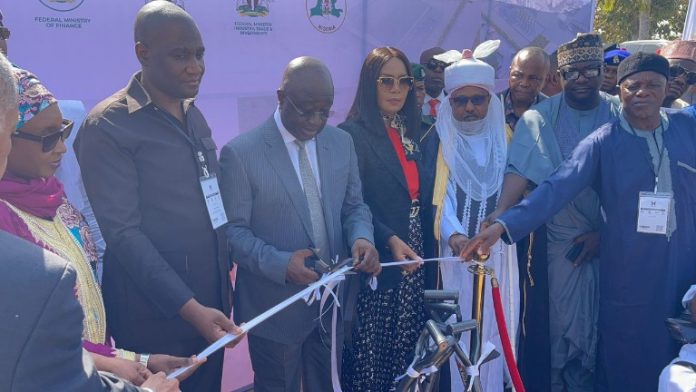


The Federal Government says it is targeting the creation of at least 10,000 direct and indirect jobs as Hasetins Commodities begins the development of a US$400 million rare earth and critical metals processing plant in Ukeh, Nasarawa State, set to become the largest facility of its kind in Africa.
Hasetins Commodities, a leading player in mineral processing and exploration, announced that the plant will add 12,000 tonnes per annum (tpa) to its existing 6,000 tpa processing capacity, bringing total output to 18,000 tpa. The company currently operates facilities that adhere to internationally recognised OECD standards.
Speaking during the launch ceremony, Dele Alake, Minister of Solid Minerals Development, described the investment as a “strategic and patriotic commitment” that aligns with the Federal Government’s push for in-country processing, beneficiation, and value addition in the solid minerals sector.
“With your collaboration, we are now witnessing the establishment of the largest rare earth and critical metals plant in Africa, right here in Nigeria,” Alake said.
He added that the project would boost investor confidence, accelerate skills transfer, and reposition the solid minerals sector as a major driver of national economic diversification.
Rare earth metals, essential for electronics, renewable energy systems, electric vehicles, and defence technologies, have become increasingly important in global supply chains. Nigeria’s entry into large-scale processing, the minister said, places the country on a competitive footing in the global market for critical minerals.
Prince Jidayi, Managing Director, Hasetins Commodities, said the new plant represents a major milestone for the company as global demand for critical metals soars.
“We are thrilled to embark on this journey, which marks a significant milestone for Hasetins and underscores our commitment to sustainable resource management,” he said.
Read also: Mining reforms generate ₦26bn revenue as Alake moves to strengthen mining marshals
Jidayi explained that the facility will expand the company’s processing capacity, absorb rising feedstock from its mining sites, and create economic opportunities for artisanal miners. According to him, the project will open new income streams for local communities and support a more inclusive mining ecosystem.
In his remarks, Abdullahi Sule, Governor of Nasarawa State, represented by Emmanuel Akabe, the deputy governor, said construction activities in Nasarawa are expected to stimulate local enterprise, deepen industrial linkages, and significantly enhance Nigeria’s share in the global critical minerals market.
He said the project is strategic because it will create jobs for local residents and strengthen the state’s manufacturing sector, noting that the processed minerals can be used in the production of MRI machines, scanning equipment, and other advanced technological devices.
