
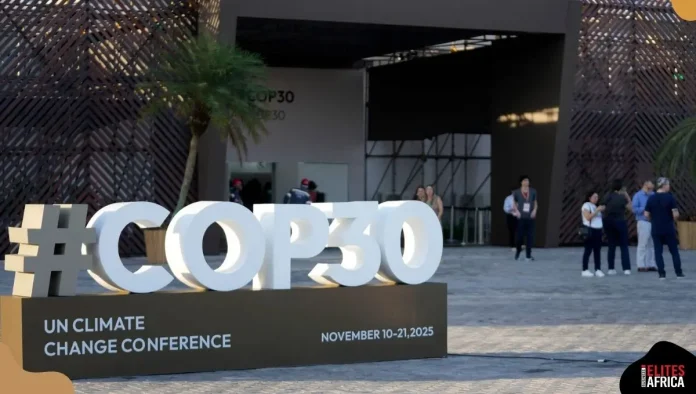



As we speak, dozens of global leaders have begun arriving in Belém, Brazil, for a two-day high-level meeting ahead of the official start of the United Nations Climate Change Conference, COP30.
The discussions, set for Thursday and Friday, aim to build consensus on urgent actions to curb global warming and revive international momentum for climate cooperation.
The gathering has drawn major European figures, including German Chancellor Friedrich Merz, French President Emmanuel Macron, and British Prime Minister Keir Starmer, alongside senior representatives from the European Union and the United Nations.
Their presence underscores the growing recognition that climate change demands a unified global response, even as many nations grapple with political instability and economic uncertainty.
Brazil Takes the Lead
Host President Luiz Inácio Lula da Silva has described this year’s conference as the “COP of Truth”, a defining moment for the global climate agenda.
Lula hopes the pre-summit in Belém will set the tone for meaningful outcomes when the two-week COP30 event officially opens on Monday, welcoming nearly 200 countries and tens of thousands of participants.
For Brazil, the location of the talks carries powerful symbolism. Belém sits near the Amazon rainforest often called the “lungs of the Earth” where rampant deforestation continues to threaten biodiversity and accelerate carbon emissions.
Brazil’s government is pushing for stronger global partnerships to protect the rainforest and to expand its sustainable fuels initiative, with a goal to quadruple production and use by 2035.
A World in Conflict, A Planet in Peril
Despite the urgency, the political landscape remains complicated. Wars, inflation, and fiscal uncertainty dominate the agendas of many world powers, overshadowing environmental commitments.
The United States, under President Donald Trump, has maintained its focus on fossil fuel expansion and will not send a high-level delegation to COP30, a move that some see as a setback for global unity on climate issues.
Meanwhile, European leaders are expected to push for stronger international accountability, particularly in deforestation pledges. In 2019, over 140 countries vowed to end deforestation by 2030, but according to the World Wide Fund for Nature (WWF), nearly seven million hectares of primary forest disappeared in 2024 alone — a staggering sign of how far the world still is from its goals.
New Initiatives to be discussed
One of the key highlights of the Brazil meeting will be the formal launch of a multibillion-dollar fund dedicated to protecting tropical forests.
The fund aims to support developing nations that bear the burden of conserving critical ecosystems while struggling with poverty and food insecurity. Leaders are also expected to issue a joint call for global forest fire management, a growing concern as record heatwaves and droughts make wildfires more frequent and devastating.
Beyond environmental issues, the summit will address broader humanitarian themes, including hunger, poverty, and equitable access to green energy recognizing that climate change is not just an environmental crisis but a social and economic one.