
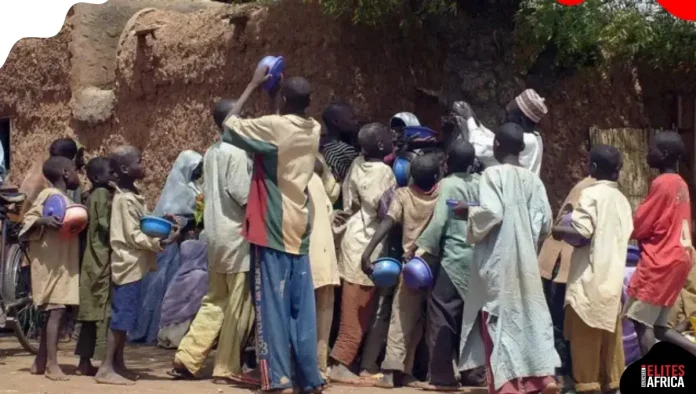



Recent World Bank data shows that extreme poverty is still very common in parts of Sub-Saharan Africa. The problem is mostly caused by low farm productivity, few good jobs, weak services like health and education, and sometimes conflict.
It can improve when countries provide power, roads, schools, clinics, fair rules, and support job-creating industries.
Here are the top 10 African Countries With Extreme Poverty in 2025:
1) Democratic Republic of Congo — 85.3 percent
The DRC is very rich in minerals, but many people are still poor. In many area,s there are few schools, clinics, or good roads. Mining creates money, but not enough jobs. Most people farm small plots with low yields. Priorities include peace and security, better rural roads, small power projects, and using mining revenue openly to fund basic services.
2) Mozambique — 82.2 percent
Gas projects could bring growth, but conflict in the north, floods and cyclones, and weak rural roads keep many families poor. Farms rely on rain, and transport is expensive. Security gains, stronger roads and irrigation, climate-smart seeds, and channelling gas income into health and education can lift incomes. Building coastal value chains in fishing and tourism and expanding small-business finance will create more jobs.
3) Malawi — 75.4 percent
Malawi is landlocked and crowded. Many families farm tiny plots, and yields are low. Tobacco depends on global prices, and droughts hurt crops. Fuel and fertiliser are costly. Stable, affordable power, cheaper transport to ports, fair farm inputs for smallholders, and keeping girls in school through secondary level are key. Growing legumes and fruits and starting light manufacturing can add jobs.
4) Burundi — 74.2 percent
Most people live in rural areas. Coffee and tea are grown, but little is processed locally. Land is overused and soils are tired. Services are weak. Watershed restoration, small irrigation, farmer groups linked to processors, clear rules for investors, and wider basic healthcare and school meals would reduce poverty over time.
5) Zambia — 71.7 percent
Copper brings in money but the economy rises and falls with prices. Debt has limited public spending. Rural poverty is high. Keeping inflation low, managing debt well, using clean power to grow industry near mines, improving feeder roads, and supporting contract farming and storage to cut post-harvest losses will raise incomes.
6) Central African Republic — 71.6 percent
Years of conflict have hurt services and scared off investors. People rely on small farms and informal trade. Transport is risky and costly. Peace and safety, protected trade routes for food and basics, clinics and schools, cash-for-work programs, and fair natural-resource rules that share benefits with communities can stabilise livelihoods.
7) Niger — 60.5 percent
The population is growing fast. Many people herd animals or grow millet and sorghum, which suffer when rains fail. Insecurity blocks markets. Small-scale irrigation, drought-tolerant seeds, fodder banks, and keeping girls in school to delay early marriage matter. Solar power for clinics and milling, cash transfers for the poorest, and steady regional trade in livestock and grain support household incomes.
8) Uganda — 59.8 percent
Uganda has active entrepreneurs, but many rural areas still have low farm output and weak roads. Cities are growing fast and services are stretched. Youth unemployment is high. Completing industrial parks with reliable power and water, building agro-processing for coffee, dairy, and grains, upgrading roads and rail to ports, and running skills programs linked to real jobs will make a difference.
9) Zimbabwe — 49.2 percent
Frequent inflation and currency problems cut real incomes. Many people work in the informal sector. Stable and credible economic policies, more irrigation, better farm advice, working cold chains, simpler taxes for small firms, and access to credit would raise productivity. Mining income should clearly fund local roads, water, schools, and clinics.
10) Kenya —
Kenya has tech, services, farming, tea, and tourism, but poverty is still high in dry counties and in informal settlements. Drought, high food and transport costs, and youth joblessness are common. Last-mile water and solar, bigger school-feeding programs, mobile-money safety nets, and more jobs in export farming, leather and textiles, and tourism will help, supported by better ports, cold chains, security, and training.