
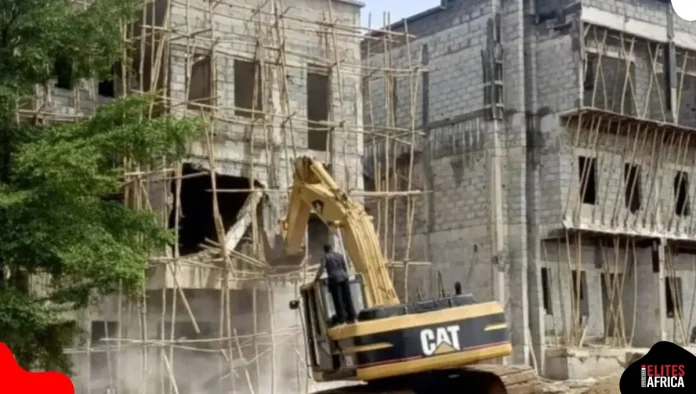



The Federal Capital Territory Administration (FCTA) has demolished an estate of high-rise blocks in the Apo-Dutse axis of Abuja, saying the development violated basic safety and planning rules.
Authorities cited two red flags: the buildings reportedly sat directly under a high-tension electricity line and encroached on the alignment for a planned transport link.
Safety experts note that right-of-way around transmission lines is non-negotiable. Clear corridors reduce electrocution risk, maintenance hazards and fire outbreaks. Urban planners also defend transport reservations, arguing that once structures block future bridges or arterial roads, a city locks in congestion and costly detours for decades.
For developers, the episode is a reminder that titles, layout approvals and environmental clearances must be verified before cranes arrive. Stop-work notices are legal orders, not suggestions; ignoring them exposes investors and off-takers to avoidable losses.
For homebuyers, due diligence should include asking for approved building plans, ROW maps, and evidence of statutory payments,preferably verified with agencies directly.
To restore confidence, the FCTA can publish GIS layers that show power-line corridors and transport reservations, and accelerate permitting so compliant projects are not dragged into the informal track. Enforcement alone cannot deliver order; transparency and speed matter.
In the end, bringing down a visible structure is politically costly, but authorities insist that public safety must come first. The message is clear: Abuja intends to enforce planning standards that protect lives and keep future mobility options open.