
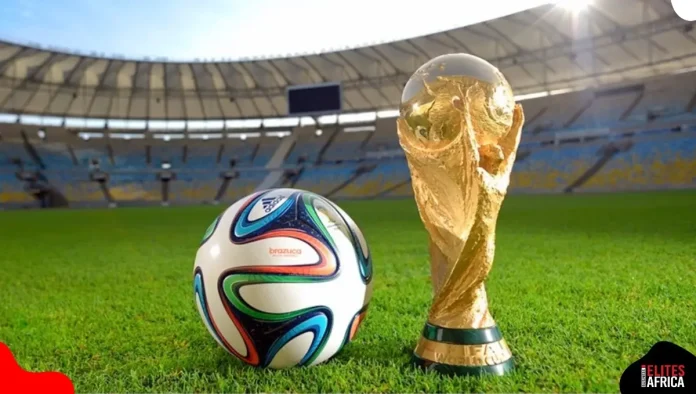



If you follow the World Cup, you know the match ball is more than a decoration. It decides how a pass zips, how a shot swerves, and sometimes who lifts the trophy.
A recent roundup highlighted five balls that defined eras, and the science behind them shows why players and keepers still argue about “the ball” every tournament.
1930 — Tiento & T-Model
Uruguay 1930 gave football its first World Cup final, and its first ball controversy. Argentina’s lighter Tiento was used in the first half; hosts Uruguay supplied a heavier T-Model for the second.
The switch changed the rhythm, and Uruguay came from behind to win 4–2. It’s a clear early example that ball design affects tactics and outcomes, and why the sport moved toward stricter standardisation.
1970 — Adidas Telstar
Mexico ’70 introduced the black-and-white Telstar, the 32-panel sphere that made football instantly recognisable on TV. The high-contrast pattern wasn’t just stylish; it improved visibility on grainy broadcasts and helped turn the World Cup into true global appointment viewing. Telstar also set a template for rounder, more consistent balls in the modern era.
1978 — Adidas Tango
Argentina ’78 unveiled the Tango, whose interlocking triads created the illusion of continuous motion. The look was so strong it carried through the 1982 and 1986 tournaments, helping the World Cup’s visual identity leap from posters to playgrounds. The Tango family also pushed materials forward, moving step by step toward fully synthetic shells in the mid-80s.
2010 — Adidas Jabulani
South Africa’s Jabulani cut panels down to eight and smoothed the surface for “perfect” roundness. Players and keepers called it unpredictable; shots dipped and swerved with a knuckle effect right in the speed range common for long passes and strikes.
Later aerodynamic studies explained why: a smoother ball sheds turbulent airflow differently, producing late, dramatic deviations. Love it or hate it, Jabulani forced the game to grapple with aerodynamics, not just technique.
2014 — Adidas Brazuca
After the Jabulani storm, Brazil’s Brazuca arrived with six thermally bonded panels, deeper seams, and a textured skin. Years of player testing produced a truer flight that strikers and keepers could both live with. For Nigerian fans, Brazuca was the ball of that strong group-stage run under Stephen Keshi ,the feel on crosses, through-balls and long diagonals was noticeably more predictable than 2010.