


The Federal Government has pledged to partner with Akwa Ibom State towards the realisation of affordable and universal access to electricity to boost industrial development.
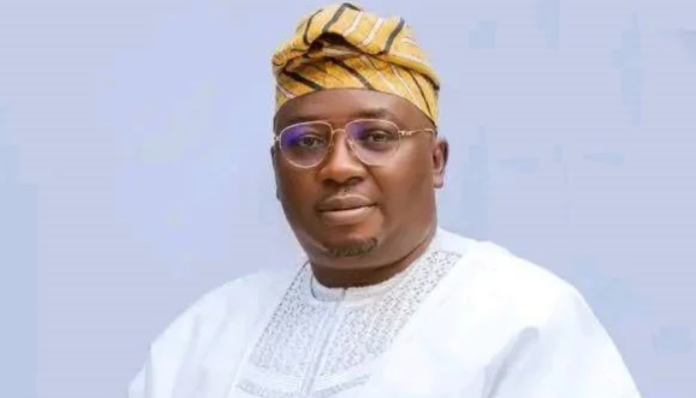
Adebayo Adelabu, minister of power, stated this in his keynote address at the opening of a two-day electricity summit organised by the Akwa Ibom State government held in Ikot Ekpene, about 20 kilometres from Uyo, the state capital.
Represented by Adedayo Olowoniyi, chief technical officer, the minister noted that state-level initiatives aligned with the Federal Government’s plans to provide access to electricity for all Nigerians.
“Our common goal is to ensure sustainable energy. When we work together, we will expand access to electricity,” he said.
While lauding the state government for its vision on affordable energy urged Akwa Ibom State was urged to focus on industrialisation to make full utilisation of the power sector reforms
” As we energise Akwa Ibom, we must focus on industrialisation, we must bring income into the hands of our people,” he said
In his speech, Governor Umo Eno highlighted the vision of the summit, saying it is for Akwa Ibom to have a “total electricity access anchored on a simple principle: electricity is not a luxury; it is a fundamental enabler of modern life.”
“When a rural health clinic has steady power, lives are saved. When our farmers can process and store their produce, incomes rise.
‘When our artisans have reliable energy, productivity soars. When our children can study under good lighting, the future becomes brighter, both literally and figuratively. Electricity is the basic and most important resource to give our people the opportunities to live longer and better.
According to him, under our Electricity Policy 2024 and Electricity Law 2025, we now have the legal, regulatory, and policy foundation to establish the Akwa Ibom State Electricity Market (AKEM).
”As we embark on this journey, the theme of this Summit comes to the fore. In other words, Akwa Ibom’s electricity reforms will be attained within the context of Nigeria’s reforming, reshaping, and redesigning electricity supply industry, he said
He called for a collaboration in resolving the huge challenge of extending access to the grid areas of our State is which should equally characterise the process of transitioning responsibility for the on-grid from the Nigerian Electricity Regulatory Commission to the soon-to-be-established Akwa Ibom State Electricity Regulatory Commission.
The governor who expressed dismay that almost 15 years ago, the four Port Harcourt Electricity Distribution States came together to attempt to take into their hands the responsibility for ensuring their States’ respective energy security, has made no meaningful progress has been made.
“That objective was partially attained following the privatisation exercise in 2013. With the enactment of the Electricity Act, we are now at the stage where we must come to the logical fulfilment of our original and overriding strategic intent to take direct responsibility for our energy security.
“To do this requires that the four States work closely with each other and with the National Council on Privatisation (NCP) and its secretariat, the Bureau of Public Enterprises (BPE), which I sincerely hope we will.
“Electricity access is the backbone of our ARISE Agenda, driving rural development and assisting vulnerable households to have clean power and water through our Compassionate Homes, amongst others.
“Already, we are integrating clean energy solutions into this vision. Our solarisation projects across model healthcare centres and schools are ensuring that critical public services no longer depend on unreliable supply.
“Our Compressed Natural Gas (CNG) mass transportation plan, the introduction of electric vehicles, and other renewable energy initiatives are all part of a deliberate strategy to reduce emissions, cut costs, and build a sustainable energy future, ” the governor said.
He called on PHED to establish electricity distribution subsidiaries in each of the four States, with appropriate board representation that would recognise each host State’s historical investment in the PHED regulatory asset base.
“For us in Akwa Ibom, this is a necessary prelude to executing our preference for Public-Private Partnerships (PPP) that bring sound corporate governance practices at the board level, bring quality management at the executive level, attract cost-efficient capital from development finance institutions and donors, transfer technical expertise, and ensure sustainability without overburdening consumers.
“The Akwa Ibom vision is ambitious, but it is eminently achievable. It will require discipline, transparency, and the support of the will of our people. It will require those entrusted with leadership in this sector to act with integrity and resist the temptation to politicise electricity supply or compromise regulatory independence.
“Therefore, let me be clear: in Akwa Ibom State, electricity sector governance will be professional, transparent, and entirely citizen-focused. Only by so doing can we put in place a State electricity sector that will stand the test of time, ” he stated.
He invited “every stakeholder, the Federal Government and its various MDAs, investors, industry professionals, community leaders and stakeholders, civil society organisations, and ordinary citizens, to join me in embarking on this crucial journey.’
“Let us work together to light every home, every business, and energise every childhood dream in Akwa Ibom State. Let us make our State an outstanding model for subnational electricity reform in Nigeria.
The summit also witnessed the unveiling of the state electricity policy and state electricity law by Governor Umo Eno, supported by other stakeholders, including representatives of the governors of the four states of Abia, Enugu, Bayelsa and Cross River.
