
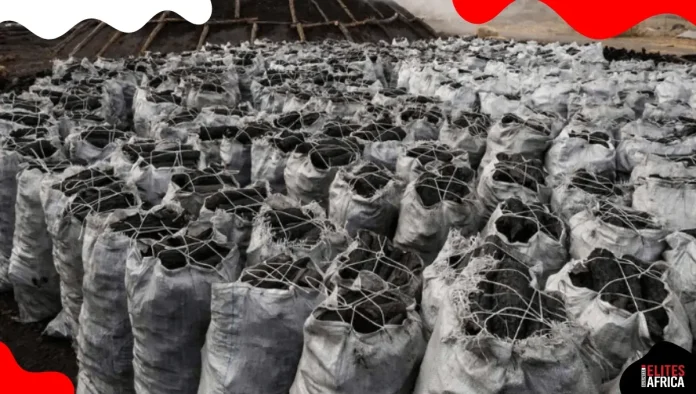



Charcoal sits in a strange place in Nigeria’s economy: everyone knows it exists, many livelihoods depend on it, yet it’s barely recognised in policy, trade data, or export strategy. That invisibility isn’t accidental.
It’s the outcome of muddled rules, inconsistent enforcement, and a blind spot in how we classify and price forest products.
Meanwhile, other countries, some with far fewer trees are quietly building jobs, foreign exchange, and climate-smart value chains from the same black lumps we treat like contraband.
A policy that says “go” and “stop” at the same time
On paper, Nigeria lifted its charcoal-export ban in mid-2023. In practice, the “lifting” came with new gates and guards.
Customs issued instructions that any charcoal export must carry an approval letter from the Ministry of Finance (now Budget & National Planning included) and that forest officers at ports must certify shipments.
That’s not a normal, rules-based framework; it’s a case-by-case permission slip. Exporters who can’t navigate the paperwork or relationships just don’t ship and the trade slips back into informality.
Fast forward to July 2025, when the federal government announced a plan to unlock $2 billion from the “forest economy.” The Vice President underscored the urgency by warning that Nigeria has lost over 90% of its original forest cover.
If we’re serious about that pledge, we can’t keep charcoal in the grey zone. We either regulate it properly or keep bleeding income, forests, and credibility.
What the numbers say (and why they sting)
Numbers cut through rhetoric. In 2023, Namibia, population ~3 million exported $80.5 million worth of wood charcoal. Nigeria bigger forests, bigger market officially shipped just 443 metric tonnes valued at $119,470, with a little under half going to the UAE and the rest scattered across Europe.
That’s not a production problem. It’s a data, policy, and market-access problem.
Global demand isn’t the issue either. Depending on the analyst you read, the world charcoal market in 2024–2025 sits somewhere around $5–8 billion, with several forecasts pointing to $11 billion-plus by 2030.
In other words, buyers exist. Nigeria’s challenge is to show up with traceable, legal, sustainably sourced product at scale.
Why charcoal stays invisible in Nigeria
It isn’t treated like a formal commodity. Because charcoal isn’t clearly classed and priced like other export commodities, there’s no standard contract spec, no official price guidance, and no predictable documentation pathway.
That vacuum pushes honest producers into the shadows and rewards middlemen who thrive on opacity.
We regulate by exception, not by rules. One-off approvals and ad-hoc port checks don’t build confidence. They raise transaction costs and make legitimate traders uncompetitive.
We don’t track the value chain. Without basic traceability, who cut what, where, and when government can’t safeguard forests, and exporters can’t meet buyer requirements. That leaves climate finance, carbon projects, and better prices off the table.
Communities carry the burden, not the benefits. Reporting in the Nigerian press suggests that more than 70% of charcoal collectors are women and youth, especially in North-Central and South-West hubs.
Yet they face the sharp end of low prices, health hazards from earth kilns, and sporadic crackdowns because the system is informal by design.
The EU’s rules are about to force a reset
Whether we like it or not, the EU Deforestation Regulation (EUDR) will change how wood-based products including HS 4402 (wood charcoal) enter Europe. Large and mid-sized operators must comply from December 30, 2025 (with micro and small enterprises following June 30, 2026).
That means geolocation to the plot, due-diligence statements, and proof that wood did not originate from deforested or degraded land after the cut-off date. If Nigeria can’t supply traceable charcoal, it won’t enter the EU market at all.
This isn’t a threat; it’s a roadmap. EUDR tells you exactly what data to collect, what to verify, and how to prove it. Countries that organise quickly will capture demand while laggards lose it.
What a sensible charcoal policy looks like (and how it protects forests)
Recognise charcoal as a commodity, not a nuisance. Give it a clear status in trade policy with a published spec: moisture limits, fixed carbon range, ash content, allowed species, bag sizes, HS codes, and required documents.
Tie that spec to a sustainability protocol, no sourcing from high-risk forests, mandatory geotagging of woodlots, and proof of replanting or regeneration.
Switch from earth kilns to clean kilns. Traditional earth kilns are cheap but wasteful and smoky. Retort or improved kilns can cut wood use, improve yield, and reduce emissions. Linking kiln upgrades to concessional finance (Bank of Industry, DBN, or climate funds) makes compliance affordable for cooperatives.
Plant what you cut and prove it. Align permits with smallholder woodlots, community forestry, shelterbelts, and invasive-bush thinning (where appropriate). A simple rule: no permit without a replanting plan and GPS polygons uploaded to a public registry.
Digitise the chain of custody. A QR-based system at bag or pallet level origin plot, species, kiln ID, moisture test, and transporter answers EU due-diligence questions and unlocks better pricing. Start light: USSD for field entries, mobile app for officers, web dashboard for exporters.
Put women and youth at the centre. If the base of the chain is mostly women and young people, build the value-add around them: safer kilns, training, micro-leasing for equipment, and guaranteed offtake contracts.
That’s how incomes rise without increasing pressure on forests. Use price transparency to kill the black market. Publish a weekly indicative export price band and a domestic floor price for compliant, traceable charcoal.
When producers can see a fair price, the incentive to bypass the system fades.
Coordinate the agencies. Customs should enforce paperwork; state forestry validates origin; the environment regulator checks species and replanting plans; Standards Organisation sets the product spec. One portal, one checklist, no overlaps.
What success looks like (and how we’ll know)
- Forest-positive sourcing: more hectares registered and replanted than felled, verified by GPS and audits.
- Higher producer incomes: cooperatives selling traceable charcoal earn premiums over informal product.
- Export recovery: recorded volumes and values climb, driven by compliance rather than exemptions.
- Cleaner air in production hubs: improved kilns reduce smoke and wood waste—measurable, not just claimed.
- Credible data: Nigeria can show the EU, the UAE, and others a product trail that stands up to scrutiny.
What we should know
Charcoal isn’t “small”, we’ve just kept it small. The world will keep buying; the question is whether Nigeria will keep watching from the sidelines.
Formalise the trade, protect the forests, give producers a fair path to compliance, and charcoal moves from invisible to investable adding real jobs and foreign exchange without costing us the trees our children will need.