
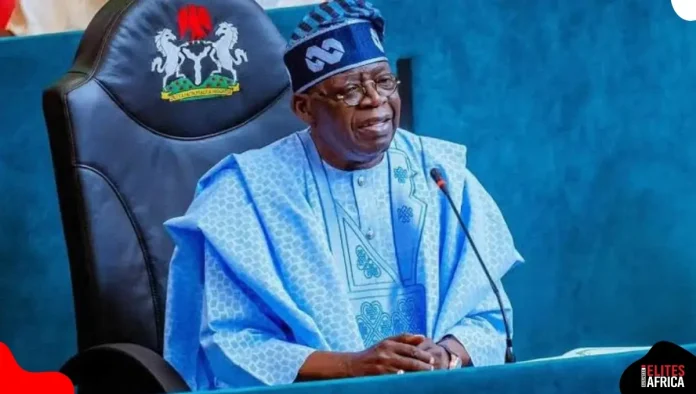



Nigeria has cleared the next medium-term roadmap for the economy, and after a National Economic Council meeting chaired by Vice President Kashim Shettima, the Minister of Budget and Economic Planning, Atiku Bagudu, announced federal approval of a 2026–2030 national development plan set for launch in December 2025.
The plan will guide federal, state, and local governments, replacing the 2021–2025 framework that is set to wind down this year.
What’s different this time
Bagudu said the new plan is designed to carry forward ongoing reforms, including the removal of fuel subsidies, changes to the foreign-exchange market, liberalisation measures, and tax updates, which were delayed from 2021 to 2023 but accelerated from mid-2023.
According to him, those earlier delays helped derail the last plan’s 7% growth ambition. With reforms now in motion and higher statutory revenues flowing to states and local governments, Abuja expects stronger execution over the next five years.
The big goals
The 2026–2030 blueprint sits inside Nigeria’s 30-year “Agenda 2050,” which is arranged as six back-to-back five-year plans. This new phase is meant to ensure policy continuity while responding to current pressures. Priorities include:
- Jobs and incomes: faster job creation and support for small businesses.
- Human capital: better outcomes in education and health, including disease preparedness.
- Sustainable infrastructure: power, transport, and digital networks that improve productivity.
- Food security: support from farm to market to reduce price shocks.
- Social protection: safety nets that cushion vulnerable households.
How the plan will be prepared
Work on the document begins this month, so it is ready for the President’s launch in December. The government says the drafting process will be participatory, involving the three tiers and arms of government, the organised private sector, political parties, civil society, faith-based groups, labour, youth and student bodies, and traditional institutions.
Three layers of governance will steer the process: a National Steering Committee, a Central Working Group, and Technical Working Groups, co-chaired by public- and private-sector leaders, with governors representing the six geopolitical zones.
What Nigerians should watch for
Expect clearer guidance on how states and LGAs align their budgets with national priorities; a timetable for sector reforms and capital projects; and performance benchmarks that track delivery quarter by quarter.
With recent health threats underscoring system gaps, the plan is also expected to spell out practical steps to strengthen primary healthcare, emergency response, and disease surveillance.
Why it matters
Medium-term plans only work when they move from paper to projects. Abuja is betting that a firmer reform base and improved cash flows to sub-nationals will make the difference this time.
The test will be simple: better power and transport, more stable food supplies, faster job growth, and visible improvements in schools, clinics, and safety nets between 2026 and 2030.