
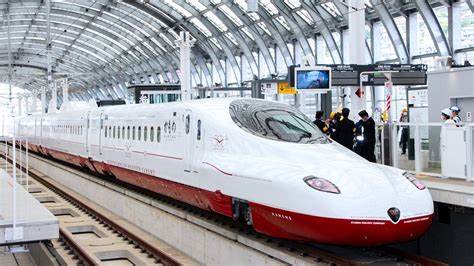


A decade after it was first conceived, Nigeria’s ambitious high-speed (bullet) train infrastructure project is edging closer to execution, after its promoters announcing they have secured up to 90 percent of required government approvals and presented proof of funds for the $60 billion scheme.
On Tuesday in Abuja, representatives of the federal government, De-Sadal Nigeria Limited, and China Liancai Petroleum Investment Holdings Limited revealed that construction would soon begin on the 4,000-kilometre network linking Lagos, Abuja, Kano, and Port Harcourt.
“Today, with our partners, I have just presented the official approval form for the project. The fund is coming from the Asian Development Investment Bank and it is to cover the first phase of the project that cuts across four major cities in Nigeria” Samuel Uko, chief executive officer of De-Sadal, a logistics investment firm, said.
He added that the $55 billion of the funds earmarked for the first phase, was “ready” and that partial operations could start before full completion.
Ekperikpe Ekpo, minister of state for petroleum resources (gas), assured the consortium of fuel supply. “We have sufficient gas that needs to be used for the project. I can assure the investors that they would not be lagging behind in terms of gas, which is the precursor of the project.”
Read also: Apapa-Moniya rail offers alternative for exporters
Sa’idu Alkali, the minister of transportation confirmed that the Infrastructure Concession Regulatory Commission (ICRC) had approved the outline business case, with the full business case still in preparation before it goes to the Federal Executive Council.
Oseodion Ewalefoh, the ICRC’s Director-General confirmed this, noting the need for financial credibility.
“Any investor coming into Nigeria must show proof of funds,” he said. “The next step is to review submissions, validate claims and see if we truly have what it takes to make the project see the light of day.”
According to Uko, the 1,600-kilometre first phase will take 36 months to complete, though passengers on some routes such as Lagos to Lokoja, could start enjoying the bullet train much earlier.
Bethel Olujobi
Bethel Olujobi reports on trade and maritime business for BusinessDay with prior experience reporting on migration, labour, and tech. He holds a Bachelor’s degree in Mass Communication from the University of Jos, and is certified by the FT, Reuters and Google. Drawing from his experience working with other respected news providers, he presents a nuanced and informed perspective on the complexities of critical matters. He is based in Lagos, Nigeria and occasionally commutes to Abuja.
