
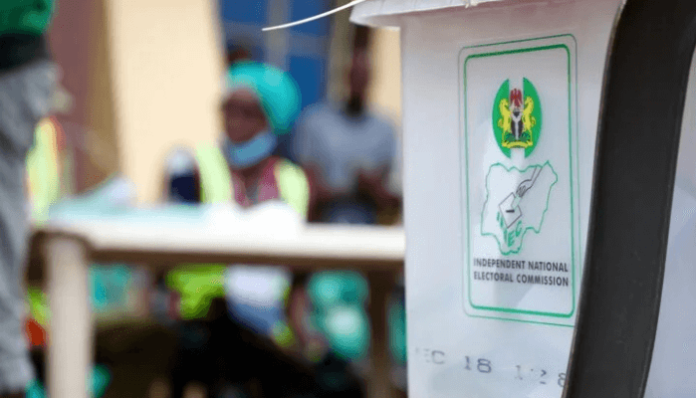


As Nigeria marches toward the 2027 general elections, political alignments and rivalries are hardening. The contest for who will occupy Aso Rock has intensified, with key opposition figures coalescing in a bid to unseat President Bola Ahmed Tinubu.
But beyond party affiliations and personalities, a more complex issue looms large over the race: the controversial but deeply influential principle of rotational presidency.
Though not enshrined in the Nigerian constitution, rotational presidency has shaped the country’s political structure since 1999. It is an unwritten understanding among the political elite, a ‘gentleman’s agreement,’ aimed at ensuring inclusiveness by alternating presidential power between the North and South every eight years. While it has never been formalised, it has become a standard by which equity, stability, and regional fairness are judged in Nigeria’s fragile federation.
Read also: Documentary by WILAN Global on women who ran in Nigeria’s 2023 General Elections to debut
The Atiku-Obi alliance: A collision of ambitions
The recent political reunion of Atiku Abubakar and Peter Obi under the platform of the African Democratic Congress (ADC) has sparked excitement and confusion in equal measure. Analysts argue that the 2023 presidential election might have had a different outcome had Atiku and Obi joined forces. Combined, their votes would have surpassed 54 percent, enough to defeat Tinubu’s 36.61 percent win – other things remaining equal. Now reunited, they present a formidable opposition, but their alliance faces one major hurdle: who will fly the flag?
From a rotational presidency perspective, neither Atiku nor Obi offers a perfect fit.
Atiku, a northern political titan and serial presidential candidate, believes 2027 is his best and final chance. He has been building momentum in the North, rallying elite support and presenting himself as the stabilising force Nigeria needs. However, his candidacy would disrupt the rotational understanding. Having had the North in power from 2015 to 2023, many argue it would be unjust for another northerner to take over so soon.
Furthermore, Atiku’s ambition is drawing strong opposition from the South and Nigeria’s increasingly vocal youth demographic. Many southerners see his move as a political overreach, an attempt to bulldoze a fragile power-sharing agreement. For the youth, Atiku represents a political establishment they are eager to retire, a generation of politicians that has failed to deliver meaningful change.
Peter Obi, former governor of Anambra State and 2023 Labour Party candidate, emerged as the surprise challenger in the last presidential election. With over six million votes and sweeping wins across the South-East and South-South, Obi redefined opposition politics in Nigeria, capturing the hopes of urban youths and middle-class Nigerians alike.
Obi’s entry into a coalition with Atiku under the ADC is strategic but also complicated. While he is likely to retain his base in the South and among young voters, his presidential ambition in 2027 poses a dilemma for the North.
Many northern stakeholders argue that Obi, if elected, would be entitled to a second term, extending southern control of the presidency to 2035. To counter this perception, Obi has promised to serve only one term if elected, portraying it as a commitment to fairness and stability. Yet, this promise is legally non-binding and politically unenforceable, leaving northern elites skeptical.
Obi’s northern outreach remains a work in progress. He is yet to significantly penetrate the North’s grassroots political structures or win the confidence of its conservative power brokers. Despite his economic pragmatism and disciplined image, he is still largely viewed in the North as a southern candidate with limited understanding of the region’s complexities.
Read also: 2027: Nigeria’s defining democratic test – Imperative for free and fair elections
Jonathan: A familiar face for transitional bargain
Goodluck Jonathan’s name continues to surface in political whispers, especially among northern elite circles looking for a compromise candidate. The former president, who handed over to Buhari in 2015, still has four years constitutionally allowed, having only served one term after Yar’Adua’s death. Some in the North see him as a palatable choice, southern by origin, but with proven alignment to northern interests.
Jonathan’s candidacy could potentially bridge the rotational presidency gap, offering the South its remaining four years, while paving the way for a northern return in 2031. But his silence, coupled with public hints from his wife Patience that he is no longer interested in politics, weakens the feasibility of this option. Jonathan also lacks a modern political structure and would need an unlikely groundswell of elite backing to return to the fray.
Tinubu: The incumbent with an uphill Northern task
President Tinubu remains the man to beat. Yet, despite his strategic brilliance and control of the political machinery, his position is not unassailable. His removal of petrol subsidy and floating of the naira have led to rising poverty and discontent, particularly in the North, where economic vulnerability is higher.
Northern politicians are already capitalising on the perceived marginalisation of the region under Tinubu. From appointments to resource allocations, the complaints have been growing louder. However, Tinubu’s political survival instinct cannot be underestimated. He is quietly consolidating his southern base and will likely offer political concessions to strategic northern actors to retain power.
Some northern power brokers may find Tinubu more tolerable than Obi, especially if the goal is to reclaim the presidency in 2031. Voting for Obi, a political outsider with a strong reformist bent, could bring unpredictable changes and prolong southern rule. Tinubu, on the other hand, represents continuity, however flawed, and is bound by the rotational principle to exit by 2031.
Northern calculus: Strategic patience or tactical aggression?
From the northern perspective, the 2027 election is a high-stakes chess game. Supporting Atiku offers the chance to reclaim power immediately, but risks violating an unwritten but politically sensitive zoning principle. Backing Obi means endorsing another eight years of southern presidency, unless his one-term pledge is trusted. Supporting Tinubu offers a painful but predictable four more years, with an assured northern return in 2031.
Read also: What would decide Nigerians votes in 2027 election, by Muhammad-Baba
Ultimately, the North faces a critical decision: Should it fight to retake the presidency now, or play the long game for 2031?
“The point is that it is a dilemma for the voters, particularly those from the North. Tinubu remains the candidate to beat, but Obi is no pushover but needs to win the North over. The zoning does not favour Atiku, but he is experienced and can’t be underestimated,” said Zachariah Unegbu, an Abuja-based public affairs analyst.
“Atiku and Obi will need to find a way to form a genuine alliance. If they go their separate ways, neither will win.”
Much will depend on how well Atiku and Obi manage their alliance, and whether they can forge a united front that satisfies both regional equity and political ambition. In the end, the cap may fit several heads, but wearing it without tearing the national fabric may be the greater test in 2027.
