
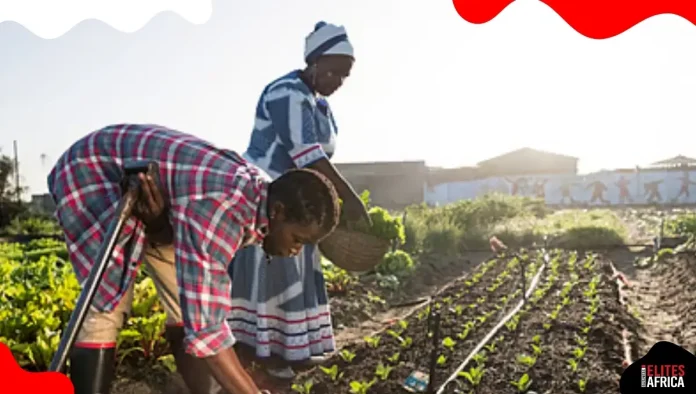



Across Africa, millions of smallholder farmers are responding to climate change not with despair, but with innovation.
From droughts and heatwaves to soil erosion and unpredictable rainfall, the challenges are mounting. But instead of giving in, many rural farmers are turning to smart farming practices to protect their land, feed their families, and adapt to new climate realities.
The question now is whether the world’s biggest economies, the G20 will support these efforts before it’s too late.

Small farms with the big ideas
Smart farming in Africa doesn’t always mean high-tech machinery or expensive solutions. It often means using simple, locally driven methods that respect nature and work with the land.
For example, agroforestry, the practice of planting trees among crops has helped farmers in countries like Ethiopia and Uganda improve harvests, reduce soil erosion, and restore land health.
In Burkina Faso and Niger, farmers are bringing degraded land back to life by digging traditional zaï pits small holes that catch rainwater and nutrients, allowing crops to grow even in dry seasons.
In Malawi and Zambia, conservation farming practices like crop rotation and covering the soil are helping farmers grow more food while protecting their soil from further damage.
These methods don’t just keep farms alive, they help build resilience. They are cheap, easy to adopt, and often based on generations of indigenous knowledge. But despite their success, they are not spreading fast enough.
Why? The answer lies in poor funding, weak policy support, and lack of access to resources especially for women and young farmers.
Funding gaps and missed opportunities
While climate-smart farming is proving effective, most of these projects remain underfunded or poorly supported. Many smallholder farmers still lack access to training, land rights, credit, or markets. And in places like Ghana and Malawi, women face additional barriers that stop them from adopting sustainable practices like limited access to funding or exclusion from decision-making.
International donors have introduced some climate-smart agriculture programs across sub-Saharan Africa, but many fail to consider local realities. Some bring in expensive technologies that small farmers can’t afford.
Others ignore traditional land use customs or sideline the voices of local communities.
For smart farming to truly thrive, efforts must be inclusive, grounded in local knowledge, and supported by strong institutions. That’s where the G20 comes in.
Why the G20 needs to step in
The G20 is a powerful group, it represents the world’s largest economies. In 2025, with South Africa holding the presidency, there’s a rare chance to put Africa’s rural farming needs on the global agenda.
While the G20 has made promises to support climate-smart agriculture and sustainable land use, these commitments often remain on paper. This year must be different.
The G20 should help African governments access low-interest climate finance and work with development banks and philanthropists to fund proven solutions already working on the ground.
These funds should go toward expanding training, providing digital tools paired with local support systems, and investing in innovations that don’t just benefit farms but also restore nature.
For example, planting underused but drought-resistant crops like millet or bambara groundnut could boost nutrition while surviving tough climate conditions.
What needs to happen now
For Africa to scale its smart farming success, three things must happen:
- Public investment in farmer support services like training, weather updates, and market access.
- Equitable access to land, water, and credit—especially for women, youth, and marginalised groups.
- Targeted climate finance for low-cost, proven solutions like agroforestry, intercropping, and indigenous farming methods.
Climate change is not just a threat to African agriculture, it is also a chance to rethink how we grow food, protect nature, and support communities. African farmers are already showing the way.
What they need now is for the G20 to listen, invest, and act. Smart farming is working. But it can only grow with smart funding.