
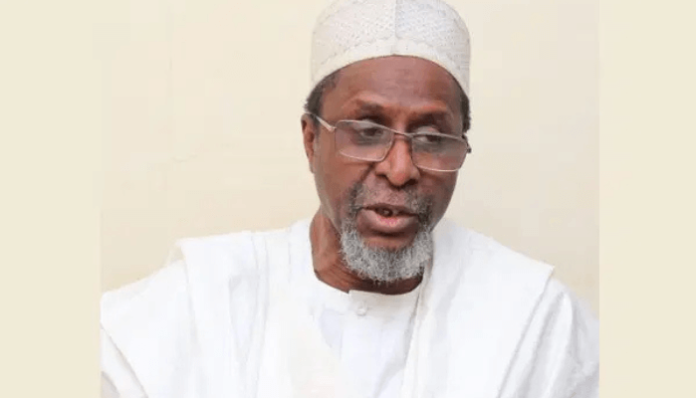


Balarabe Lawal Abbas, the Minister of Environment, said that, due to poor sanitary environment and unsafe hygiene practices, about 3.5 million children are suffering from diarrhoea disease in Nigeria annually.
Speaking at an event to mark the 2025 National Environmental Sanitation Day in Lafia, the Nasarawa State capital, the Minister called on governments and other stakeholders in the environment sector to be more proactive in safeguarding the environment from challenges detrimental to the health of the people.
The event, which was sponsored by the Nigerian Red Cross, with the theme: ‘Safe Sanitation and Hygiene for Disease Prevention’, was organized by the Federal Ministry of Environment, in collaboration with the Nasarawa State Ministry of Environment and Natural Resources, and supported by UNICEF, WEBMARK, WHO among other development partners, where they declared a zero tolerance to open defecation across the 13 local government areas the state and across states in the country to improve their sanitation and hygiene practices.
Twenty years after the institution of the National World Environment Day, precisely in 2005, this was the first in a series Nigeria has been observing the day, with the launch of the sensitisation outreach at Lafia Modern Market and Ungwar Wajen Lelle community in Lafia.
Read also: Sanitation without accountability: Why Nigeria’s open defecation crisis persists (Part 2)
The Minister noted that the joint efforts between the two ministries were aimed at educating the residents on the importance of proper waste disposal and environmental hygiene.
“This initiative underscores the government’s commitment to improving environmental health and promoting a cleaner and healthier environment for the people of Nasarawa State.
Abbas, who was represented by the Director II, Pollution Control and Environmental Health at the ministry, Omotinde Adiola, emphasised the importance of maintaining a clean environment to tackle preventable diseases in our communities.
“A large number of children die every year due to sanitation and hygiene-related diseases. And more than 3.5 million children suffer from diarrhoea in Nigeria.
He expressed concern about how Nigerians, in the 21st century, are still using bush and water bodies as their regular means of excreta disposal, adding that the advent of COVID-19 and other public health diseases further underscores the fact that access to sanitation and hygiene is an essential need for disease prevention.
The Environment Minister then called for adequate functional sanitary facilities in public institutions, a proper sewage system, and unsafe collection of sewage can severely compromise safe sanitary and hygiene, as untreated and contaminated water can increase the risk of waterborne disease in the communities, he added.
“Nigeria has been identified as one of the hotspots for open defecation. That is why we are also working with the Federal Ministry of Water Resources to ensure that it is tackled.
“We are advocating that the citizens should defecate in the toilets, keep them clean and wash their hands with soap under running water when they use the toilets.
Read also: Poor funding, weak enforcement threaten Nigeria’s 2030 open defecation target
“Across our communities, we continue to face challenges of preventable diseases, such as cholera, typhoid, diarrhoea and malaria, which are largely responsible for the poor sanitation and hygiene environment.
“Poor and unsafe sanitation has far-reaching consequences, as it exposes communities, families and individuals to a myriad of diseases that have significant economic impacts on the people, including lost productivity in all aspects”
He called on the Nasarawa State government to consider enforcing the relevant sanitary laws on the people, especially in places like the markets, in order to enhance the culture of sanitation among the people.
According to the Minister, unless the people take ownership of their environment by evacuating dirt and clearing the drainages around them, the efforts put in place will be far from reality.
Governor Abdullahi Sule of Nasarawa State, who was represented by the state Commissioner for Environment and Natural Resources, Margaret Itake Elayo, said the partnership was to strengthen what the state was already doing towards ensuring cleanliness.
Governor Sule explained that efforts were being made to ensure that every household and public places get toilet facilities with water, saying that his administration has placed significance on environmental sanitation.
He, therefore, promised to strengthen the enforcement teams of the state’s Ministry of Environment and Natural Resources in order to ensure cleaner environments across the localities of the state for the general well-being of the citizens.
According to Sule, sanitation is not just about the environment, it is about public health, human dignity and social justice, saying that curtailing the spread of communicable diseases lies solely on our collective ability to tackle public health issues threatening our existence.
Read also: Taming the menace of open defecation in Nigeria
While calling for proper waste management, promotion of hygiene practices and safe sanitary systems in both rural and urban communities, Governor Sule then urged stakeholders to reflect on the urgency of today’s conversation and for tomorrow’s action.
Gideon Adamu of the Department of Healthcare Services, Nigerian Red Cross, Abuja, said the event aims to address the critical issues of littering and indiscriminate refuse dumping, which pose severe health risks to the residents of the state.
He added that most of the health challenges people are facing are not only environmentally related, but also because of the pollution of our environment.
He urged the people to see cleanliness as a personal duty, even as he urges them to plant trees as a means of tackling climate change effect.
